Blog Post
Beyond the Event: Designing Brand Experiences for Digital Virality and the Perfect Aftermovie
The New Metric of Success: From Attendance to Digital Reach
In today's experiential marketing landscape, how we measure the success of a brand activation has dramatically evolved. Gone are the days when attendee numbers or traditional media impressions were the sole indicators of a positive ROI. Today, the true measure of impact lies in an experience's ability to transcend physical space and generate significant resonance in the digital realm. Social media virality and the quality of the aftermovie have solidified their positions as crucial metrics, reflecting not only on-site participation but also exponential reach and brand amplification.
This transformation is largely due to the omnipresence of mobile devices and the culture of sharing content in real-time. A brand experience is no longer an isolated event but a catalyst for conversations, images, and videos that spread across platforms like TikTok, Instagram, YouTube, and X. The aftermovie, far from being a mere summary, becomes a strategic piece of content that encapsulates the essence of the activation, its most impactful moments, and the genuine reactions of participants, serving as a powerful post-event marketing asset.
For Cinética Studio, this evolution is not a novelty but the central axis of our design philosophy. We understand that every element of an immersive experience, from the most subtle interaction to the grandest architectural projection, must be conceived with the camera in mind. It's not about sacrificing authenticity for aesthetics, but about integrating digital aesthetics into the very heart of the experience's authenticity. This involves thinking about camera angles, video-optimized lighting, visually striking moments, and clear opportunities for user-generated content.
An experience's ability to generate organic, high-quality social media content is a testament to its success. When attendees become content creators, they amplify the brand's message in a way that paid advertising can hardly replicate. This user-generated content (UGC) is not only more credible but also extends the campaign's lifecycle far beyond the physical duration of the event, reaching audiences that would otherwise be inaccessible. The aftermovie acts as the master piece that cohesively brings all this content together, offering a polished and professional narrative that complements and validates spontaneous virality.
Designing for the Camera: 'Shareability' as a Core Principle
Integrating the 'designing for the camera' perspective from the initial stages of any experiential project is crucial to ensure its digital resonance. This means that every visual, interactive, and narrative element must be conceived with its photogenic and shareable potential in mind. It's not an afterthought but a guiding principle that informs conceptualization and development.
From the very first sketch, creatives should ask themselves: How will this look on a smartphone screen? What angles will it offer for an impactful photograph? What interaction will a short, dynamic video generate? This proactive mindset allows for the identification and enhancement of 'Instagrammable moments' before the experience comes to life.
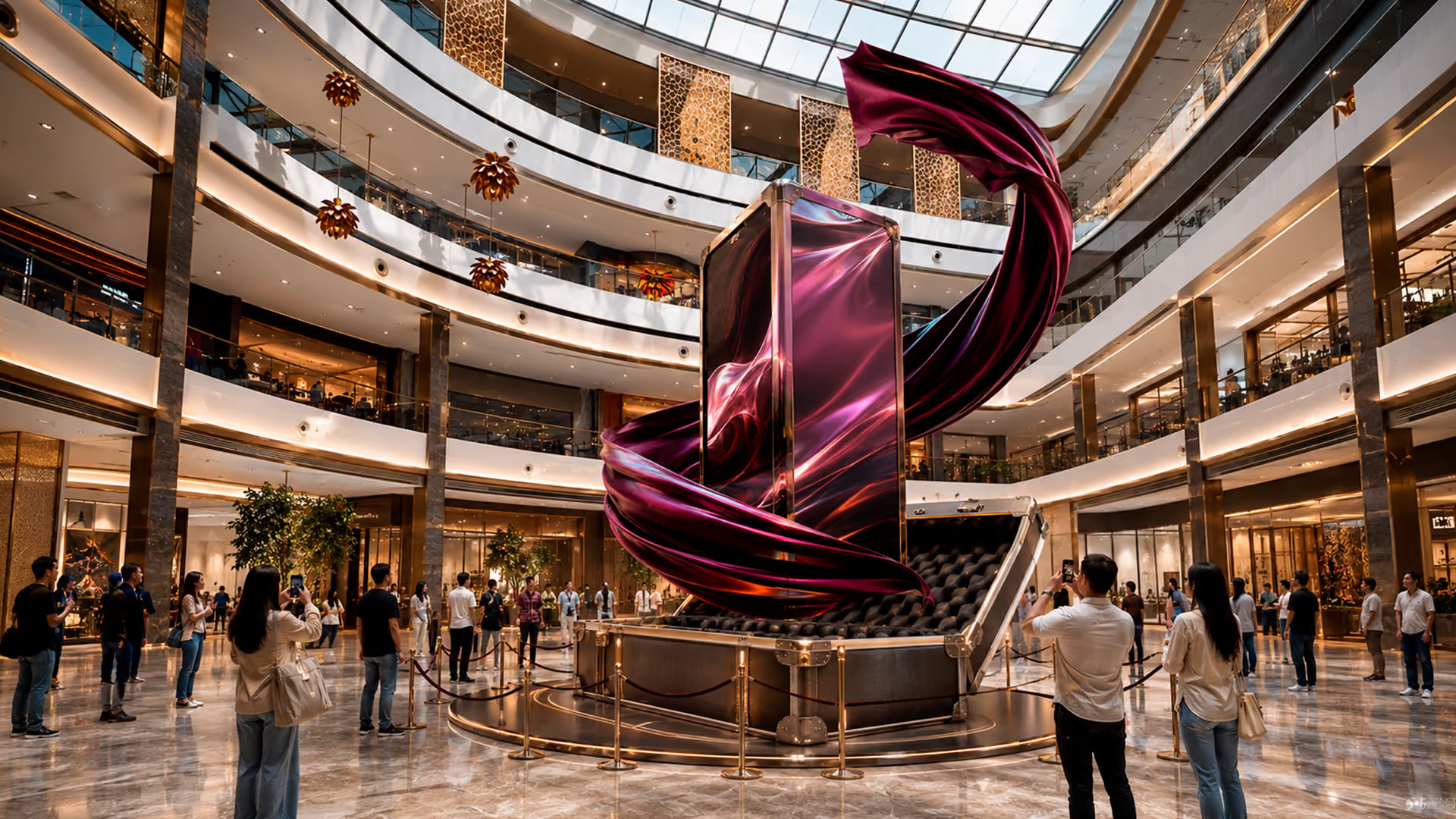
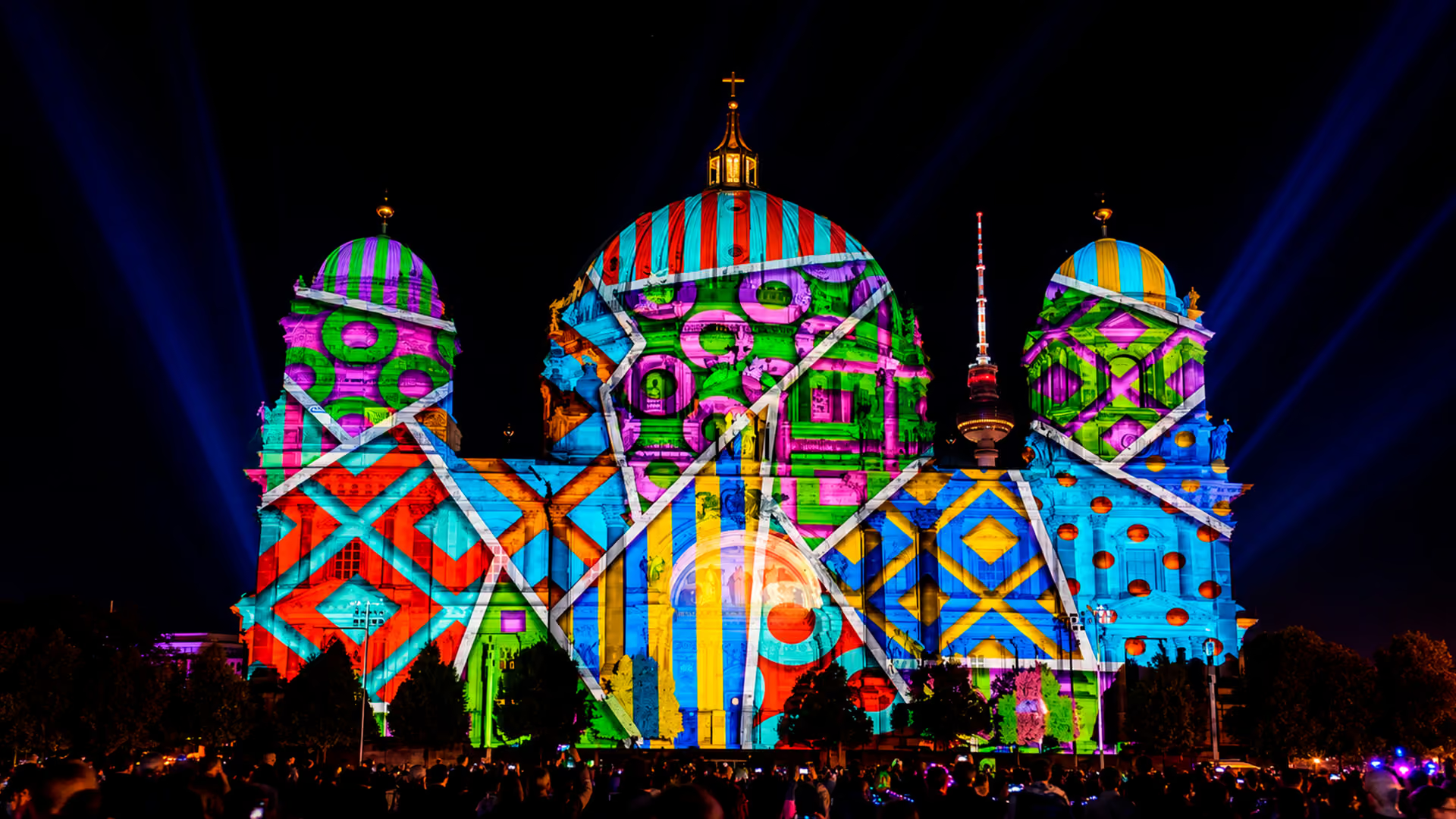
Design focused on shareability involves creating visual focal points that attract attention and encourage content capture. This can manifest in large-scale art installations, such as an architectural videomapping that transforms a facade into a dynamic canvas, or in interactive elements that invite active user participation. The key is that these elements are not only aesthetically appealing but also tell a story or evoke an emotion that prompts the viewer to share their experience.
Consider, for example, the development of anamorphic content for large-format LED screens, such as those Cinética Studio has created for brands like Tecate. Here, the illusion of depth and scale is specifically designed to be captured from a precise angle, generating a visual effect that is intrinsically surprising and, therefore, highly shareable. 3D animation technology, in this case using Blender, is put at the service of a visual narrative that seeks immediate impact on social media.
Another example is the design of interactive experiences that, by their very nature, generate unique content for each participant. An interactive floor that reacts to people's movement, using technologies like TouchDesigner and Computer Vision to create real-time generative graphics, is not only fun to experience but also produces personalized videos that users want to share. Each interaction becomes a piece of original content, organically amplifying the brand's reach. This approach ensures that the experience is not only lived in the moment but also extends and goes viral within the digital ecosystem.
Key Elements of an 'Aftermovie-Ready' Experience
For a brand experience to transcend the in-person moment and become viral content through an aftermovie or social media posts, it's crucial to design it from the outset with an aesthetic and visual fluidity that facilitates its recording and editing. This involves meticulous planning of each component, ensuring it contributes to a dynamic and engaging visual narrative.
Lighting is one of the pillars. It's not just about seeing, but about creating atmospheres and highlighting key elements. Strategic lighting can transform a space, guide the viewer's gaze, and generate dramatic contrasts or immersive environments that look spectacular on camera. Light play, color changes, and dynamic projections are essential for adding depth and movement to shots, avoiding flat and static scenes.
Sound, for its part, goes beyond background music. It includes sound effects that reinforce interaction, voice-overs that guide the narrative, or even the absence of sound to create impact. A well-executed sound design complements the visual experience and is crucial for aftermovie editing, as it can evoke emotions and maintain the narrative rhythm.
Scenography is the main canvas. Architectural elements, artistic installations, large-format LED screens, or immersive projections define the environment. For example, in projects like the anamorphic content for Tecate, which used L-shaped giant LED screens, the scenography itself became the spectacle, creating illusions of depth that are highly photogenic and viral. The key is to design spaces that offer multiple interesting visual angles and invite interaction, providing a rich backdrop for any recording.
Finally, interaction is the engine that generates authentic and spontaneous content. Experiences that invite participants to touch, move, play, or create are the ones that produce the most genuine and shareable reactions. An interactive floor that reacts to movement, like the one developed for Coca-Cola using TouchDesigner and Computer Vision, or a karaoke booth for Amazon Music that records users' best moments, are examples of how interaction becomes the heart of the content. These activations not only entertain but also generate unique moments that are perfect for capturing and sharing, imbuing the aftermovie with unparalleled energy and authenticity.
Technology at the Service of Virality: Tools to Amplify Impact
Creative technology is the engine that transforms a good idea into an unforgettable experience and, crucially, into highly shareable content. It's not about using technology for technology's sake, but about strategically integrating it to create visually striking and emotionally resonant moments that invite capture and dissemination on social media. From immersive projections to interactive installations, each tool offers a unique opportunity to generate that much-sought-after 'wow' effect.
Videomapping and architectural projection, for example, can turn entire facades into dynamic canvases, creating visual spectacles that are inherently photogenic and worthy of being recorded. These large-scale projections not only attract attention but also generate a sense of wonder that prompts attendees to share their experience. 3D animation and CGI, for their part, allow fantastic worlds or products to be brought to life in a hyperrealistic way, as seen in the anamorphic content Cinética Studio developed for Tecate. This visual piece, designed to surprise from a precise angle and generate an illusion of depth and scale, became an immediate attraction point, merging digital art and brand narrative into an experience crafted to stop, impact, and share.
Interactive installations elevate user participation, turning them into co-creators of content. Technologies such as computer vision and motion tracking allow spaces to react to people's presence and actions, generating personalized and unique experiences. An example of this is the interactive floor Cinética Studio developed for Coca-Cola, where real-time generative graphics visually changed according to the movement and number of people. Through cameras and computer vision, the position of each user was detected and tracked, allowing the visual to follow their path and respond to their movement in a fluid and immersive way. These experiences, being so personalized and dynamic, are ideal for recording and sharing, as each interaction is unique content.
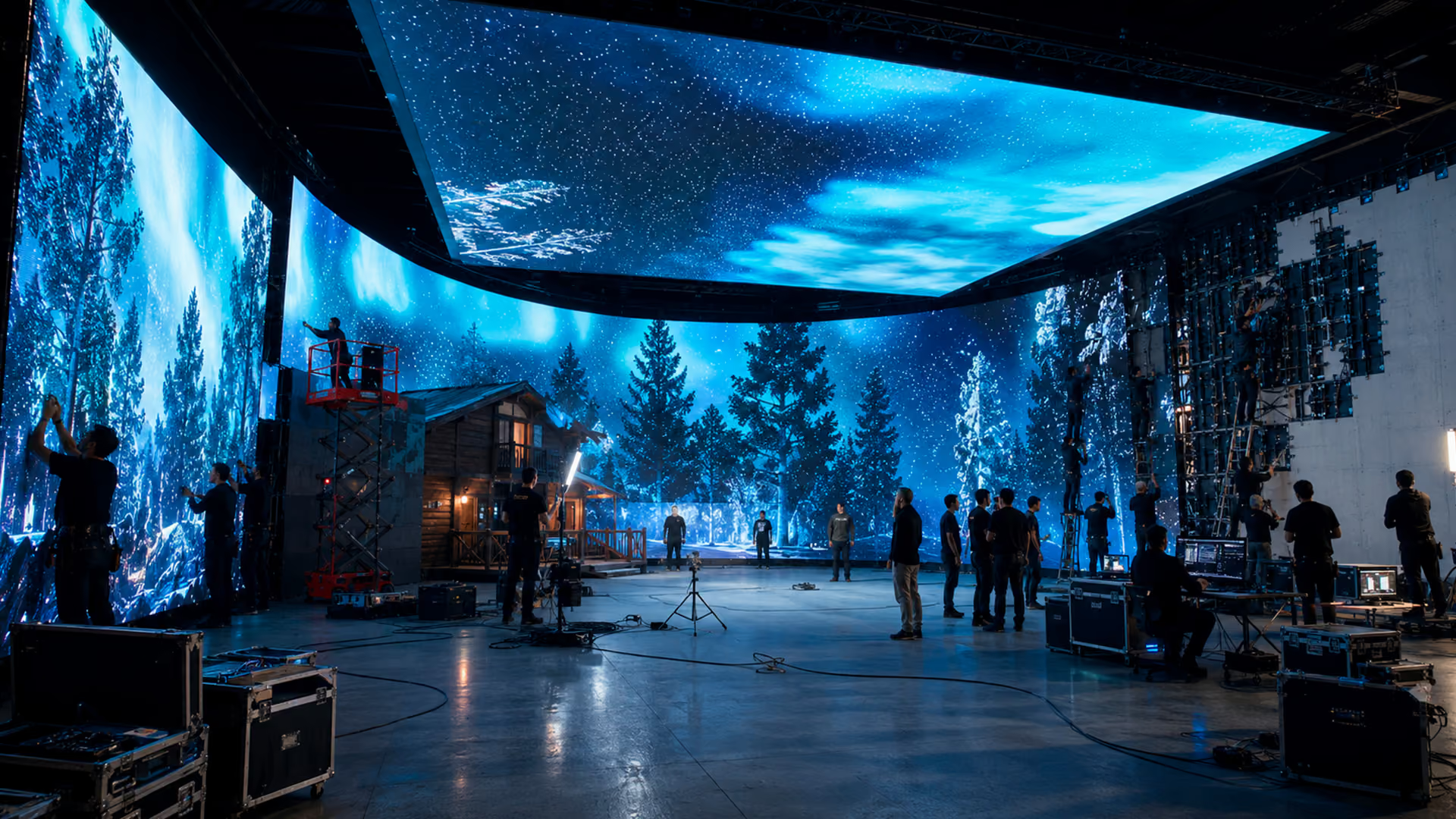
Virtual production, with its LED Volumes and immersive environments, offers unprecedented control over background and lighting, allowing for the creation of spectacular settings that are perfect for the camera. These environments are not only visually impressive in person but are designed to look impeccable in any recording, ensuring that the aftermovie and user-generated content have cinematic quality. By strategically integrating these technologies, brands can ensure that their experiences are not only memorable in the moment but also translate into valuable digital content that amplifies their message far beyond the physical event.
Narrative and Iconic Moments: Scripting the Aftermovie Before the Event
The aftermovie is not merely a documentary record of an event; it's a narrative piece that condenses the essence of the experience, its emotional peaks, and the brand's key messages. For this story to be powerful and viral, its script must begin long before the cameras roll. It involves strategic planning that identifies desired iconic moments and designs the experience so that these manifest naturally and spectacularly.
This anticipation means visualizing which scenes we want the audience to remember, share, and associate with the brand. Will it be the awe-struck reaction to an architectural projection transforming an iconic building? The playful interaction with an installation that generates personalized content? Or the collective energy of a crowd immersed in a digital environment? Defining these "aftermovie moments" is the first step in orchestrating a memorable experience.
At Cinética Studio, we approach this process from the conceptualization phase. For example, when developing the interactive floor for Coca-Cola, we knew the key would be fluid interaction and visual surprise. We designed the experience with TouchDesigner so that real-time generative graphics responded to each person's movement, creating a dynamic and immersive visual effect. The aftermovie for this project would not only show people walking but the magic of how the floor reacted to their presence, turning a simple hallway into an interactive canvas and a moment of collective wonder.
Similarly, for Tecate, the creation of anamorphic 3D content aimed to generate such a strong visual impact that it would become an immediate focal point. The illusion of depth and scale, visible from a precise angle on large-format LED screens, was conceived as a "stop-and-stare" moment that would translate perfectly into an aftermovie, inviting the digital audience to seek out that same effect in person or to share the marvel of forced perspective.
The aftermovie's narrative is thus built from these designed moments. It's not left to chance; instead, it's planned how the experience will guide participants through a series of emotions and discoveries, culminating in those moments of maximum expression that are perfect for the camera and, therefore, for virality. This is the difference between documenting what happened and telling the story that was intended to be created.
User Participation as a Driver of Generated Content
In the digital age, the virality of a brand experience depends not only on its intrinsic design but also on its ability to transform attendees into co-creators and content disseminators. Interactive and personalized experiences are fundamental catalysts for this process, encouraging participants to generate and share their own material, which exponentially amplifies the brand's reach in an organic and authentic way.
When an experience allows the user to be the protagonist, the content they produce is perceived as genuine and share-worthy. It's not an advertising imposition but a natural extension of their experience. This User-Generated Content (UGC) is invaluable, as it enjoys much greater credibility than any traditional brand message. People trust the recommendations and experiences of their peers, and UGC acts as powerful digital word-of-mouth.
A clear example of how technology facilitates this co-creation is the development of experiences that deliver a personalized digital product to the participant. For an Amazon Music project, Cinética Studio designed an interactive karaoke booth where attendees could sing their favorite song. The system recorded the best 20 seconds of their performance, generated a personalized video, and made it available to the user via a QR code for immediate download and sharing. This dynamic not only offered a moment of fun but also provided each participant with a unique digital asset ready to be published on their social media, extending the event's experience far beyond its physical duration.
Similarly, interactive floors, such as the one developed for Coca-Cola, transform users' movements into dynamic and engaging visual elements. Through technologies like TouchDesigner and Computer Vision, the system detected and tracked each person's position, allowing real-time generative graphics to respond to their path. Although it didn't directly generate a downloadable file, the visually striking and reactive nature of the experience invited spectators and participants to record and share these moments of interaction, turning their presence in the space into a spectacle worthy of being documented and disseminated on platforms like TikTok or Instagram Stories. These interactions not only create memories but also become valuable content fragments that users are eager to share, acting as spontaneous brand ambassadors.
Aftermovie Production: From Recording to Strategic Editing
Creating an impactful aftermovie and viral social media content isn't a process that begins after an event; it's meticulously planned from the experience's design phase. The production phase, encompassing everything from material capture to final editing, is where strategic vision materializes into audiovisual pieces that extend the activation's lifespan and amplify its reach.
During the event, material capture must be intentional. This means going beyond simple documentary recording. Film crews must be aligned with the pre-established narrative and identified iconic moments, seeking dynamic angles, genuine participant reactions, and interaction with key elements of the experience. Shot diversity is crucial: wide shots that show scale and atmosphere, detail shots that highlight technology or design, and close-ups that capture human emotion. Audio quality, though often underestimated, is fundamental for conveying the event's atmosphere and energy.
Strategic aftermovie editing is where raw material transforms into a cohesive and exciting narrative. Here, selecting the best angles not only aims for aesthetics but also for the ability to evoke an emotional response and tell a story. Music plays a leading role, setting the rhythm and tone, and amplifying the emotional peaks of the experience. An effective aftermovie doesn't just show what happened; it makes the viewer feel like they were there, or wished they had been.
For social media content, editing becomes even more agile and adapted to each platform's specific formats. Short, dynamic clips, with clear subtitles and calls to action, are essential for capturing attention in saturated feeds. Virality is fostered by highlighting the most surprising, interactive, or visually impactful moments—those that invite instant sharing. For example, in projects like Coca-Cola's interactive floor, where generative graphics reacted in real-time to people's movement, the aftermovie would focus on the fluidity of the interaction and the participants' surprise at seeing how the space responded to their presence. Similarly, for the Amazon Music karaoke experience, viral clips would center on the most enthusiastic performances and users' reactions to receiving and sharing their personalized videos. The key is to identify and amplify those "wow moments" that resonate with the digital audience and drive them to interact and share.
Measurement and Optimization: The Lifecycle of a Viral Experience
A brand experience, no matter how spectacular in the moment, only reaches its full potential when its impact is measured, analyzed, and fed back into future activations. Virality is not an accident but the result of intentional design and continuous optimization. Measuring the success of an experience in terms of digital reach and engagement is fundamental to understanding its true return on investment and refining design and production strategies.
The first step in measurement is establishing clear metrics from the planning phase. Beyond physical attendance, which remains relevant, the focus shifts to digital indicators: number of impressions, organic and paid reach, brand mentions, shares, comments, likes, and overall sentiment on social media. Social monitoring tools and data analytics allow these metrics to be tracked in real-time and post-event, identifying which elements of the experience resonated most with the digital audience. For example, in the case of the karaoke experience for Amazon Music, the key metric was the number of videos downloaded and shared by participants via QR codes, which offered a direct measure of the virality generated by user-created content.
Optimization is fueled by this data. A post-event analysis must go beyond raw numbers to understand the why behind success or areas for improvement. What type of visual content generated the most shares? Which moments of the experience were the most photographed or recorded? Was there an interactive element that most incentivized participation and content creation? These questions allow us to refine design principles for the camera and the creation of iconic moments in future activations.
At Cinética Studio, we understand that every project is a learning opportunity. For example, in developing interactive experiences like the interactive floor for Coca-Cola or the games for Nestlé NAN, feedback on user interaction and real-time visual response is crucial. Analyzing how users moved, interacted with generative graphics, or responded to game challenges allows us to adjust programming logic, sensor sensitivity, and visual design to maximize engagement and, therefore, the potential to generate shareable content. This lifecycle of design, implementation, measurement, and optimization ensures that each experience is not only memorable in the present but also builds a lasting digital legacy for the brand.
Featured in
Our work has been recognized by leading industry publications covering creativity, technology, and innovation.
Discover interviews, features, and articles that highlight our projects and perspective.


You may also like
Ready to create something extraordinary?
From concept to execution, we design experiences that connect people, technology, and storytelling in unforgettable ways.