Blog Post
FOOH: Standing Out in a Saturated Creative Landscape and Avoiding Being 'Just Another'
The FOOH Explosion: Why Did It Become Marketing's Viral Trend?
Fake Out-Of-Home (FOOH) has burst onto the digital marketing scene as one of the most powerful and viral trends of recent years. Its meteoric rise is no accident; it responds to a confluence of technological, social, and consumer factors that have positioned it as an almost indispensable tool for brands seeking to capture attention in a saturated environment.
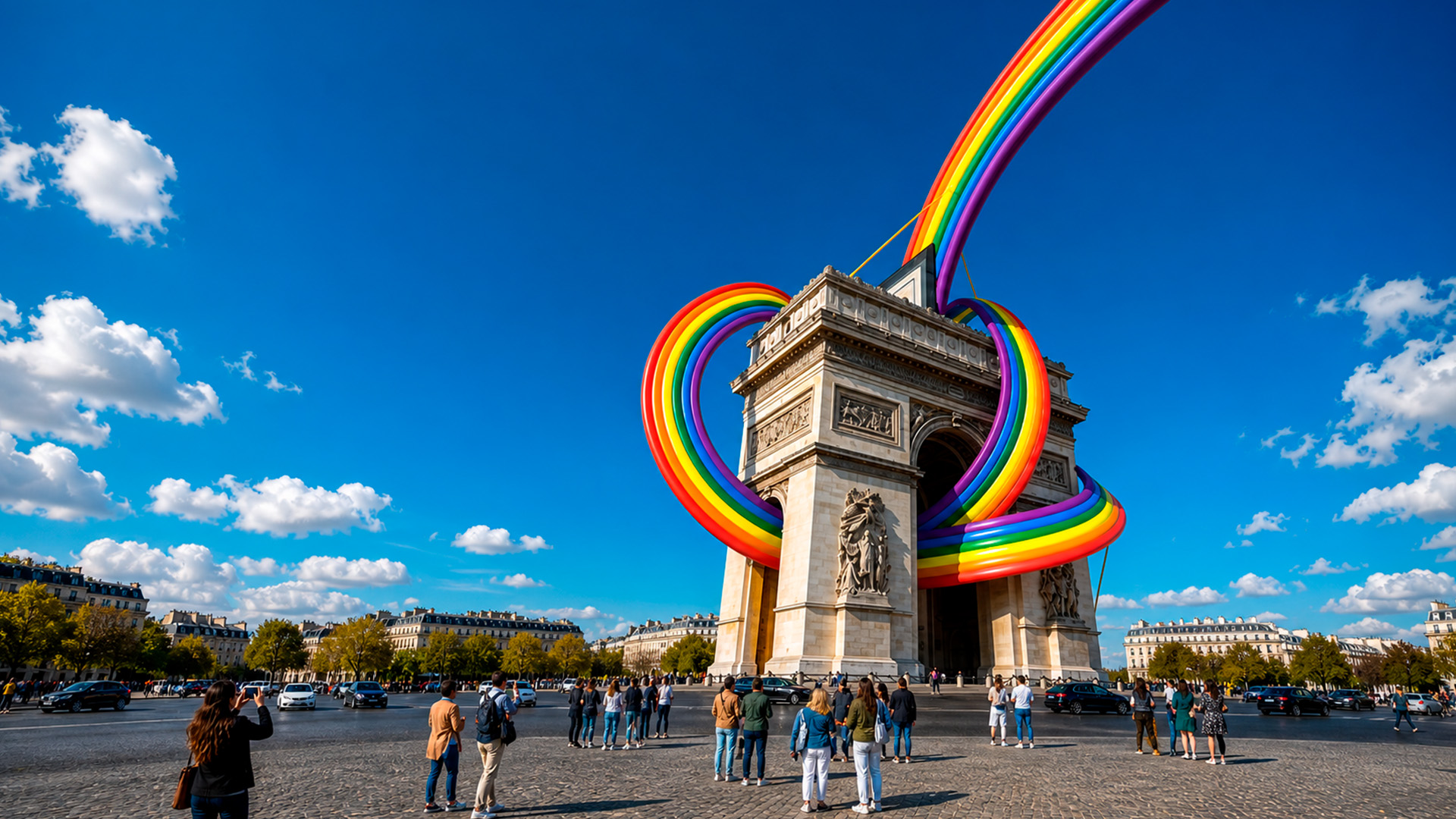
In essence, FOOH involves creating advertising content that simulates the presence of large-scale brand objects or activations in public spaces, but which are actually computer-generated (CGI) and digitally integrated into videos or photographs of real locations. This technique allows brands to deploy visually striking campaigns, often impossible or prohibitively expensive to execute in the physical world, such as a giant handbag floating above the Seine or a colossal watch emerging from an iconic building.
The main reason for its virality lies in its ability to generate awe and disruption. In a social media feed where most content is predictable, a well-executed FOOH stops the user's scroll. The surprise of seeing something extraordinary in an everyday context, coupled with the initial ambiguity of whether it's real or not, encourages interaction, comments, and, crucially, sharing. This "is it real?" mechanic becomes the engine of its organic propagation, transforming an advertisement into a shared cultural phenomenon.
Furthermore, FOOH greatly benefits from the evolution of CGI tools and the increasing sophistication of digital artists. What once required Hollywood budgets is now accessible for advertising productions, allowing for a level of realism that makes these illusions increasingly convincing. The barrier between the physical and the digital blurs, and with it, brands' ability to create visual narratives without geographical or logistical limits.
The initial impact of FOOH was monumental. The first campaigns to exploit this technique achieved reach and engagement figures far exceeding those of traditional advertising. Luxury brands, automotive companies, and mass-market consumer goods found in FOOH a way to generate conversation, reinforce their image of innovation and, in many cases, revitalize their presence on digital platforms. It became the "trick" everyone wanted to replicate, a magic formula for instant virality. However, as with any successful trend, mass adoption brings with it the risk of homogeneity—a challenge that brands and creative studios must address to ensure FOOH doesn't lose its magic.
The Risk of Homogeneity: When FOOH Becomes 'More of the Same'
While the rapid adoption of FOOH demonstrates its initial effectiveness, it has also brought an inherent challenge to any viral trend: homogeneity. What began as a disruptive and novel technique, capable of instantly capturing attention, risks being diluted in a sea of similar executions. When every brand seeks to replicate the success of pioneering campaigns, originality suffers, and impact diminishes.
This phenomenon is not exclusive to FOOH; it's observed in any advertising format that achieves massive popularity. Initially, novelty generates surprise and admiration, but as more players enter the field with standardized proposals, consumers develop fatigue. The human mind, constantly bombarded by stimuli, tends to ignore what it perceives as repetitive or predictable. In the context of FOOH, this means that an impressive visual effect alone is no longer enough to guarantee virality or connection with the audience.
The problem lies in many brands and agencies focusing solely on the visual "trick" without a solid content strategy or brand message to back it up. Momentary spectacle is prioritized over narrative or cultural relevance. Thus, we see a proliferation of giant buses, products floating in the air, or transforming buildings, but without a distinctive voice to differentiate them. The result is that, although technically impeccable, these pieces become interchangeable and fail to leave a lasting impression in the consumer's memory.
The standardization of ideas and executions not only dilutes the individual impact of each campaign but also erodes the general perception of FOOH as an innovative tool. What was once a "wow" becomes "just another one." For brands, this means that investment in FOOH, if not approached with a differentiating strategy, can yield diminishing returns. The key is no longer just "doing a FOOH," but "doing a FOOH that no one else has done or that tells a story uniquely." Differentiation becomes the most valuable currency in this saturated landscape.
Beyond the Visual Trick: The Strategy Behind a Memorable FOOH
For a FOOH (Fake Out Of Home) to transcend mere visual impact and become a memorable piece of marketing, a solid strategy behind the effect is imperative. A successful FOOH is not just a striking image; it's a coherent extension of the brand narrative, a vehicle for emotional connection, and a tool aligned with clear business objectives. Without this strategic foundation, even the most sophisticated CGI risks being perceived as an ephemeral trick, easily forgotten in the digital content whirlwind.
Brand narrative is the heart of any effective marketing campaign, and FOOH is no exception. Before considering which giant object will appear on which iconic building, brands must ask themselves: What story do we want to tell? How does this virtual intervention align with our values, our identity, and the message we wish to convey? A FOOH that simply displays a product in an exaggerated way may generate an initial reaction, but one that integrates the product or service within a larger story, one that resonates with the audience, is the one that endures. For example, if an energy drink brand seeks to communicate vitality and achievement, a FOOH showing its product powering an impossible feat (like a giant bottle scaling a skyscraper) can be more effective than just a floating bottle.
Emotional connection is another fundamental pillar. The most successful campaigns are those that manage to evoke feelings, whether awe, joy, nostalgia, or even humor. FOOH, by its surprising and disruptive nature, has an inherent potential to generate these emotions. However, this connection doesn't arise from nowhere; it must be intentional. It involves understanding the audience, their aspirations, and their pain points, and then designing a visual experience that speaks directly to those aspects. A FOOH that elicits a genuine smile or a shared moment of wonder is much more likely to be remembered and, crucially, to be shared, organically amplifying its reach.
Finally, integration with clear business objectives is what transforms a FOOH from a piece of digital art into a marketing investment. Is the goal to increase brand awareness, drive traffic to a website, generate leads, or strengthen the perception of innovation? Each FOOH must be designed with a measurable purpose in mind. This involves defining clear KPIs before production and establishing mechanisms to track the campaign's impact. For example, a FOOH can include a virtual QR code or a subtle call to action that directs viewers to a specific landing page, allowing for direct conversion measurement. At Cinética Studio, we understand that visual spectacularity is only the starting point; the true value lies in how that spectacularity translates into tangible results for the brand.
Technical and Conceptual Innovation: How Cinética Studio Redefines FOOH
In an ecosystem where FOOH (Fake Out Of Home) runs the risk of becoming predictable, differentiation lies in the ability to innovate both technically and conceptually. Cinética Studio addresses this challenge with a methodology that integrates cutting-edge technologies and a deep understanding of brand narrative, always seeking to go beyond mere visual effects to create experiences that genuinely resonate with the audience.
The key to avoiding repetition and the exhaustion of the FOOH formula is constant experimentation with new tools and approaches. This involves mastering CGI (Computer-Generated Imagery) and 3D animation techniques to achieve impeccable photorealism, but also exploring how these technologies can be combined with unexpected elements or more complex narratives. It's not just about making an object look real in a virtual environment, but about making that object tell a story or evoke genuine emotion.
These types of projects demonstrate that innovation in FOOH is not limited to the scale or size of the virtual object, but to the intelligence with which technology is used to manipulate perception and generate a moment of awe. Cinética Studio invests in the research and development of advanced rendering, lighting, and texturing techniques, ensuring that every virtual element not only looks real but also integrates organically with the environment, respecting the laws of physics and light to maintain credibility.
In addition to technical excellence, redefining FOOH requires bold conceptualization. This means challenging conventions, proposing ideas that break with expectations, and seeking unique angles that allow the brand to stand out. The goal is for each FOOH to be a conversation piece, content that people want to share not only for its spectacular nature but also for its originality and the message it conveys. It is at this intersection of technical mastery and boundless creativity that Cinética Studio finds the formula for FOOH to be not "more of the same," but a truly memorable and differentiating experience.
The Creation Process: From Brief to Authentic Virality
Creating FOOH that not only captures attention but also generates authentic connection and virality requires a meticulous process, from strategic conceptualization to flawless technical execution. At Cinética Studio, this workflow is built on close collaboration with the brand and a deep understanding of its objectives, ensuring that each piece is more than just a visual trick.
It all begins with the brief. Here, the brand outlines its campaign objectives, key message, target audience, and the context in which the FOOH will be inserted. It's crucial to understand the brand's essence and what it aims to communicate. Based on this information, our creative and strategy team dives into an ideation phase, exploring concepts that are not only visually impactful but also resonate with the brand's narrative and offer a fresh, differentiating angle. The goal is to find an idea with the inherent potential to be shared, one that provokes a genuine reaction.
Once the main concept is defined and approved, we move to the design and pre-production phase. This includes the creation of detailed storyboards, animatics, and preliminary renders that allow us to visualize the piece in its real context. Here, we define the virtual location, the interaction of the CGI element with the environment, and the lighting—crucial elements for achieving convincing realism. Attention to detail at this stage is what distinguishes a credible FOOH from one that feels artificial.
CGI production is the technical heart of FOOH. Our 3D artists model, texture, and light virtual elements with a level of detail that seamlessly integrates them into the real footage. Advanced tools like Blender are used for creating anamorphic animations, assets, lighting, and texturing, ensuring that every shadow, reflection, and movement is consistent with the environment. Post-production is the final stage, where 3D elements are integrated into the real video or photograph, colors are adjusted, visual effects are added, and details are polished to achieve a final result indistinguishable from reality. It's an iterative process, where each adjustment contributes to the desired authenticity and impact, transforming an idea into a viral experience. To see examples of our work and how we apply these techniques, visit our FOOH portfolio.
Measuring Impact: How to Tell if Your FOOH is Really Working
Once a FOOH campaign has launched and generated the desired visual impact, the crucial question is how to quantify its success beyond superficial views. Measuring the impact of a FOOH requires going beyond vanity metrics to understand how the piece contributed to brand and business objectives. This involves analyzing engagement, brand sentiment, organic reach, and ultimately, conversion.
The first level of measurement focuses on virality and reach. Here, direct views on platforms where the FOOH was published are monitored, as well as the number of shares, comments, and social media mentions. It's essential to distinguish between paid reach (if promotion was invested in) and organic reach, which is a purer indicator of content resonance. A successful FOOH spreads naturally, generating conversations and reaching audiences not in the initial target.
Engagement is measured through user interaction with the content. This includes not only likes and shares but also viewing time, click-through rates (if applicable), and the depth of comments. High engagement suggests that the FOOH was not only seen but generated an emotional or intellectual response from the audience. For example, if the FOOH includes a subtle call to action, traffic generated to a landing page or brand profile can be tracked.
Brand sentiment is another qualitative but powerful metric. Through analysis of comments and mentions, it can be determined whether brand perception improved, or if curiosity, wonder, or even humor was generated. Social listening tools allow tracking the general tone of conversations around the FOOH and the brand, identifying whether the campaign resonated positively with the values and message it intended to convey. A FOOH that generates positive sentiment aligned with the brand is more valuable than one that merely creates noise.
Finally, the deepest impact is measured in terms of business results. Although FOOH is primarily an awareness and branding tool, its success can translate into an increase in brand searches, website visits, media mentions, or even an increase in sales or product consideration in the long term. By correlating the FOOH launch with peaks in these metrics, brands can attribute part of their success to the campaign. This data not only justifies the investment but also informs and refines strategies for future activations, ensuring that each FOOH is not just a spectacle, but a strategic investment.
The Future of FOOH: Trends and Evolution of Virtual Out-of-Home Advertising
Fake Out-Of-Home (FOOH) has proven to be more than a fleeting trend; it's a manifestation of how technology can redefine outdoor advertising. However, to maintain its relevance and avoid saturation, FOOH must evolve. Its future lies in integration with other emerging technologies, personalization, and the creation of even more immersive and meaningful experiences.
One of the clearest trends is the convergence with generative Artificial Intelligence. AI will not only streamline 3D content creation processes but also enable the generation of FOOH variations tailored to different audiences or geographical contexts almost instantly. This opens the door to hyper-segmented campaigns that react in real-time to events or trends, maintaining the freshness and surprise factor that defines FOOH. AI's ability to analyze performance data will also optimize creativity, identifying which visual or narrative elements resonate most with the audience.
Augmented reality (AR) is another fundamental pillar in the evolution of FOOH. While current FOOH is predominantly passive (a video consumed), AR can transform these illusions into interactive experiences. Imagine a FOOH that, when scanned with a mobile device, reveals additional layers of content, a game, or direct product interaction. This not only extends the campaign's lifespan but also generates much deeper and more measurable engagement. AR integration could take FOOH from being a spectacle to an active participation platform, where the public not only observes but becomes part of the narrative.
Furthermore, FOOH will benefit from greater sophistication in creating immersive experiences. This means going beyond simply projecting a 3D object into a real environment. We could see FOOHs that simulate extreme weather events, complex architectural transformations, or even serialized narratives unfolding in different locations over time. The key will be the ability to tell richer, more engaging stories, using the urban environment as a dynamic and changing canvas. Real-time rendering technology and advanced graphics engines will allow for a level of photorealism that will make it increasingly difficult to distinguish between real and virtual, elevating the emotional impact and credibility of these interventions.
At Cinética Studio, we are already exploring these intersections. The natural evolution of these types of projects is towards the integration with generative AI elements to personalize the experience or with AR to add interactive layers that allow the user to explore the content from multiple angles or even interact with it. The future of FOOH is not just about creating impactful images, but about building content ecosystems that adapt, interact, and evolve with the audience.
The key for a FOOH to go beyond trends and build a lasting brand
For a FOOH campaign to avoid getting lost in digital noise and, instead, become a lasting brand asset, it's crucial to adopt a strategic vision that goes beyond momentary visual impact. The key lies in integrating FOOH within a coherent brand narrative and leveraging its potential to generate meaningful conversations.
First, brand authenticity must be the central pillar. A successful FOOH is not just a visual trick, but a creative extension of the brand's identity and values. If the execution feels forced or misaligned with what the brand represents, the viral effect can be ephemeral and, worse, counterproductive. Creativity must serve the brand, not the other way around.
Second, constant innovation is imperative. In a rapidly evolving field, replicating past successful formulas is the fastest path to irrelevance. This involves exploring new technologies, such as integration with real-time generative AI, or developing narratives that surprise and challenge expectations. Differentiation comes not only from what is shown, but from how it is conceived and executed.
Third, interaction and participation amplify the impact. A FOOH that invites the audience to be part of the experience, whether through a clear call to action, a game element, or an emotional connection, has a greater chance of being shared and remembered. Virality is not just a metric; it's a manifestation of the cultural resonance the piece has achieved.
Finally, measurement and learning close the loop. Understanding which elements of the campaign generated the most engagement, which platforms best amplified the message, and how this translated into business metrics, allows for refinement of future strategies. FOOH is not a silver bullet, but a powerful tool that, used with intelligence and adaptability, can build a solid and memorable brand in today's digital landscape.
In summary, FOOH that transcends trends is conceived as a piece of digital art with a clear strategic purpose: to communicate the essence of the brand, surprise with ingenuity, and generate a genuine connection with its audience. It is the combination of bold creative vision and impeccable technical execution that allows brands not only to participate in the conversation but to lead it. If your brand seeks to go beyond conventional FOOH and create experiences that truly impact, we invite you to contact Cinética Studio to explore how we can transform your ideas into reality.
Frequently Asked Questions (FAQ) about FOOH
What does FOOH mean in marketing?
FOOH stands for Fake Out-Of-Home. It is a marketing technique that uses computer-generated imagery (CGI) to simulate the presence of large-scale brand objects or activations in real public spaces, creating striking visual illusions that are primarily disseminated through social media.
What is the difference between FOOH and traditional outdoor advertising?
The main difference is that FOOH is virtual and disseminated digitally, while traditional outdoor advertising (OOH) is physical and installed in real spaces. FOOH allows for greater creative flexibility, potentially lower costs by avoiding physical production, and organic virality on social media, without the geographical or logistical limitations of OOH.
How is the success of a FOOH campaign measured?
The success of a FOOH campaign is measured through metrics such as reach (views, shares), engagement (interactions, comments, viewing time), brand sentiment (tone analysis in conversations), and ultimately, business results (increase in brand searches, website traffic, media mentions, or impact on sales). It is crucial to go beyond vanity metrics and correlate FOOH with strategic objectives.
What technologies are used to create FOOH?
FOOH creation primarily relies on 3D modeling and animation software (CGI), photorealistic rendering tools, and video compositing and post-production software. At Cinética Studio, we use advanced tools like Blender to ensure seamless integration of virtual elements with real footage, achieving a high level of credibility and realism.
Why should my brand consider a FOOH campaign?
A FOOH campaign can be an effective strategy for your brand if you aim to generate high awareness, virality, creative disruption, and reinforce an image of innovation. It is ideal for capturing attention in a saturated digital environment, creating conversation around your brand, and reaching massive audiences organically, provided it is executed with a solid strategy and a coherent brand narrative. To find out if FOOH is right for your brand, we invite you to consult with our experts.
Featured in
Our work has been recognized by leading industry publications covering creativity, technology, and innovation.
Discover interviews, features, and articles that highlight our projects and perspective.


You may also like

Ready to create something extraordinary?
From concept to execution, we design experiences that connect people, technology, and storytelling in unforgettable ways.