Blog Post
From Concept to Execution: Designing Immersive Experiences for Mass Audiences Without Bottlenecks
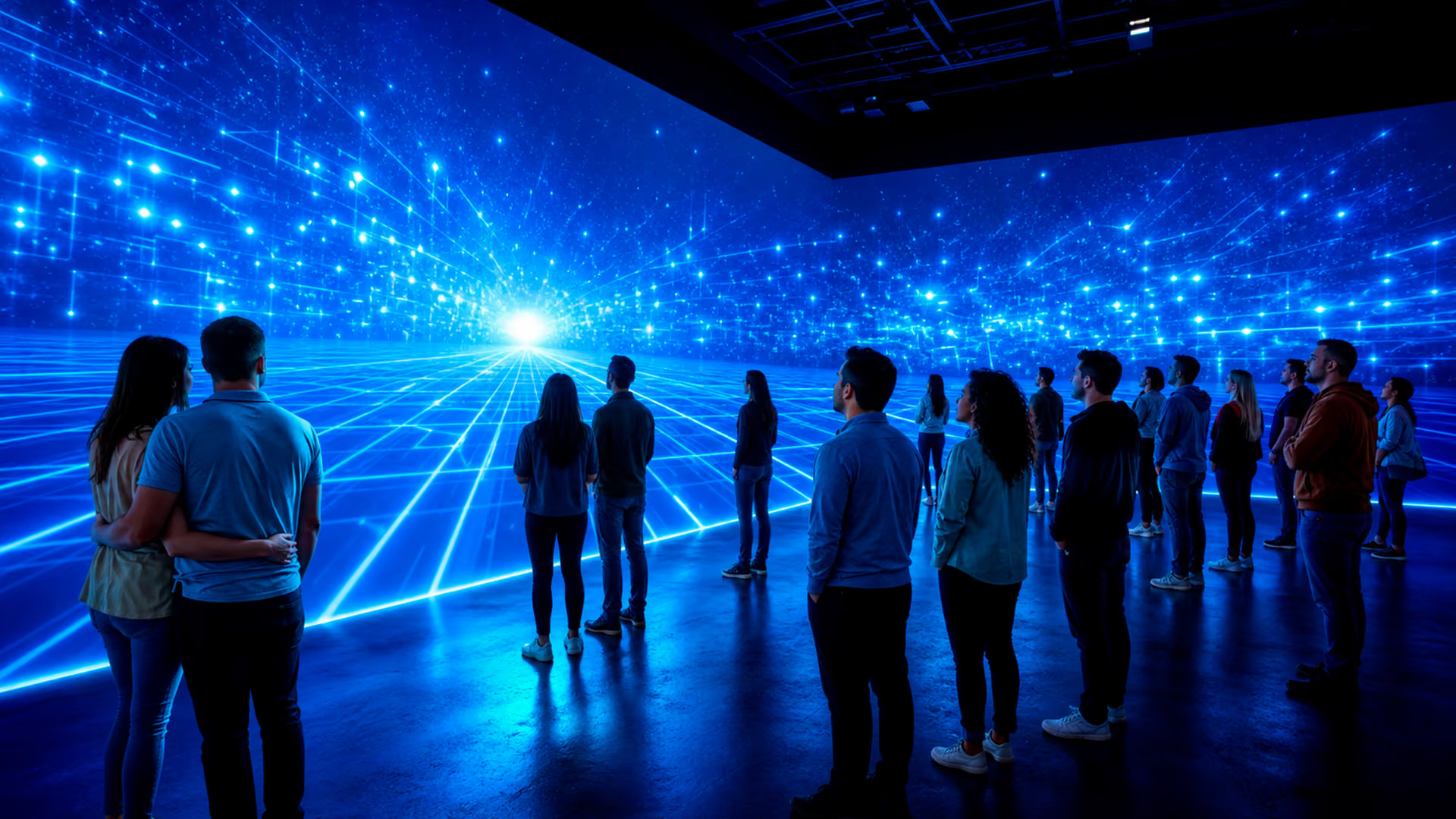
High-Throughput Immersive Experiences: Scaling the Magic for Thousands of People per Hour
The Promise of Mass Immersion: Why Are Brands Investing in High-Throughput Experiences?
In today’s marketing landscape, where consumer attention is increasingly scarce, brands are constantly searching for new ways to create meaningful and memorable connections.
Immersive experiences have emerged as a powerful tool capable of moving beyond traditional advertising and placing users directly inside brand narratives. However, both the real challenge and the greatest opportunity lie in designing these experiences to accommodate large audiences at high-profile events, mass activations, or permanent installations without compromising the fluidity of the visitor journey or the quality of the interaction.
Mass immersion is not simply a matter of volume. It is a strategy designed to amplify a brand’s impact through reach, participation, and shareability.
When an immersive experience successfully captivates a large number of participants in a fluid and uninterrupted way, digital word of mouth and social media amplification can increase significantly. Each participant becomes a potential brand ambassador, sharing their experience and extending the brand message far beyond the physical space of the activation.
Brands invest in high-throughput experiences because they understand that scale should not compromise the quality of the interaction.
An event where thousands of attendees experience a fluid and personalized immersive environment can generate a much deeper emotional response than a conventional advertising campaign. This connection can translate into stronger brand recall, greater loyalty, and, ultimately, a positive impact on business results.
The appeal of mass immersion lies in its ability to transform an event into an experience that is shareable, memorable, and aligned with the brand’s objectives.
By allowing a large audience to interact with a brand simultaneously within a multisensory environment, a sense of community and collective participation is created.
This is particularly valuable during product launches, festivals, or activations in high-traffic retail locations, where the objective is to generate an immediate and lasting impact on a broad and diverse audience.
However, designing high-throughput immersive experiences presents an inherent challenge: how can quality, personalization, and fluidity be maintained for each individual when thousands of people move through the same space within a short period?
Avoiding bottlenecks, managing interactions, and ensuring that every participant receives an optimal experience are essential to the success of these ambitious projects.
Flow-Centered Design: Key Principles for Avoiding Bottlenecks
The success of a high-throughput immersive experience does not depend exclusively on how spectacular it appears, but also on its ability to efficiently manage the movement of large numbers of people.
This requires meticulous design that anticipates and prevents bottlenecks, ensuring that every participant enjoys a fluid and frustration-free interaction.
Spatial planning is the first pillar of this process. Clear, one-directional routes, strategically positioned waiting areas, and clearly marked exits must be defined.
It is essential to think of the experience as a choreographed journey in which every station or interaction serves a specific purpose and has an optimized duration.
Intuitive signage plays a crucial role in this process.
Beyond simply indicating directions, effective signage subtly guides users by informing them about waiting times, the duration of each interaction, and the next step in their journey.
This reduces uncertainty and the need to stop and ask questions, helping maintain a constant flow.
Visual and auditory elements can become powerful allies, creating a guiding thread that leads participants through the space almost unconsciously.
Another critical consideration is the optimal duration of each interaction.
When an experience is too long, people begin to accumulate. When it is too short, it can feel superficial.
The ideal balance lies in offering concise, high-impact moments that allow for rapid participant rotation.
For example, in an interactive floor such as the one developed by Cinetica Studio for Coca-Cola, where generative graphics reacted to movement in real time, the dynamic and temporary nature of the interaction allowed multiple people to enjoy the effect without interrupting the overall flow.
The key is to design interactions that are completed within a predefined period, preventing users from remaining stationary for too long.
Finally, the strategic distribution of points of interest is essential.
Instead of concentrating every attraction in one location, distributing them throughout the journey helps spread the audience more evenly.
This may include pre-show areas, secondary activations, or photography opportunities that temporarily redirect smaller groups and reduce pressure on the primary interactions.
The goal is to create an ecosystem where movement remains constant and the experience feels personalized, even within a high-volume environment.
Enabling Technologies: The Infrastructure Behind a Fluid Experience
An immersive experience’s ability to manage a high number of participants without sacrificing quality or fluidity depends directly on a robust and properly integrated technological infrastructure.
It is not simply about projecting striking images, but about building an ecosystem where every interaction is processed in real time and dynamically adapted to the movement of the audience.
At the heart of these experiences are people-detection and tracking systems.
Technologies such as LiDAR, which uses light pulses to measure distances and create 3D maps of the environment, and computer vision, which analyzes images and videos to identify and track objects or individuals, are fundamental.
These systems allow the installation to understand how many people are present, where they are located, and how they are moving. This information is crucial for adapting content and preventing overcrowding.
Real-time generative content platforms are another essential pillar.
Unlike pre-rendered content, these platforms create and modify visuals and sound as the experience unfolds, reacting to user interactions.
This not only personalizes the experience for each participant or group, but also provides exceptional flexibility to adjust the complexity or duration of the interaction according to visitor flow.
Tools such as TouchDesigner are key in this area, allowing studios such as Cinetica Studio to develop complex visual and interactive experiences that respond in real time.
Robust hardware provides the foundation for all of this technology.
High-performance servers, high-brightness projectors, high-resolution LED screens, and spatial audio systems are all critical components.
The selection and configuration of this hardware must be optimized for the expected workload, reducing perceptible latency and minimizing the risk of failures that could interrupt the immersion or create bottlenecks.
A hardware failure within a high-throughput experience can bring thousands of people to a standstill, emphasizing the importance of redundancy and reliability.
Finally, efficient communication networks act as the nervous system of any high-throughput experience.
Low-latency, high-bandwidth connectivity is essential for transmitting sensor data to processing platforms and sending generative content to output devices without delays.
This is particularly important in installations where multiple technological components must remain perfectly synchronized.
A practical example of how these technologies come together to create a high-throughput experience is the interactive floor developed by Cinetica Studio for Coca-Cola.
TouchDesigner was used to develop the visual experience, while MediaPipe enabled real-time detection and tracking of people through webcams.
Computer vision analyzed the presence, approximate position, and movement of users within the camera frame, allowing the real-time generative floor graphics to change dynamically according to the movement and number of people detected.
This approach ensured that, despite the constant movement of participants, the experience remained fluid, immersive, and responsive for each individual.
It demonstrated the effectiveness of a properly designed technological infrastructure for managing high visitor flow.
Scalable Interactivity: Engagement Without Saturation
The true magic of a high-throughput immersive experience lies in its ability to provide meaningful interactions for every participant, even when thousands of people are moving through the space.
The challenge is to create deep engagement without producing saturation or bottlenecks.
This can be achieved through customizable experiences, intelligent gamification, and interfaces that are intuitive enough to minimize waiting times while maximizing simultaneous participation.
Personalization is essential.
In a high-throughput environment, the objective is not necessarily to create a completely unique experience for every individual, but rather to offer pathways or outcomes that adapt to the user’s actions or decisions.
This may involve selecting an avatar, answering a question, or influencing the development of a visual narrative.
When participants feel that their actions have an impact, they become more deeply engaged, transforming passive observation into active participation.
Game mechanics such as points, challenges, rewards, or leaderboards can motivate participation and transform a simple activation into an entertaining shared experience.
However, within high-throughput environments, these mechanics must be fluid and easy to understand.
The rules should be immediately clear, allowing users to participate without a complicated learning curve or unnecessary delays.
Intuitive interfaces are the foundation of scalable interactivity.
This involves using technologies that do not require direct contact or that allow multiple simultaneous interactions.
Motion sensors, large-format touchscreens, gesture recognition, or interactions through personal mobile devices can all facilitate mass participation.
The objective is for the technology to disappear into the background, allowing users to focus on the experience rather than on how to operate it.
An example of how Cinetica Studio has approached scalable interactivity can be seen in the projects developed for Nestlé NAN.
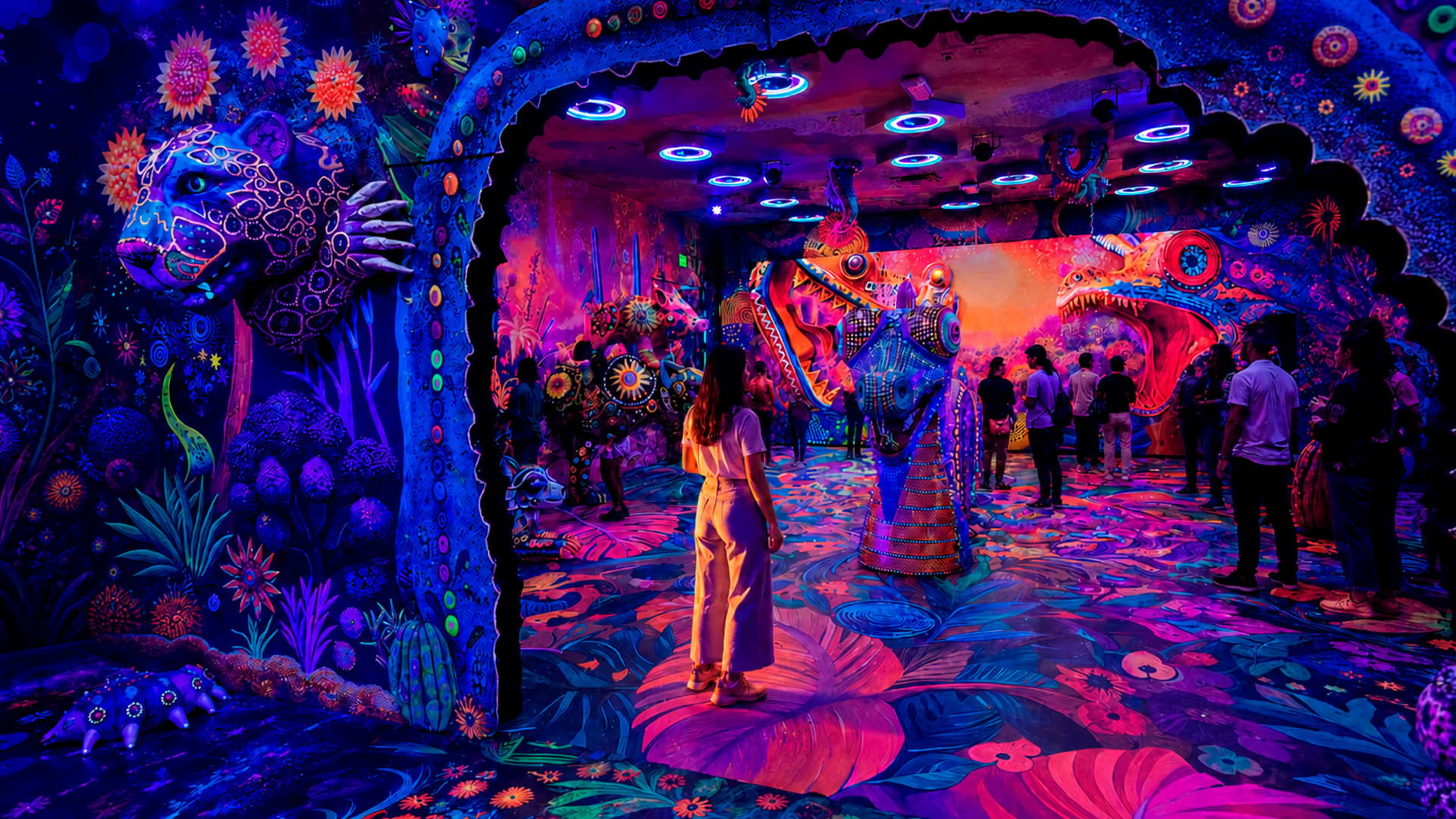
In the “Secrets of the Microbiota” experience, interactive games were created across touchscreens, floors, and immersive walls.
These systems allowed multiple children to interact simultaneously, whether they were searching for hidden microbiota on a touchscreen or participating in balance challenges on an interactive floor.
Detection technology such as LiDAR was used for the interactive wall, interpreting contact or proximity points and transmitting the data to Unity in real time to generate an immediate visual response.
This approach made it possible to manage the participation of numerous users without making the experience feel overcrowded, maintaining both energy and enjoyment for everyone.
The Role of Real-Time Generative Content and AI
Within high-throughput immersive experiences, real-time generative content and artificial intelligence can be valuable tools when they provide adaptability, content variation, or automation without compromising stability, creative control, or operational reliability.
Their main value lies in their ability to dynamically adapt the experience to the presence and actions of individual users or groups without requiring constant manual intervention.
This is essential for maintaining novelty and interest while avoiding the repetition that can occur in a high-volume environment.
Generative content enables every interaction to feel different.
Instead of presenting a predefined sequence, the system can create visual, auditory, or narrative elements as the experience unfolds, responding to detectable variables such as movement, location, presence, interaction speed, or user decisions.
This large-scale personalization is what transforms a simple activation into a truly memorable and shareable experience, even when thousands of people move through the same space within a short period.
Artificial intelligence can further enhance this generative capability.
Machine-learning algorithms can analyze interaction patterns, optimize system responses, and, in the case of generative AI, create entirely new content—including images, sounds, or text—that integrates fluidly into the experience.
This can increase the level of variation and immersion, but it requires clear rules, curation, quality testing, and creative limits to prevent inconsistent or off-brand results.
Cinetica Studio has integrated these capabilities into projects requiring a high degree of adaptability.
For example, in the development of an interactive floor for Coca-Cola, TouchDesigner was used to generate real-time graphics that reacted to the movement and number of people passing through a tunnel.
Through computer vision and MediaPipe, the system detected and tracked each user, allowing the floor visuals to follow their route and respond in a fluid and immersive way.
Despite the constant flow of visitors, this approach enabled the system to produce visual variations that reacted to detected movement while reducing friction within the interaction.
The implementation of these technologies not only enriches the user experience, but also optimizes resources.
Automating the generation and adaptation of content reduces the operational workload and helps maintain consistent quality, even during peak visitor periods.
This is key to making a high-throughput immersive experience not only possible, but also exceptional and sustainable.
Success Stories: When High Visitor Flow Meets Immersion
The theory behind high-throughput design comes to life in projects that successfully combine technological innovation with carefully managed user experiences.
At Cinetica Studio, we have had the opportunity to apply these principles in large-scale activations, demonstrating that it is possible to offer memorable interactions to thousands of people per hour without compromising quality or generating friction.
A clear example of how technology can optimize both flow and interactivity is the interactive floor developed for Coca-Cola.
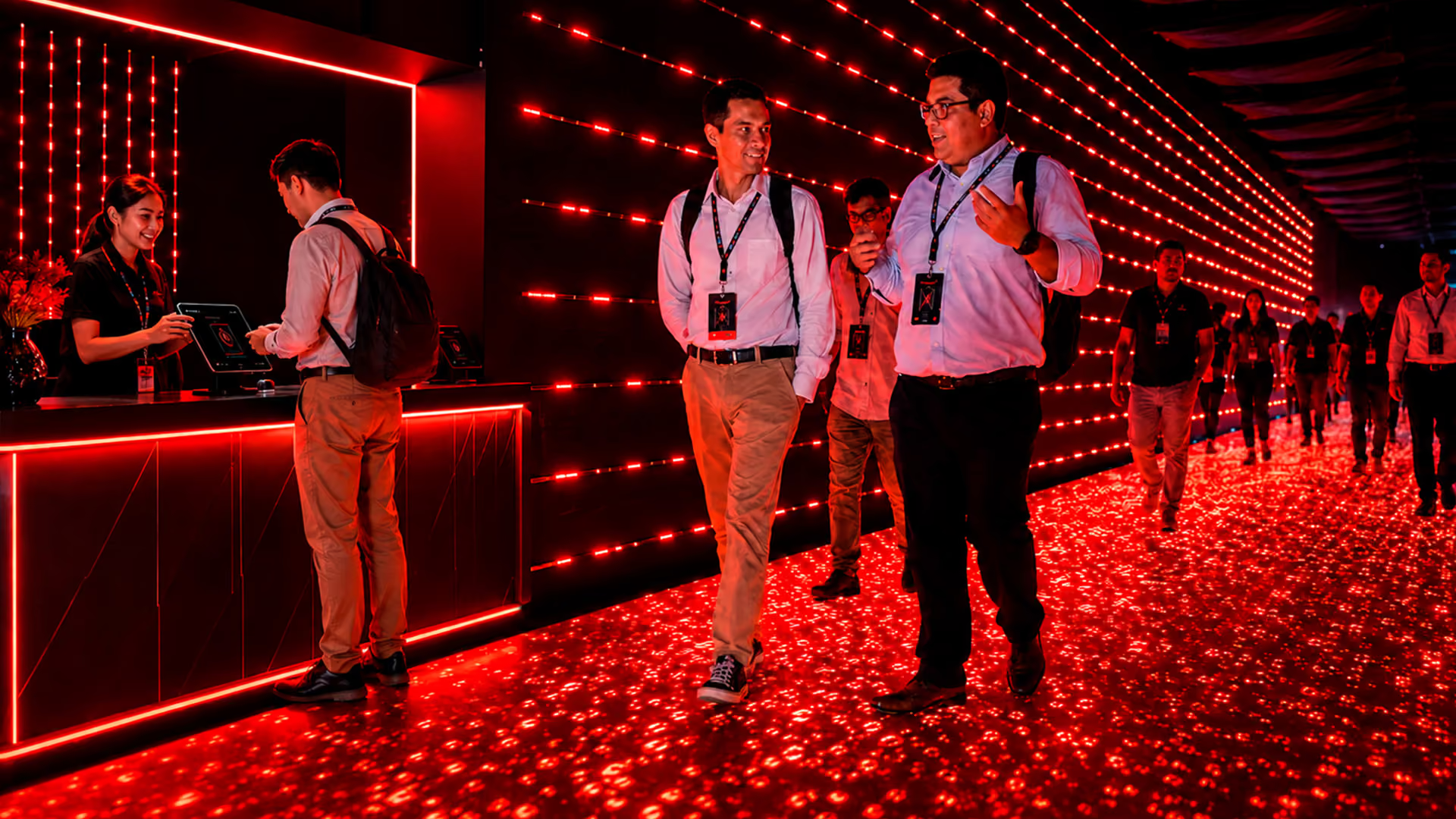
The objective was to create a dynamic visual experience inside a tunnel, where graphics reacted to participants’ movements in real time.
TouchDesigner was used for the visual and interactive development, while MediaPipe enabled person detection and tracking.
Through webcams and computer-vision algorithms, the system identified the position and movement of each user, allowing the floor visuals to change fluidly and immersively.
This implementation not only generated a powerful immersive effect, but also managed the continuous movement of visitors, transforming the tunnel into a digital canvas that responded to each individual without interruptions or bottlenecks.
Another example of scalable interactivity is the karaoke booth created for Amazon Music during a football match.
The experience was designed so that attendees could enter the booth, select a song, and sing while the software recorded the best 20 seconds of their performance.
At the end of the interaction, each participant received a QR code that allowed them to download and share their video.
To manage the high volume of fans, the solution used Unity for the development and control of the experience, with real-time video and audio capture.
Firebase and/or cloud services managed the storage and administration of the videos, while personalized QR codes gave each user direct access to their content.
This strategy not only delivered an entertaining and personalized interaction, but also optimized participant flow, allowing a large number of people to enjoy the activation consecutively without excessive waiting times.
These projects demonstrate that, with careful planning and the appropriate selection of technologies, high-throughput immersive experiences can be both spectacular and efficient, transforming mass interaction into a unique moment for every participant.
Measurement and Optimization: Iterating Toward the Perfect Flow
Regardless of how innovative its concept or robust its technology may be, a high-throughput immersive experience cannot reach its full potential without an ongoing process of measurement and optimization.
Collecting data and analyzing user behavior are essential for identifying and correcting bottlenecks, ensuring that the activation achieves its engagement and capacity objectives.
The key metrics in this context go beyond total attendance.
It is essential to monitor the average amount of time spent in each interactive area, the interaction rate with key elements of the experience, and, of course, the number of people moving through the installation per hour.
This data, collected through sensors, computer-vision cameras, and tracking systems, provides a detailed understanding of how participants move, interact, and respond to the experience.
For high-throughput installations, it is advisable to define both operational and participation metrics, including dwell time, interaction rate, number of users served, waiting times, and points where users abandon the journey.
For example, when the analysis reveals that users spend a disproportionately short amount of time in a particular section or that crowds begin to form around a specific interaction, this signals an area that requires improvement.
The interface may not be intuitive, the content may not be sufficiently engaging, or the technological capacity of that area may be overwhelmed.
The information collected makes it possible to refine the spatial design, adjust the interactive narrative, or modify technical parameters in future iterations.
At Cinetica Studio, the post-production phase of an activation does not end when the installation is dismantled.
Projects such as the interactive floor developed for Coca-Cola, which used TouchDesigner, MediaPipe, and computer vision for person tracking, generated valuable data about how users moved and responded to real-time generative graphics.
This type of information is essential for understanding which visual elements or interaction patterns are the most effective at maintaining visitor flow and engagement.
Similarly, in the Amazon Music karaoke experience, where the best 20 seconds of each participant’s performance were recorded, analyzing the number of videos generated, waiting times, and the ease of downloading content through QR codes provided direct metrics regarding the efficiency of the system and user satisfaction.
These insights provide the foundation for adjusting the experience logic, optimizing processing times, and improving usability in future implementations.
Data-driven iteration is what transforms a good experience into an exceptional and scalable one.
The Future of High-Throughput Immersive Experiences: Trends and Challenges
The future of high-throughput immersive experiences is being shaped by innovations that promise to elevate mass interaction to unprecedented levels.
Technological developments driven by extended reality, artificial intelligence, and spatial computing are redefining what is possible in environments containing thousands of people.
The key will lie in the ability of these experiences to seamlessly combine the physical and digital worlds, provide personalization at scale, and preserve the magic of immersion.
One of the clearest trends is the increasingly deep integration of augmented reality and mixed reality into physical environments.
This will allow layers of information and interactive content to be superimposed onto the real world, transforming any environment into a dynamic canvas.
Imagine activations where participants use personal devices or smart glasses to perceive virtual elements that respond to their presence and the presence of others, creating a narrative that is simultaneously collective and personal.
Spatial computing, which maps and understands the physical environment in real time, will be essential for making these interactions accurate and convincing while preventing synchronization errors that could disrupt the immersion.
Personalization at scale is another major pillar of the future.
Through AI algorithms and more sophisticated detection systems, experiences will be able to dynamically adapt to observable variables such as visitor flow, location, movement, interaction decisions, or aggregated behavioral patterns.
This does not mean creating a completely unique experience for every person, but rather offering subtle variations or specific interaction points that resonate with different audience segments without compromising the overall flow.
Generative AI will play an important role by creating real-time visual, auditory, or narrative content that responds to detected preferences.
However, these developments are not without challenges.
Network infrastructure will need to be sufficiently robust to manage the enormous amounts of data generated by interconnected experiences.
User-data privacy, particularly when biometrics and movement tracking are involved, will become a central concern requiring ethical and transparent solutions.
Furthermore, interface and interaction design must be intuitive and accessible to everyone, regardless of their familiarity with technology, to prevent digital exclusion and ensure that the experience is genuinely inclusive.
The future may also bring greater convergence between in-person immersive experiences and persistent digital or virtual platforms.
This is not limited to virtual environments, but extends to the creation of ecosystems where physical and digital interactions become interconnected.
Brands will look to create bridges between real-world activations and their presence on virtual platforms, allowing the experience to continue and expand beyond the physical event.
This will require strategic planning that considers interoperability and brand consistency across multiple physical and virtual touchpoints.
Ultimately, the success of high-throughput immersive experiences will depend on their ability to balance technological innovation with a deep understanding of human behavior.
It is not simply about demonstrating what technology can do, but about determining how that technology can amplify emotion, connection, and memory within a mass environment.
Studios such as Cinetica Studio, which combine creativity with technical rigor, will play a fundamental role in navigating these challenges and building the memorable experiences of tomorrow.
Conclusion: Mass Immersion as a High-Impact Brand Strategy
High-throughput immersive experiences represent one of the highest expressions of creative technology applied to marketing.
They are not simply spectacles, but complex ecosystems designed to manage the interactions of thousands of people per hour, transforming logistics into an integral part of the magic.
From meticulous spatial planning and flow-centered design to the implementation of detection and tracking technologies, real-time generative content, and artificial intelligence, every element is orchestrated to deliver a fluid, personalized, and memorable experience at scale.
At Cinetica Studio, we have found that the key to success lies in combining creativity with robust engineering.
Projects such as the interactive floor developed for Coca-Cola and the karaoke booth created for Amazon Music demonstrate that it is possible not only to captivate large audiences, but also to optimize their journey and engagement, transforming every participant into a potential brand ambassador.
Continuous measurement and optimization, based on concrete data, allow us to refine these experiences and ensure that each iteration becomes more efficient and effective.
The future of mass immersion is promising, with extended reality, spatial computing, and generative AI opening new possibilities for personalization at scale and the convergence of the physical and digital worlds.
However, challenges related to infrastructure, privacy, and accessibility will require an ethical approach and continuous innovation.
Brands that invest in these experiences will not only generate an immediate impact, but also build lasting connections and deeper loyalty within an increasingly competitive market.
At Cinetica Studio, we design high-throughput immersive experiences that combine creativity, engineering, and operations to help brands connect with large audiences in ways that are clear, memorable, and measurable.
Frequently Asked Questions About High-Throughput Immersive Experiences
What is a high-throughput immersive experience?
A high-throughput immersive experience is a brand activation or installation designed to captivate and manage the interaction of thousands of people per hour in a fluid and uninterrupted way.
It combines creative technology, spatial design, and dynamic content to provide large audiences with a memorable and personalized experience.
Why do brands invest in high-throughput experiences?
Brands invest in these experiences to generate mass impact, amplify their message through social sharing and word of mouth, and create deep emotional connections with large audiences.
They can transform events into cultural moments that increase brand recall and loyalty.
Which technologies are essential for managing high visitor flow?
Key technologies include people-detection and tracking systems such as LiDAR and computer vision, real-time generative content platforms such as TouchDesigner, robust hardware including servers, projectors, and LED screens, and low-latency communication networks.
Generative AI can also play an important role in supporting personalization at scale.
How can bottlenecks be avoided in a high-throughput experience?
Bottlenecks can be avoided through meticulous spatial design with clear routes, intuitive signage, optimized interaction durations, and the strategic distribution of points of interest.
The objective is to maintain a constant flow of participants while minimizing waiting times and frustration.
How is the success of a high-throughput immersive experience measured?
Success can be measured through metrics such as average dwell time, interaction rates with key elements, the number of people moving through the installation per hour, and social media amplification.
Analyzing this data makes it possible to continuously optimize the experience and maximize both engagement and capacity.
Interested in creating a high-throughput immersive experience for your brand?
Contact Cinetica Studio to explore how we can transform your vision into a powerful reality. You can also view our immersive-experience portfolio for inspiration.
Featured in
Our work has been recognized by leading industry publications covering creativity, technology, and innovation.
Discover interviews, features, and articles that highlight our projects and perspective.


You may also like
Ready to create something extraordinary?
From concept to execution, we design experiences that connect people, technology, and storytelling in unforgettable ways.