Blog Post
Beyond Viral: Designing FOOH for a 360 Campaign with Reusable Assets
The Evolution of FOOH: From Viral Sensation to Strategic Campaign Pillar
Fake Out-Of-Home (FOOH) burst onto the marketing scene as a viral phenomenon, capturing global attention with its ability to transform the ordinary into the extraordinary through hyperrealistic 3D illusions projected onto public spaces. Initially, many brands adopted it as a one-off impact tactic, seeking to generate visual shock and rapid social media dissemination. The novelty and ingenuity of seeing giant objects or fantastical scenes interacting with urban architecture made it a magnet for digital conversation.
However, what began as an ephemeral trend has rapidly matured, positioning itself as a fundamental strategic pillar in integrated marketing campaigns. The most visionary brands have understood that FOOH is not just a visual trick, but a powerful narrative tool capable of extending a campaign's lifespan far beyond its initial impact. This evolution implies a shift in mindset: from thinking of FOOH as isolated content to conceiving it as the epicenter of an ecosystem of reusable 3D assets.
The key to this transformation lies in the ability of 3D elements created for FOOH to transcend their original purpose. A 3D model of a product floating above a building, for example, should not exist solely for that video. With proper planning from the design phase, that same asset can be the basis for augmented reality (AR) activations, interactive web experiences, e-commerce product visualizations, or even elements for virtual productions in an LED Volume. This long-term vision maximizes creative and technological investment, ensuring that every digital component contributes to a cohesive, multi-platform brand narrative.
At Cinética Studio, we have observed how this strategic approach not only amplifies campaign reach but also optimizes resources. By designing 3D assets with reusability in mind, brands can build a bank of high-quality visual elements that maintain aesthetic and technical consistency across various touchpoints. This not only reduces long-term costs but also accelerates production times for future adaptations and campaign extensions, solidifying the brand's presence in the consumer's mind through immersive and memorable experiences.
The Reuse Challenge: Why 3D Assets Often Remain in a Single Format
The promise of FOOH is undeniable: generating visual impact with high viral potential. However, behind every successful campaign lies a 3D asset creation process that, all too often, is conceived for a single purpose. The result is that these valuable digital assets, which involve a significant investment of time and resources, end up being underutilized, confined to the original video piece, and missing the opportunity to amplify the brand message across other channels.
One of the main reasons for this limitation lies in the lack of comprehensive strategic planning from the initial stages of the project. When the design of a FOOH focuses exclusively on the final video delivery, 3D assets are modeled, textured, and lit with very specific parameters for that format and context. This can include optimizations for fixed camera angles, determined resolutions, or particular lighting conditions that, while perfect for the original video, are inadequate or require costly rework for other uses, such as a high-resolution static image for press, an interactive element for an AR experience, or an object for a social media activation.
Another crucial factor is the choice of formats and software. While 3D animation tools like Blender, Maya, or Cinema 4D are powerful, the way models and animations are exported can restrict their versatility. An asset optimized for a video render may not be suitable for a real-time augmented reality environment, which demands lighter models and efficient textures. The lack of an interoperability standard or the absence of foresight for different rendering engines or interactive platforms condemns these assets to singular use. For example, a 3D model created for anamorphic animation on giant LED screens, such as those Cinética Studio has developed for brands like Tecate, requires a very specific forced perspective setup that is not directly transferable to an Instagram filter without considerable adaptation.
Technical limitations also play an important role. 3D assets can contain a large number of polygons, high-resolution textures, complex particle systems, or physical simulations that are computationally demanding. If their scalability is not planned, adapting these elements for platforms with lower processing capacity (such as mobile devices for AR) or for fast web loading times becomes a technical and economic challenge. The initial investment in creating a high-quality 3D asset for a FOOH is considerable; failing to leverage its reuse potential is, in essence, leaving money on the table and limiting the campaign's reach and resonance.
Modular and Scalable Design: The Key to Versatile 3D Assets
The true magic of extending the lifespan of a FOOH's 3D assets lies in a modular and scalable design approach from the earliest stages of the project. This means conceiving each 3D element not as a unique piece for a single video, but as an adaptable component that can be reconfigured, animated, and rendered in multiple contexts and formats. Modularity refers to the ability to break down a complex model into smaller, independent parts that can be assembled or disassembled as needed. Scalability, for its part, ensures that these assets maintain their quality and functionality when adapted to different resolutions, platforms, or levels of detail.
To achieve this, creative technology studios like Cinética Studio adopt methodologies that prioritize versatility. This begins with conceptualization, where the 3D asset is envisioned not only in its final form for the main FOOH but also in its possible iterations for other media. The team considers how a 3D object can be isolated, rotated, scaled, or animated differently for an Instagram story, an interactive banner, an augmented reality experience, or even a physical installation.
A fundamental principle is the creation of 3D models with clean and optimized topology. This means that the model's geometry must be efficient, with an adequate number of polygons that allows for both high-quality rendering for the FOOH and possible simplification for platforms requiring fewer resources, such as WebAR. Textures and materials are also designed non-destructively, using high-resolution texture maps that can be easily adjusted or replaced, and shading systems that adapt to different lighting environments.
Animation is another critical component. Instead of creating monolithic animations, layered or cyclical animations that can be combined and reordered are favored. For example, the animation of a floating object can be a repeating cycle, while a specific interaction (such as an explosion or a transformation) can be a separate animation triggered at key moments. This allows creative teams to "mix and match" animations to generate new sequences without having to redo work from scratch.
Finally, standardization in file naming, scene organization, and the use of asset libraries are essential practices. A well-named and categorized asset, with its associated materials and animations, is much easier to find, adapt, and reuse by different team members or in future projects. This discipline in the production pipeline is what transforms a 3D asset from a single-use element into a strategic campaign tool with lasting value.
Optimized Workflow: Integrating Reusability from Pre-production
The key to maximizing the value of a FOOH's 3D assets lies not solely in technology or individual talent, but in a workflow that integrates the vision of reusability from the earliest pre-production phase. This implies a paradigm shift: instead of thinking of a 3D asset as a single-use element for a specific video, it is conceived as a versatile component that can adapt to multiple formats and platforms throughout a campaign.
This approach begins with conceptualization. From the very first brief, the creative team must consider not only how the final FOOH will look, but also how its constituent 3D elements could function in a static image for social media, an augmented reality filter, an interactive experience, or even a physical installation. This holistic vision requires the early involvement of a multidisciplinary team that includes 3D designers, animators, visual effects specialists, AR/VR developers, and marketing strategists. Their collaboration ensures that design and production decisions are made with scalability in mind.
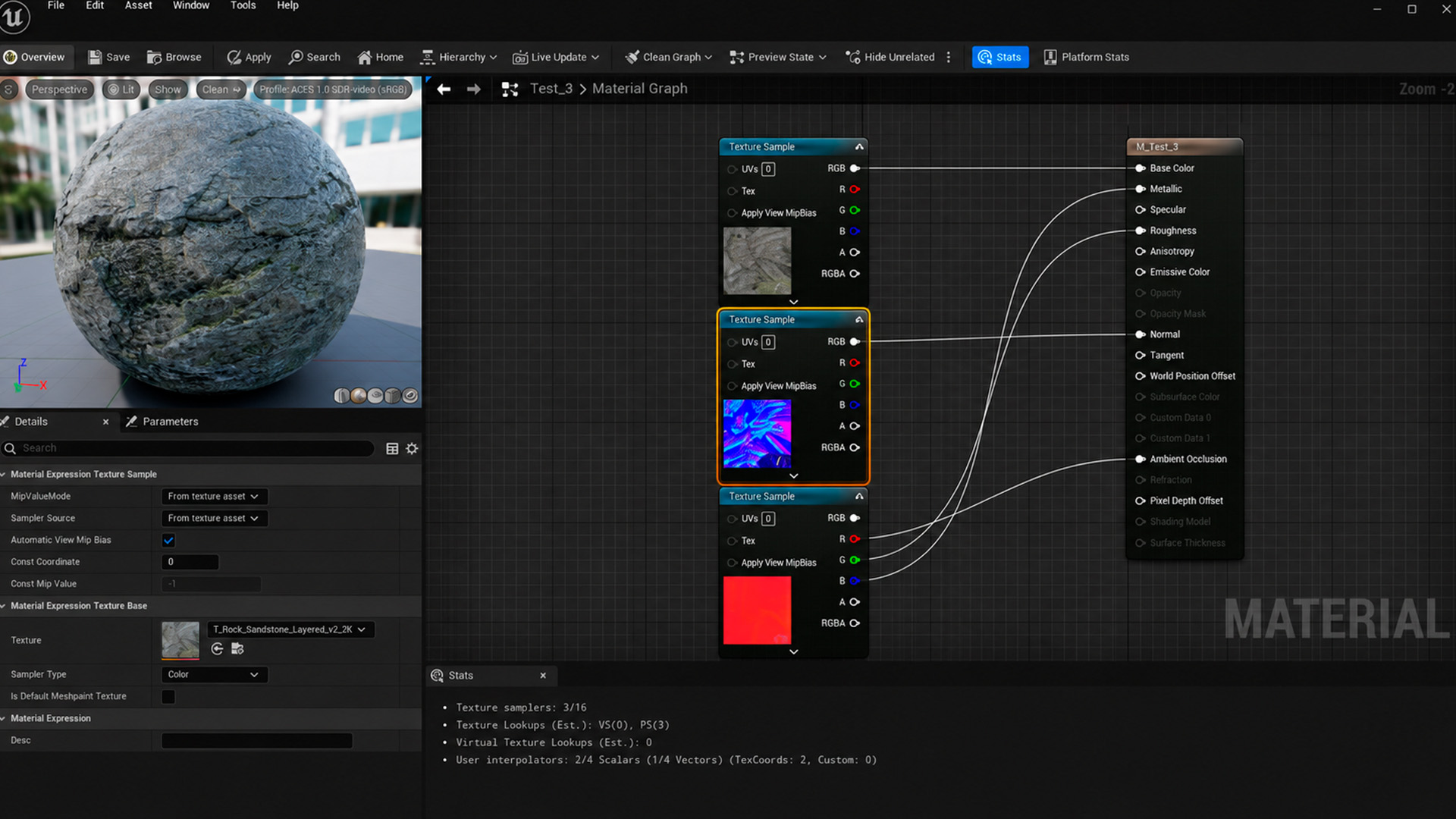
During 3D modeling, the focus is on optimization. This means creating models with clean and efficient topology that can be easily simplified for real-time environments (such as AR or web experiences) or detailed for high-resolution renders. Texturing and lighting are also approached with a modular focus. PBR (Physically Based Rendering) materials are used to ensure a consistent appearance under different lighting conditions and across various render engines, facilitating their adaptation to diverse visual contexts without the need to redo work from scratch. For example, if a giant soda bottle is created for a FOOH, it is modeled and textured in such a way that it can be rendered photorealistically for the main video, but also easily exported for an Instagram filter or a visual for an interactive landing page.
Animation, for its part, is planned in layers. Instead of monolithic animation, motion sequences are created that can be deconstructed and reassembled. A complex movement of a 3D object can be divided into shorter, reusable animations, such as a spin, an explosion, or a transformation. This allows the same animated assets to adapt to different durations and purposes, from a short loop for an animated GIF to an extended sequence for a commercial. This process not only saves significant time and resources in later stages but also ensures visual and brand consistency across all campaign touchpoints.
Beyond Video: Where Your FOOH 3D Assets Can Live
Once FOOH 3D assets have been created with a modular and scalable approach, their potential extends far beyond the original video. The inherent versatility of these digital models allows them to come alive in a multitude of formats and channels, amplifying the campaign's message and extending its reach in innovative ways. Thinking about this reuse from the outset is what transforms a FOOH from a one-hit wonder into a central component of a 360-degree marketing strategy.
One of the most natural destinations for these assets is Augmented Reality (AR). A 3D object floating on a virtual building can, with appropriate adaptations, appear in the real world through a smartphone camera. This opens the door to Instagram or TikTok filters, WebAR experiences that don't require app downloads, or even in-store activations where users can interact with the campaign's 3D element. Imagine a giant product that appeared in a FOOH, now available to be virtually placed in a consumer's living room, or for them to pose next to it in a shareable photo.
Virtual Reality (VR) is another fertile ecosystem. 3D assets can be integrated into complete immersive experiences, from promotional games to virtual environments where users explore a brand world. If the FOOH featured an iconic character or object, it can become the protagonist of an interactive VR narrative, offering a deeper and more memorable connection with the audience. This is especially relevant for brands looking to create long-lasting brand experiences or for specific events.
But reuse is not limited to digital and immersive formats. High-quality 3D assets can be rendered for large-format prints, such as physical billboards, posters, or in-store POP materials. By having the 3D model with defined textures and materials, static images can be generated from any angle and with any lighting, ensuring perfect visual consistency with the digital campaign. This represents significant savings in product photography or creating images from scratch.
In the realm of social media, beyond AR filters, 3D assets can be animated in short formats for stories, reels, or shorts, creating dynamic and engaging content that maintains the aesthetic of the main campaign. They can also be the basis for animated GIFs or stickers that users can share, encouraging interaction and organic virality. The key is to adapt the asset to the technical and narrative specifications of each platform.
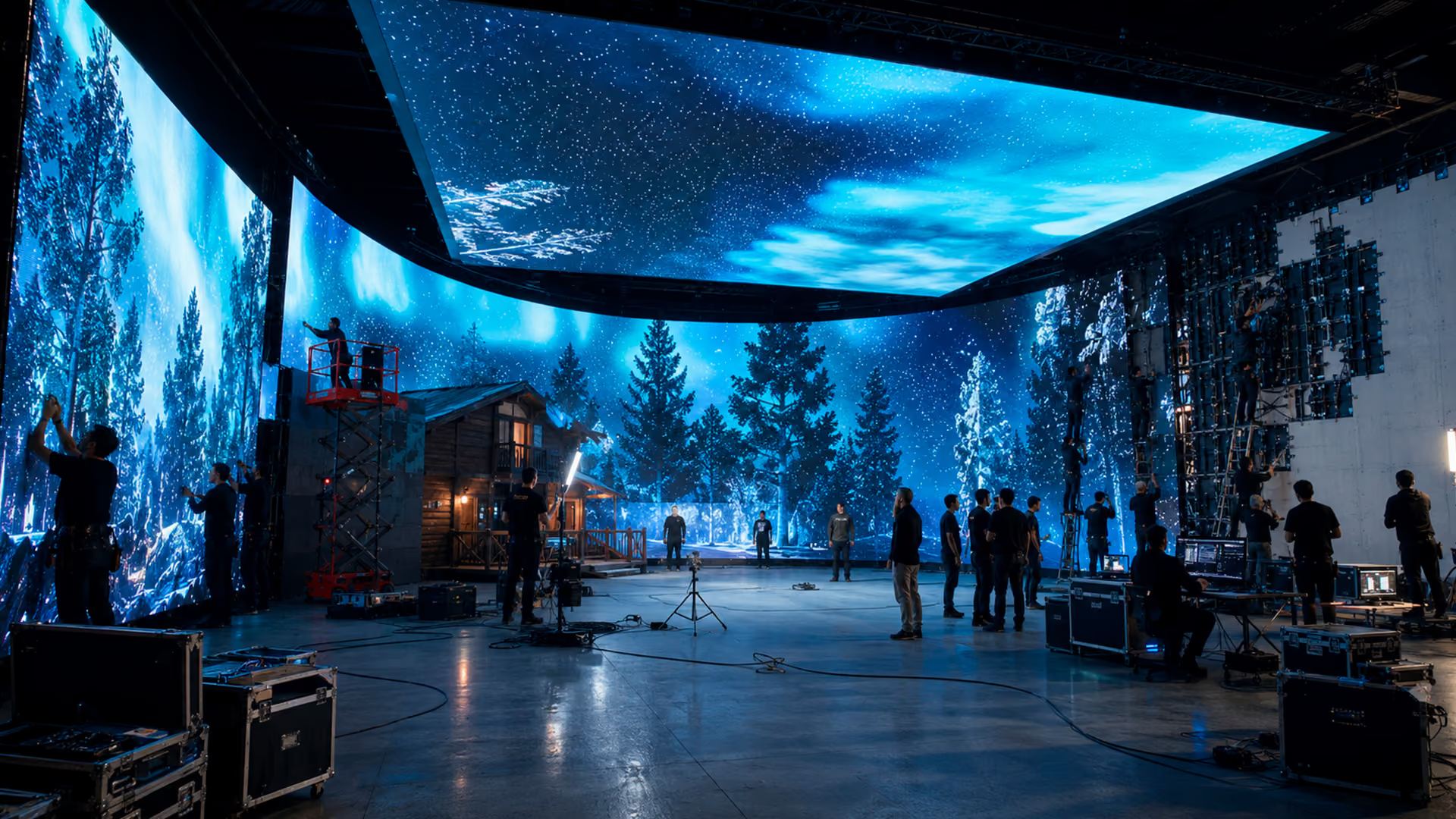
Finally, virtual production offers a powerful synergy. If a FOOH features a vehicle or a product, that same 3D model can be imported into an LED Volume for a photoshoot or a commercial, interacting with real talent in a dynamic environment. This allows brands to maintain visual and design consistency across all their communications, from the initial viral impact to more traditional advertising, optimizing resources and production times.
Technology and Tools: Facilitating 3D Asset Adaptability
The ability to reuse 3D assets from a FOOH across multiple formats and platforms is not just a matter of strategic planning, but also of selecting and mastering the right technological tools. The 3D software ecosystem has evolved to offer solutions that enable the creation of versatile models, optimized for different uses and with the necessary flexibility to adapt to new demands. From initial modeling to final rendering and integration into interactive experiences, each stage of the process benefits from specific tools that facilitate adaptability.
At the heart of creating reusable 3D assets are 3D modeling and animation programs. Tools like Blender, Maya, or Cinema 4D offer robust capabilities for building clean geometries, applying PBR (Physically Based Rendering) textures, and animating objects with rigging and deformers that can be easily exported and reoriented. The key here is parametric design and modularity: creating components that can be assembled, disassembled, and modified without losing quality or visual coherence. For example, a 3D object designed for a FOOH can have separate parts that animate independently, allowing only a section to be reused in an augmented reality experience or an interactive banner.
Rendering engines are equally crucial. Engines like OctaneRender, Redshift, or V-Ray, integrated into 3D software, allow for the generation of high-quality images and animations with precise control over lighting, materials, and visual effects. The ability to render separate passes (such as depth, normals, occlusions) is fundamental for post-production and compositing, allowing assets to be adjusted in different environments without having to render the entire scene from scratch. This streamlines the adaptation process and ensures that the asset maintains its visual fidelity in any context.
For integration into interactive experiences, game engines like Unity and Unreal Engine are indispensable. These platforms not only allow the import of optimized 3D assets but also offer environments for developing augmented reality (AR), virtual reality (VR), and interactive web experiences. Unity's capability for interactive experience development was key in projects like Amazon Music's Karaoke, where it was used to develop and control the experience, enabling video and audio capture, and the generation of personalized content for each participant. Similarly, for NESTLE - NAN's interactive activations, Unity was fundamental in the development of interactive video games for touchscreens and immersive walls, demonstrating its versatility in integrating 3D assets into dynamic and multi-sensory experiences.
Interoperability between software is another critical factor. File formats like FBX, OBJ, or glTF are industry standards that facilitate the exchange of 3D assets between different programs and platforms, ensuring that a model created in one software can be imported and used in another without compatibility issues. Furthermore, mesh and texture optimization tools are essential for adapting high-resolution assets (created for photorealistic rendering) to real-time environments, where performance is key. This includes retopology, the generation of LODs (Levels of Detail), and texture compression, processes that ensure the asset looks good and performs efficiently in any application.
Cinética Studio Success Stories: 3D Asset Reutilization in Action
At Cinética Studio, the vision of 3D asset reutilization isn't just a theory; it's a fundamental practice we apply to every project to maximize impact and ROI for our clients. We understand that a well-designed 3D asset is an investment that should generate value across multiple touchpoints of a campaign. Below, we explore how we've implemented this strategy in real projects, demonstrating the versatility and reach achievable when 3D assets are conceived with a 360-degree perspective.
A clear example of this philosophy is seen in the anamorphic 3D content project we developed for Tecate. The initial goal was to create an illusion of depth and scale impossible to see with the naked eye, designed to make an impact on giant L-shaped LED screens. To achieve this, we used Blender for the creation of anamorphic animations, assets, lighting, and texturing, along with precise mapping for the LED screens. The key here was the modular and high-fidelity conception of the 3D assets, which allowed these elements, once generated, to be adapted for other campaign formats. Although the primary focus was anamorphic projection, the quality and structure of the 3D models facilitated their subsequent integration into digital communication pieces, social media activations, or even printed materials, maintaining visual coherence and brand impact across different channels. The investment in creating these 3D assets was not limited to a single event but extended throughout Tecate's marketing strategy, amplifying its message and presence.
Another case illustrating the power of 3D asset reutilization is the development of animated content for NESTLE - NAN, specifically for the "Nan - Formula Perfecta" project. In this project, the creation of 3D animations related to the product's formula was done using Blender. These assets, which visually and attractively explained the key ingredients and exclusive technologies of the formula, were designed to be versatile from the outset. Although initially deployed via TouchDesigner for interactive content and sensory stations, the nature of the 3D assets allowed for their adaptation to other purposes. For example, the same models and animations could be used in explanatory videos for digital platforms, educational material for healthcare professionals, or even augmented reality experiences that allowed consumers to explore the formula from their devices. The ability to take these high-quality 3D assets and reconfigure them for different media and purposes not only optimized production resources but also ensured a consistent and engaging brand narrative across all consumer touchpoints.
The ROI of 360-Degree Vision: Benefits of a FOOH Strategy with Reusable Assets
Adopting a FOOH design strategy with reusable 3D assets is not just a creative best practice; it's a strategic decision that directly impacts a campaign's return on investment (ROI). A 360-degree vision, which conceives visual elements from the outset with the flexibility to adapt to multiple platforms and formats, translates into tangible benefits that extend beyond initial virality.
One of the primary benefits is investment optimization. By designing 3D assets that can be adapted for social media, digital advertising, interactive activations, or even augmented reality experiences, brands maximize the value of every dollar invested in production. Instead of creating content from scratch for each channel, they start with a robust and versatile foundation, reducing costs and production times in later stages of the campaign.
Brand consistency is another fundamental pillar. When the same 3D assets, or direct variations thereof, are deployed across different touchpoints, the brand's visual identity is reinforced coherently. This generates instant recognition and a unified narrative that resonates with the audience, building trust and familiarity. A fragmented visual message, conversely, can dilute impact and confuse the consumer.
Furthermore, the strategic reuse of 3D assets allows for greater reach and engagement. A viral FOOH can capture initial attention, but its true potential is unlocked when those visual elements are transformed into AR filters for Instagram, stickers for WhatsApp, or even interactive elements on a website. This not only extends the content's lifespan but also invites the audience to interact with the brand in new ways, turning them from passive spectators into active participants.
Agility in adapting to new trends or emerging platforms is also crucial. In a constantly changing digital ecosystem, having modular 3D assets means a brand can react quickly, adapting its existing content to a new format without incurring significant costs or delays. This keeps the brand relevant and at the forefront, capitalizing on opportunities in real-time.
Finally, this approach fosters a richer and deeper campaign narrative. By having a set of versatile 3D assets, creative teams can explore different angles and extensions of the brand's story, creating an immersive and multifaceted experience for the consumer. From a spectacular FOOH in an iconic city to a personalized AR experience on a mobile device, each interaction becomes a chapter in a larger, more cohesive story.
At Cinética Studio, we understand that the value of a FOOH doesn't end with its initial publication. By integrating a 360-degree vision from conception, we ensure that every 3D asset becomes a strategic tool that drives ROI, strengthens the brand, and generates lasting impact on the audience. It's the difference between an ephemeral viral moment and a comprehensive, sustainable marketing campaign.
Featured in
Our work has been recognized by leading industry publications covering creativity, technology, and innovation.
Discover interviews, features, and articles that highlight our projects and perspective.


You may also like
Ready to create something extraordinary?
From concept to execution, we design experiences that connect people, technology, and storytelling in unforgettable ways.