Blog Post
Pixel-Perfect Precision: Strategies for Reducing Videomapping Risks During Preproduction
Videomapping with a Smaller Margin of Error: The Methodology Behind a Precise Projection
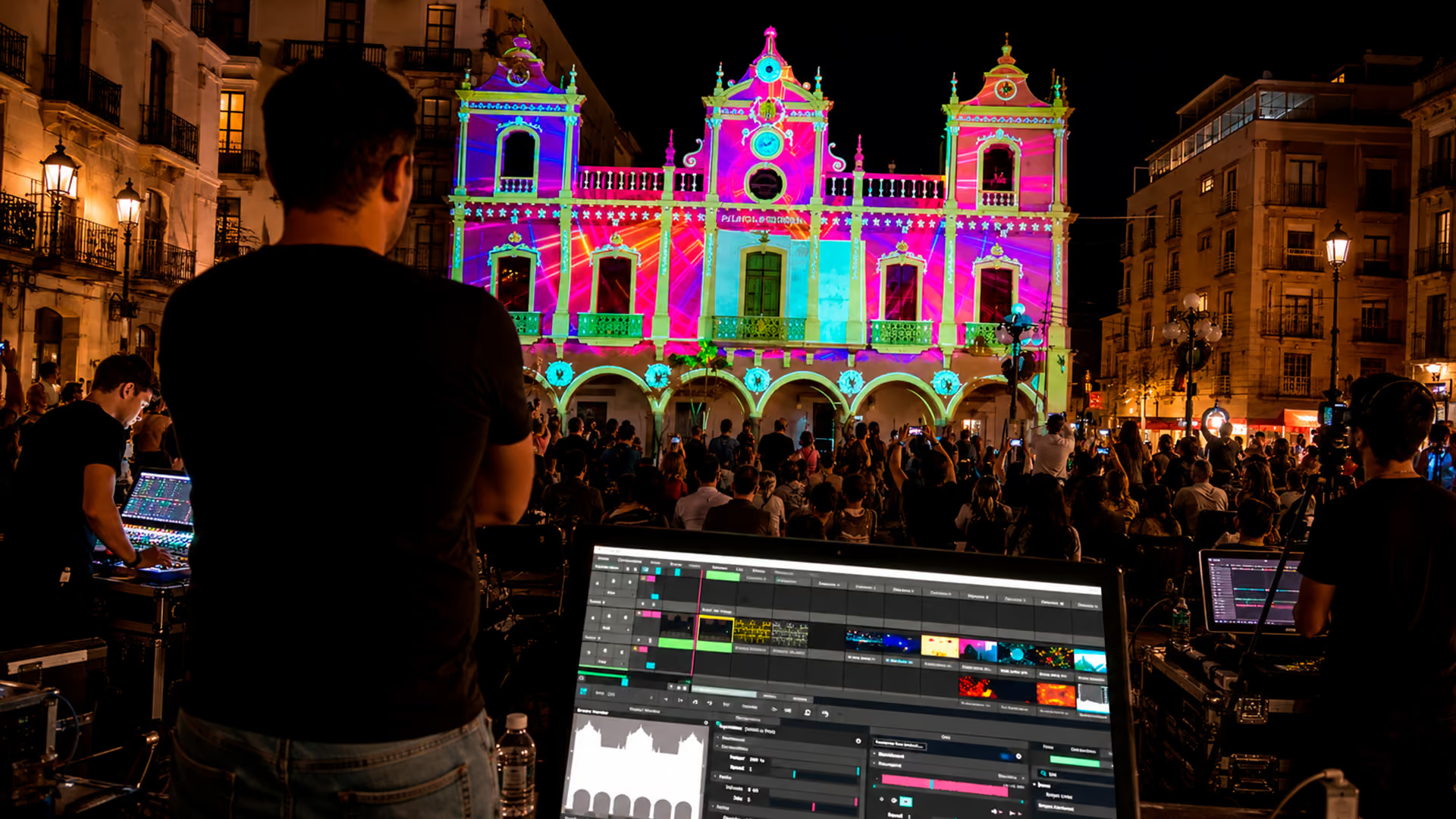
The Promise of Videomapping: Visual Impact with Technical Control and Precise Planning
Videomapping has evolved from a technological novelty into a relevant resource within experiential marketing. Its ability to transform different types of architectural surfaces into dynamic and creative canvases gives brands a powerful opportunity to generate visual and emotional impact. From the façade of a historic building to the interior of an event venue, videomapping creates immersive experiences that capture attention, encourage interaction, and leave a memorable impression on audiences.
However, the spectacular nature of these projections is directly proportional to the complexity of their execution. The challenge lies in ensuring that the projected content aligns with the surface with a high degree of precision, that colors remain visually consistent, and that the narrative flows without interruption—even when it is not possible to conduct a complete technical rehearsal at the final location.
The key question for any brand or agency considering this technology is: How can the risk of visible errors be reduced when there is no opportunity to test everything at the actual venue before the event? The answer does not lie in improvisation, but in thorough preparation and the strategic use of advanced technology.
The key is a meticulous process that extends from the initial concept to final implementation, with each stage designed to mitigate risks and bring the final result closer to the original technical and artistic intention. This involves a combination of precise 3D modeling, digital simulation, adaptive content design, and rigorous calibration before on-site execution.
At Cinetica Studio, we understand that confidence in execution is just as crucial as the creativity of the concept. Our approach therefore focuses on breaking down the complexity of videomapping into manageable and predictable components. It is not simply about projecting images; it is about orchestrating light, form, and narrative with a high level of technical control from the very first installation stage.
The absence of a full on-site rehearsal requires more detailed planning and methodologies that reduce uncertainty. This includes creating digital models of the space, simulating projections in virtual environments, and pre-calibrating equipment whenever the technical scope allows, with the objective of bringing the final result as close as possible to what was planned during preproduction.
Beyond the Projector: The Technological Ecosystem of Videomapping
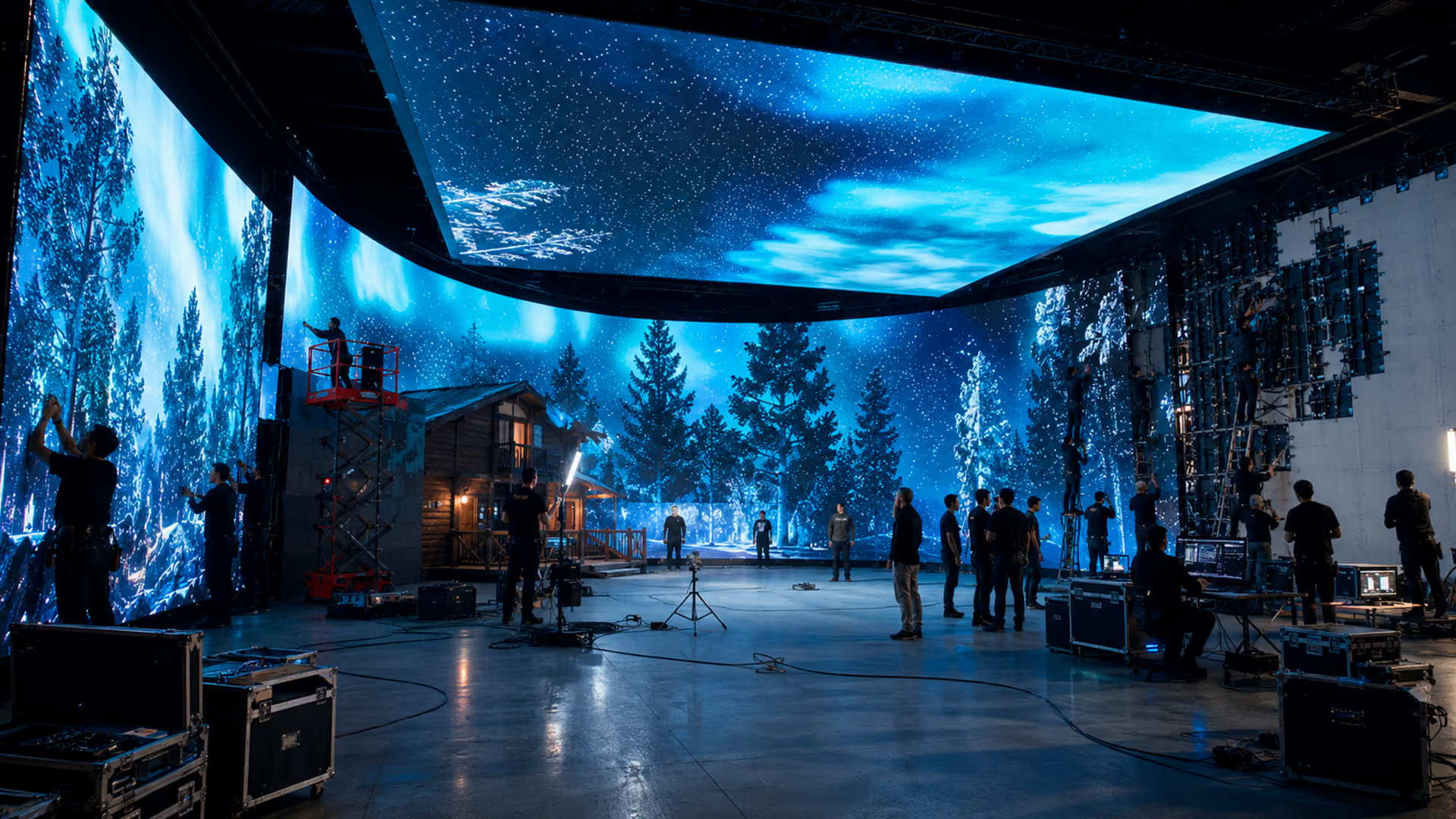
Achieving a highly precise videomapping installation requires technology that goes far beyond the projector itself. A complex ecosystem of tools and software works together to create a highly accurate digital model of the physical space, enabling detailed planning and simulation before the actual projection takes place. This digital twin is an important foundation for reducing technical uncertainty in videomapping.
The first step in this process is capturing data from the environment. This is where 3D scanning technologies such as LiDAR—an acronym for Light Detection and Ranging—and photogrammetry come into play.
LiDAR uses laser light pulses to measure distances and create high-resolution 3D models of buildings and surfaces. Photogrammetry, on the other hand, constructs 3D models from multiple photographs taken from different angles. Both techniques make it possible to obtain a precise three-dimensional representation of the object or architecture onto which the content will be projected, capturing curves, reliefs, and details that may affect the projection.
Once the data has been captured, it is imported into 3D modeling and simulation software. CAD tools and 3D modeling programs such as Autodesk 3ds Max or Blender can be used to process the scanning information and construct a detailed virtual model.
Within this digital environment, designers can manipulate the model, apply textures, and simulate the projection of the content. This simulation makes it possible to identify potential distortions, shadow areas, or blind spots before arriving at the installation site, optimizing both the content design and projector placement.
Media servers are another vital component of this ecosystem. Platforms such as Dataton WATCHOUT or Disguise are designed to manage and reproduce high-resolution video content across multiple synchronized projectors.
These servers do more than store content. They also enable image deformation, known as warping, and image blending, allowing the content to be adjusted with a high degree of precision to irregular surfaces. Their ability to manage large volumes of data while maintaining accurate synchronization is essential to the visual fluidity and coherence of the videomapping experience.
Finally, advanced calibration systems are responsible for adjusting the projection on-site. Although much of the work is completed using the digital twin, physical reality always presents small variations.
These systems can use cameras and specialized software to capture reference patterns during installation and make adjustments to geometry, blending, or color. This helps correct visible misalignments and improve the integration of the content with the surface.
The combination of these technologies improves the alignment of the projected content and reduces visible errors in geometry, color, and continuity, transforming the surface into a dynamic and precise canvas.
Millimeter-Accurate Preproduction: The Digital Twin as a Testing Environment
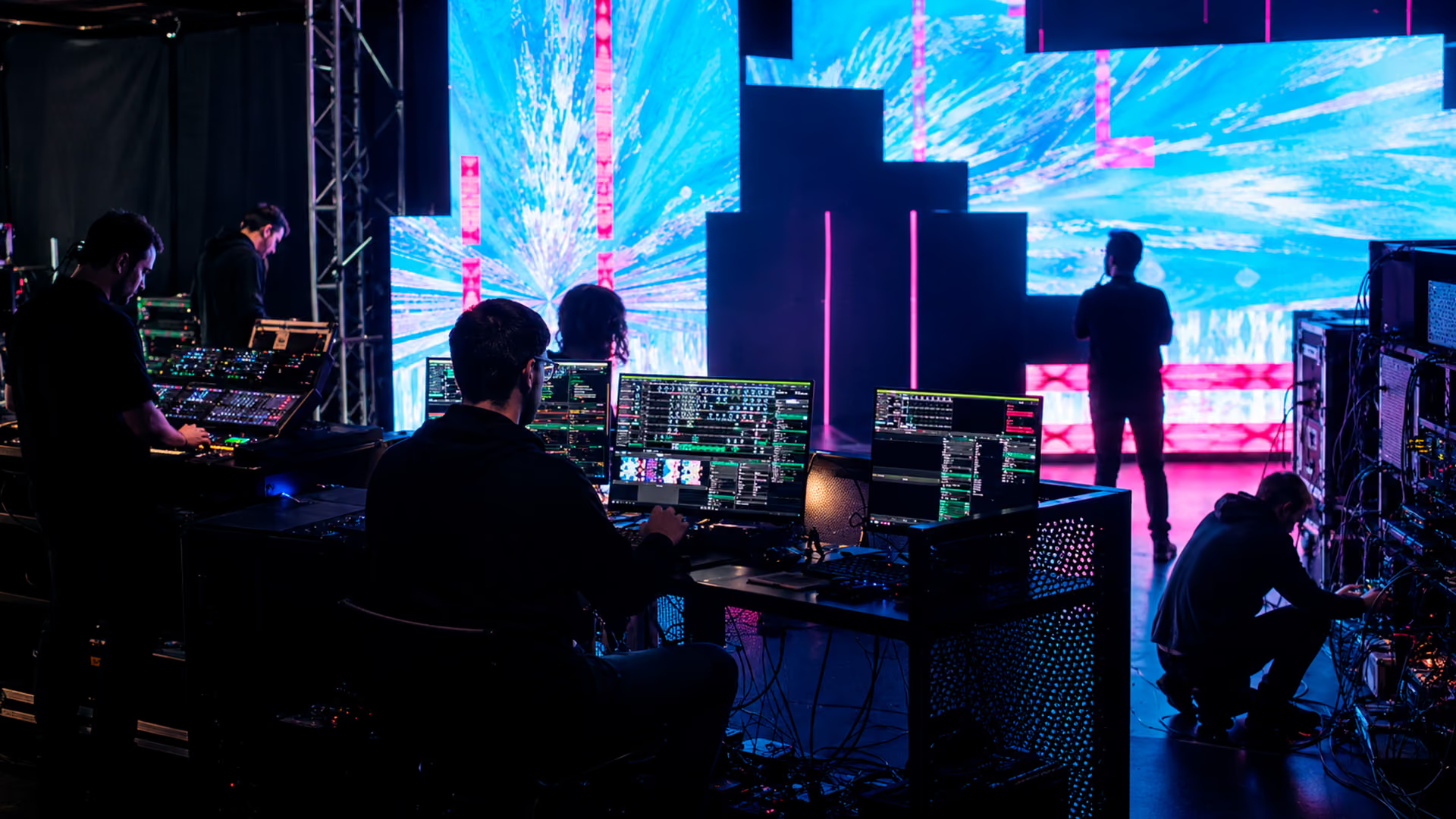
The key to precise videomapping—especially when there is little room for extensive on-site rehearsals—lies in rigorous preproduction and the strategic use of a digital twin.
This approach allows studios such as Cinetica Studio to anticipate and resolve challenges long before the first projector is switched on at the event venue. The initial phase is critical: it involves constructing a highly accurate virtual replica of the physical space where the projection will take place.
This digital twin is not simply a photograph or a two-dimensional plan. It is a highly accurate 3D model of the building or surface to be projected onto, incorporating architectural details, reliefs, windows, projections, and other elements that may alter how the content is visually perceived.
To achieve this, technologies such as 3D laser scanning or photogrammetry are used to capture spatial data and reconstruct the environment with a high degree of precision, depending on the method, equipment, distance, and capture conditions. This information is translated into a three-dimensional model that serves as a virtual canvas.
Once the digital model has been created, it becomes a testing environment. Designers and technicians can use it to simulate the projection of the content with a high level of technical precision.
This includes determining the position and angle of the projectors, light intensity, image resolution, and, most importantly, how the content will interact with the forms and textures of the actual surface.
This is where potential distortions, alignment problems, or areas where the projection may be less effective due to obstacles or architectural features can be identified and corrected.
The simulation process allows iterative adjustments to be made to both the content design and the technical configuration. Different resolutions, color palettes, and animations can be tested to ensure that the final result is both visually impactful and technically viable.
By working with the digital twin, Cinetica Studio can prepare the content to align more precisely with the surface, reducing the need for extensive on-site rehearsals, which are often impossible due to logistical or scheduling constraints.
The accuracy of the digital model makes the installation and calibration process more agile and predictable once the team arrives at the actual venue—almost as though the project had already been rehearsed in a controlled environment.
Custom-Made Content: Design and Rendering for the Projected Surface
Once the digital twin of the space has been finalized, the next critical step is the creation of the visual content. This is not a generic design process. Every pixel, animation, and effect is conceived and produced specifically for the surface onto which it will be projected.
This requires a deep understanding of the architecture, the textures of the materials, and the viewpoints from which the audience will experience the projection.
The creative team works directly on the 3D model of the building or structure using advanced animation and 3D design software. This makes it possible to visualize how the animations will interact with windows, cornices, columns, and other architectural elements.
Depth, natural shadows, and the way light reacts to different surfaces are all considered. For example, a rough texture will absorb light differently from a smooth surface, and this difference must be anticipated and compensated for during the content-design process.
Precision in rendering is fundamental. The objective is not only to create attractive images, but also to ensure that these images align convincingly with the physical environment once they are projected.
This requires a rendering process that takes into account the perspective of the projectors, the distortion caused by the surface, and the final resolution required to prevent pixelation or visual artifacts.
Digital artists optimize every frame for the specific projection systems being used, adjusting parameters such as brightness, contrast, and color range to achieve strong visual fidelity.
At Cinetica Studio, this process benefits from tools that allow us to simulate the projection on the digital twin before the content is finalized.
This means that we can preview the overall behavior of the videomapping experience from different angles and estimate its performance under specific lighting conditions, identifying and correcting misalignments or imperfections before arriving on-site.
This design and rendering phase is not only creative, but also highly technical. It combines digital art with projection engineering to ensure that every visual element contributes to an immersive experience with reduced operational risk.
Calibration and Warping: Adapting the Content to the Surface
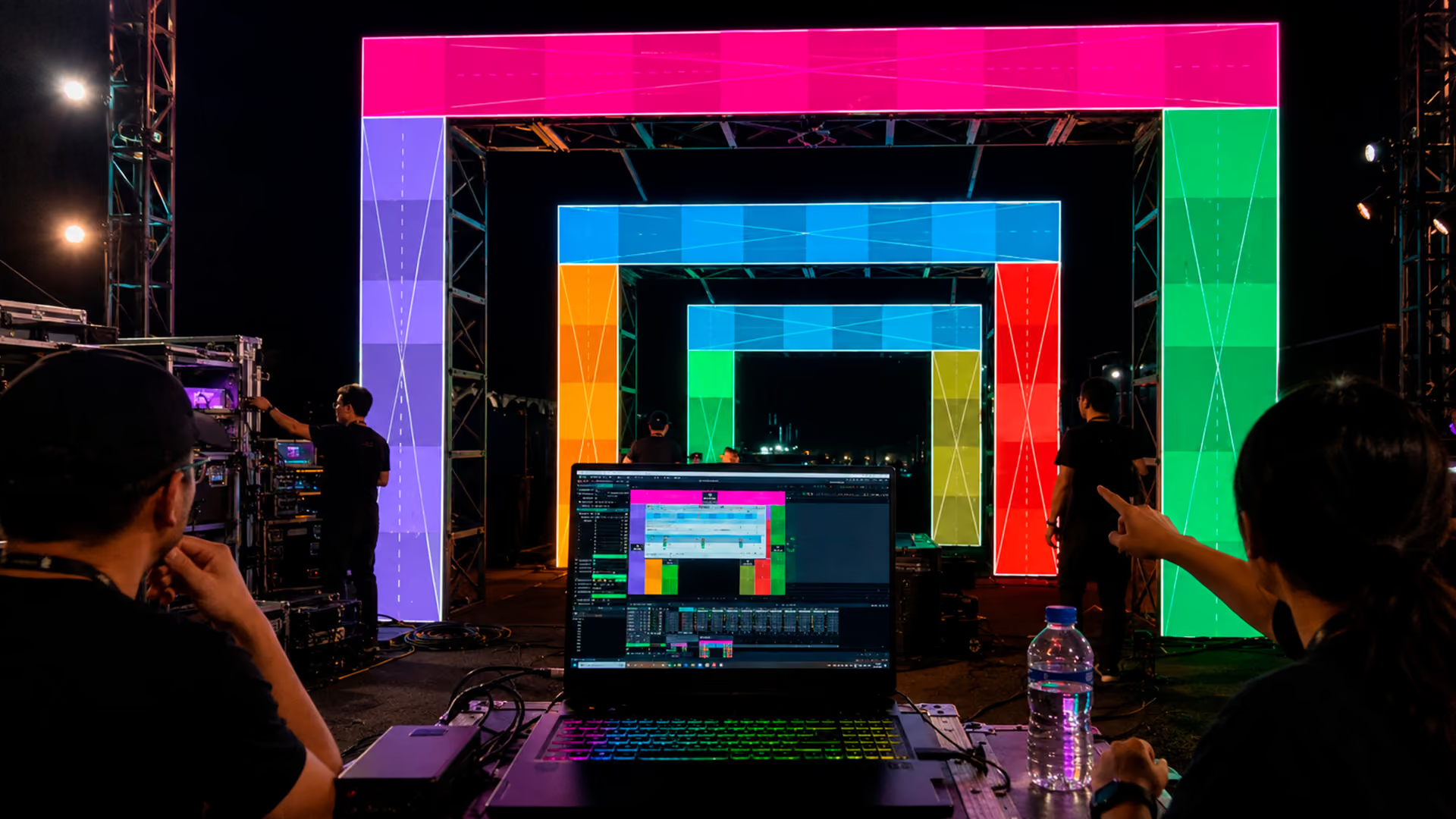
Once the content has been designed specifically for the surface and its alignment has been validated using the digital twin, the next challenge is transferring that precision from the virtual model to the physical world.
This is where calibration and warping come into play—essential techniques for reducing visible distortions and adapting the projection to irregular or complex surfaces.
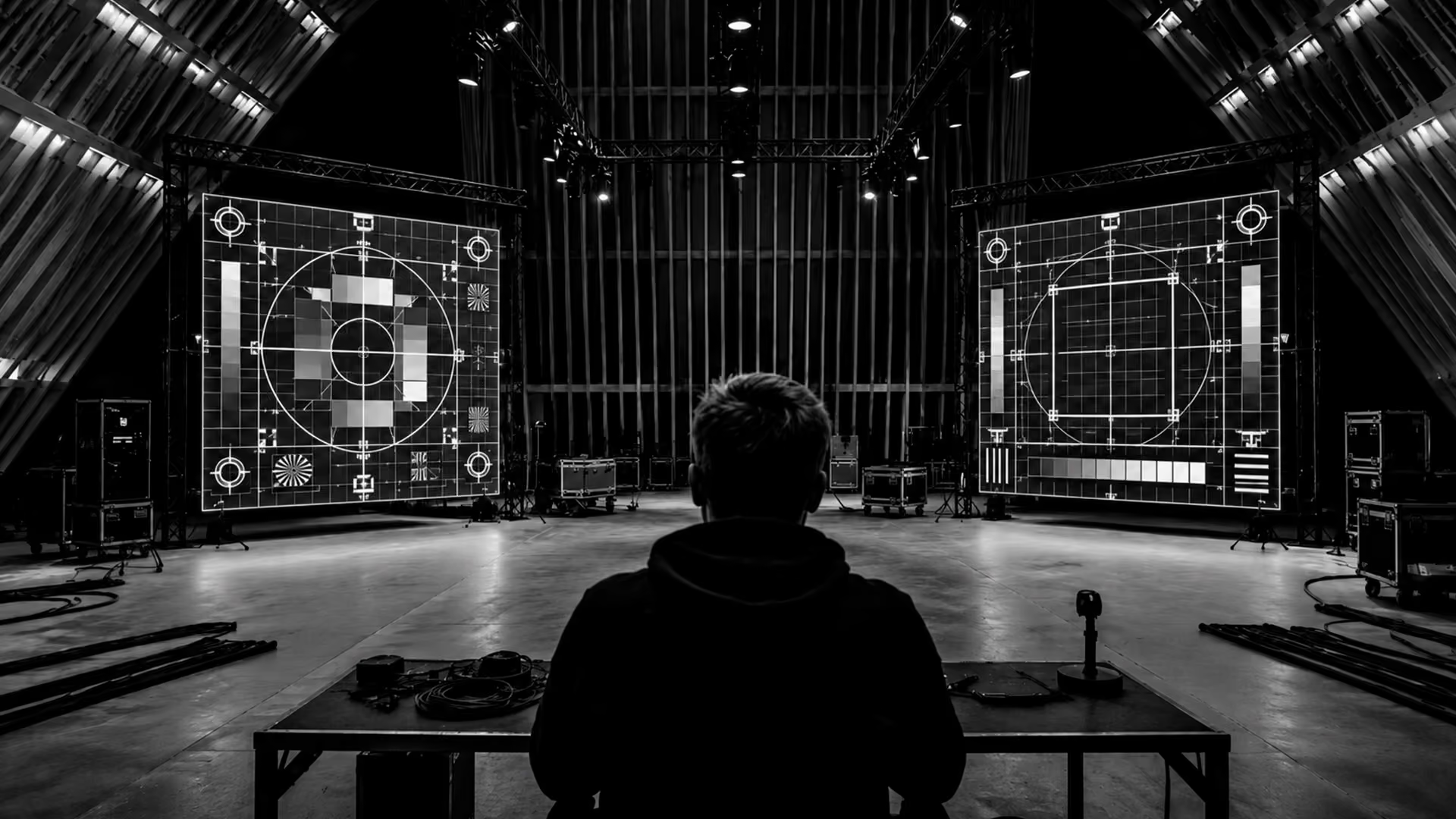
Calibration is the process of adjusting the projectors so that their light and color output is consistent and accurate. This includes not only brightness and contrast, but also the geometric alignment of multiple projectors when they are used to cover a large or irregular surface.
Modern videomapping systems use advanced software that enables automated or semi-automated calibration, reducing both adjustment time and the margin for human error.
Cameras and calibration systems can capture test patterns and send the resulting data to the software, which then adjusts geometry, blending, and color to reduce visible differences between projectors.
Warping, or image deformation, is the technique that allows two-dimensional projected content to conform to the three-dimensional shape of the surface.
Imagine a building with windows, cornices, and balconies. If a flat image is projected onto it, the image will appear distorted and misaligned. Warping corrects these distortions.
Using control points defined within the software—and adjusting them manually or with the assistance of computer vision systems—the image is digitally deformed so that it appears correct when projected onto the irregular surface.
This is crucial for preserving the integrity of the design and the artistic intention of the content.
Some warping and calibration systems support fine adjustments during installation and, depending on the platform, camera-assisted corrections or automated recalibration.
This means that even when there are small variations in the installation or the physical surface, the operator can make precise adjustments to improve the alignment of the content with the structure.
Combined with rigorous preproduction, this adaptability allows the videomapping experience to approach the originally conceived result with a greater degree of confidence.
Integration and Synchronization: Orchestrating the Complete Experience
The true power of videomapping does not lie solely in the quality of the projection, but in the way all its components—video, audio, lighting, and, in some cases, interactive elements or special effects—are combined into a cohesive and synchronized narrative.
This orchestration is what elevates a simple projection into an immersive and memorable experience. It is also a fundamental element in reducing operational risks during the execution of the event.
Integration begins with the selection of a robust centralized control system. These systems act as the conductor of an orchestra: they manage media-server playback, projector control, sound-system activation, and synchronization with any other elements present in the space.
Specialized software tools make it possible to program complex sequences in which every light switches on, every musical note plays, and every visual effect is triggered with precise synchronization, usually coordinated through timecode, networks, cues, or show-control systems.
Synchronization is critical. In a videomapping experience, even a slight delay between video and audio can break the sense of immersion.
To prevent this, low-latency communication protocols and dedicated networks are used to help devices receive instructions in a coordinated manner.
This is particularly relevant in projects that incorporate interactivity, where the system’s response must maintain sufficiently low latency to feel fluid.
For example, in installations where the audience can interact with the projection, the detection of movement or gestures must quickly translate into a visual or audio modification, preserving the illusion of a living, responsive experience.
Automation plays a crucial role during this phase. Once the sequence has been programmed and tested through simulations and controlled trials, the control system can execute it with less dependence on manual intervention.
This reduces the need to make critical decisions during the live event and minimizes operational risks.
From switching projectors on and off to adjusting audio volume and lighting intensity, different elements can be programmed to ensure a fluid and uninterrupted execution.
This automation capability allows Cinetica Studio to design large-scale videomapping experiences with greater control over the exact moment when each element must be activated.
Related Projects: When Planning Reduces Execution Risks
The principles of meticulous planning and the use of digital models come to life in practice.
At Cinetica Studio, we have seen how investing in thorough preproduction helps reduce execution risks, particularly when conditions do not allow for a complete on-site rehearsal.
The following related projects demonstrate how technology and experience can be combined to deliver strong results in complex visual and interactive experiences.
One example of this philosophy is the work we completed for Tecate, where we developed anamorphic 3D content designed to be perceived from a specific viewing angle.
The challenge was to create an illusion of depth and scale through forced perspective while carefully considering the composition, the audience’s primary viewpoint, and the visual behavior of the content on the display surface.
Through 3D modeling, rendering, and advance content review, the piece combined digital art and brand storytelling in a visual experience designed to attract attention and generate amplification across social media.
Another case that illustrates the importance of this methodology is the development of interactive experiences connected to Nestlé NAN®.
Although it was not a traditional videomapping project, the complexity of integrating visual content, interaction logic, and controlled testing presented several challenges similar to those encountered in an immersive production.
In projects of this kind, surface calibration, content validation, and coordination between systems are essential steps in ensuring that the final experience is fluid, clear, and stable for the audience.
These projects demonstrate that a studio’s ability to anticipate and resolve challenges during preproduction is what truly determines the strength of a videomapping installation—or any complex immersive experience.
Cinetica Studio’s experience in creating digital models, designing optimized content, and implementing advanced calibration systems allows us to reduce technical uncertainty and arrive at the installation stage with a more robust foundation.
The Future of Videomapping: AI and Automation for Even Greater Precision

Videomapping, already a discipline that combines art and technology, is entering a new phase of development driven by artificial intelligence and automation.
These technologies can refine current processes and open new creative and operational possibilities, particularly in projects where advance preparation, calibration, and technical control are decisive.
AI can support certain preproduction processes, including the analysis of 3D models, visual exploration, and the preliminary identification of surfaces or areas of interest, provided that the creative team reviews the results and performs the necessary technical validation.
These tools can accelerate specific tasks, but their usefulness depends on the software, the quality of the data, the workflow, and human supervision.
In calibration and warping, AI-assisted automation could improve certain detection and adjustment processes.
Current systems already use cameras and software to support projection calibration, and the development of computer-vision algorithms could make some workflows more efficient.
This could allow variations in a surface or projector position to be detected and corrected more quickly, depending on the system, hardware, reference capture, and installation conditions.
Generative AI could also expand the possibilities for creating dynamic videomapping content.
In some workflows, generative systems can support the production of visuals that react to external stimuli—such as audience movement, changes in the environment, or live data—provided that sufficient creative, technical, and performance controls are in place.
This can provide greater flexibility, although it does not replace the planning, optimization, and validation of the content.
Automation also extends to the overall management of the project. From equipment logistics and planning to remote monitoring of projector performance and the synchronization of multimedia elements, automated systems can improve operational continuity and reduce reliance on manual processes during execution.
This allows technical teams to focus on strategic supervision while maintaining greater control over critical processes.
At Cinetica Studio, we are exploring how these innovations can be integrated to take videomapping to a new level.
The combination of our experience in design and production with emerging AI and automation capabilities can help us create more efficient, precise, and adaptable experiences, while maintaining technical validation and creative control at every stage.
Conclusion: The Methodology Behind a Precise Projection
At its highest level, videomapping is a discipline that combines artistic creativity with technical precision.
The ability to transform a surface into a dynamic, narrative canvas—with lower operational risk and without depending entirely on full on-site rehearsals—is not the result of chance. It is the result of a rigorous methodology and the strategic use of specialized technology.
From 3D scanning and the creation of digital twins to custom content design, advanced calibration, and the synchronized integration of every element, each step is designed to improve precision and reduce uncertainty.
At Cinetica Studio, our experience in complex projects for brands such as Tecate and Nestlé NAN® demonstrates that investing in thorough preproduction and strategically using technologies such as AI and automation can contribute to a more robust execution.
These tools make it possible to anticipate challenges, optimize designs, and prepare each projection with greater technical control before arriving on-site.
For brands seeking to create impact, innovate, and leave a lasting impression, videomapping offers a powerful visual platform.
Choosing a studio with the right experience, technology, and methodology is fundamental to transforming a creative vision into an immersive experience that is clear, precise, and aligned with the brand’s objectives.
At Cinetica Studio, we are ready to take your next activation to a higher level with a proposal that combines visual storytelling, technical planning, and specialized execution.
Frequently Asked Questions About Videomapping with a Smaller Margin of Error
What is a digital twin in the context of videomapping?
A digital twin is a highly accurate virtual 3D model of the physical space or surface where the videomapping experience will take place.
It can be created using technologies such as 3D laser scanning, LiDAR, or photogrammetry.
This model allows designers and technicians to simulate the projection of the content, identify potential problems, and make adjustments before the actual installation, reducing the need for extensive on-site rehearsals.
How can content precision be ensured without a full rehearsal at the venue?
Precision is improved through meticulous preproduction, including the use of a digital twin to simulate the projection, custom content design that considers architectural details, and advanced projector calibration.
These stages make it possible to anticipate and correct distortions or misalignments within a controlled environment, increasing the probability of a solid execution at the actual venue.
Which technologies are essential for executing precise videomapping?
Key technologies include 3D scanning, LiDAR, and photogrammetry for creating the digital twin; 3D modeling and simulation software such as CAD, Autodesk 3ds Max, or Blender; media servers such as Dataton WATCHOUT or Disguise for managing high-resolution content; calibration and warping systems for adapting the projection to irregular surfaces; and centralized control systems for synchronizing video, audio, lighting, and other technical elements.
How can AI contribute to the future of videomapping?
AI can contribute to videomapping by supporting preproduction tasks, visual exploration, surface analysis, and the generation of reactive content, provided that creative supervision and technical validation are maintained.
In calibration and warping, some systems already offer camera-assisted, high-precision workflows, although their performance depends on the hardware, software, and installation conditions.
Why is it important to choose a studio with videomapping experience?
Choosing an experienced studio such as Cinetica Studio is important because the complexity of videomapping requires both technical and creative expertise.
An experienced studio can provide rigorous preproduction, the appropriate use of advanced technologies, the ability to resolve challenges throughout the process, and a visual execution aligned with the brand’s objectives.
You can learn more about our projects and contact Cinetica Studio to begin planning your next activation.
Featured in
Our work has been recognized by leading industry publications covering creativity, technology, and innovation.
Discover interviews, features, and articles that highlight our projects and perspective.


You may also like
Ready to create something extraordinary?
From concept to execution, we design experiences that connect people, technology, and storytelling in unforgettable ways.