Blog Post
FOOH: Why a Piece Can Cost 5x More and How to Understand Your Quote
Introduction: The Magic of FOOH and the Reality of Its Cost
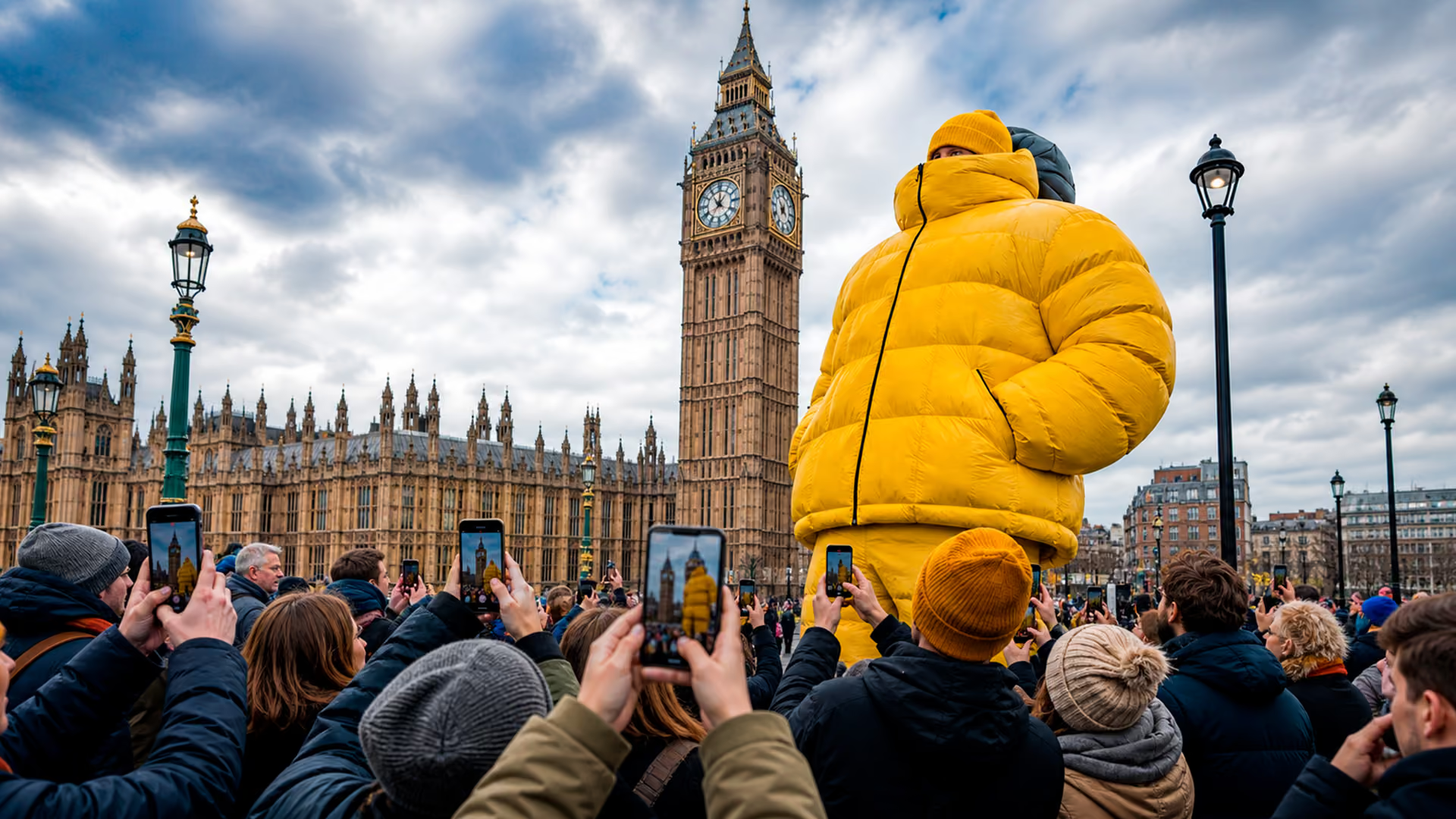
Fake Out-Of-Home (FOOH) has burst onto the marketing and advertising scene as one of the most viral and effective trends of recent years. This technique, which combines 3D animation and visual effects (CGI) with real-world environment footage, creates the illusion that giant, impossible objects or activations exist in public spaces. From luxury handbags floating above iconic buildings to refreshing drinks spectacularly spilling onto streets, FOOH captures the attention of millions, generates organic conversation, and is massively shared on social media, redefining what's possible in out-of-home advertising.
The fascination with FOOH lies in its ability to blur the line between the real and the digital, offering brands a powerful tool to impact their audiences in a novel and memorable way. Its inherently surprising nature and potential for virality have made it an invaluable asset for campaigns seeking a high return on investment in visibility and engagement. At Cinética Studio, we've witnessed how these pieces not only capture the imagination but also boost brand perception and consumer interaction. For example, in our project for Tecate at the Pa'l Norte festival, we integrated photorealistic 3D elements into giant LED screens to create an anamorphic experience that generated significant viral impact, demonstrating our ability to execute high-level FOOH that resonates with the audience.
However, behind the apparent simplicity of a 15-second video that goes viral lies a complex and highly specialized production process. Brands and agencies exploring FOOH often encounter a bewildering disparity in quotes: it's common to receive proposals that vary up to five times in price for the same concept. This gap not only creates confusion but also hinders informed decision-making regarding investment.
Understanding why a FOOH piece can cost anywhere from a few thousand to tens of thousands of dollars is crucial. The variation is not arbitrary; it responds to technical, creative, and strategic factors that directly impact the quality, realism, and scope of the project. This article will break down the key elements influencing the cost of a FOOH production, from the complexity of CGI and integration with the real environment to the talent involved and the distribution strategy. Our goal is to provide a clear guide for brands to evaluate quotes with informed understanding and ensure their investment in this innovative form of advertising generates maximum impact.
The Technical Core: The Complexity of CGI and 3D Animation
At the heart of every FOOH piece lies the magic of CGI (Computer-Generated Imagery) and 3D animation. It is here that cost variation can be most dramatic, directly reflecting the level of detail, realism, and technical complexity desired. Creating a simple 3D object with basic textures is not the same as developing a photorealistic scene that challenges perception and seamlessly integrates with the real environment.
3D Modeling: The Foundation of Realism
The quality of 3D modeling is the first factor. A low-polygon model, with simple shapes and few details, requires less time and skill than a high-polygon model, which replicates every curve, texture, and reflection with millimeter precision. Think of the difference between a generic cube and an exact replica of a product with its specific logos, reliefs, and finishes. This level of detail is crucial for FOOH to not look like a crude montage, but rather a real intervention in urban space.
Texturing and Lighting: The Key to Verisimilitude
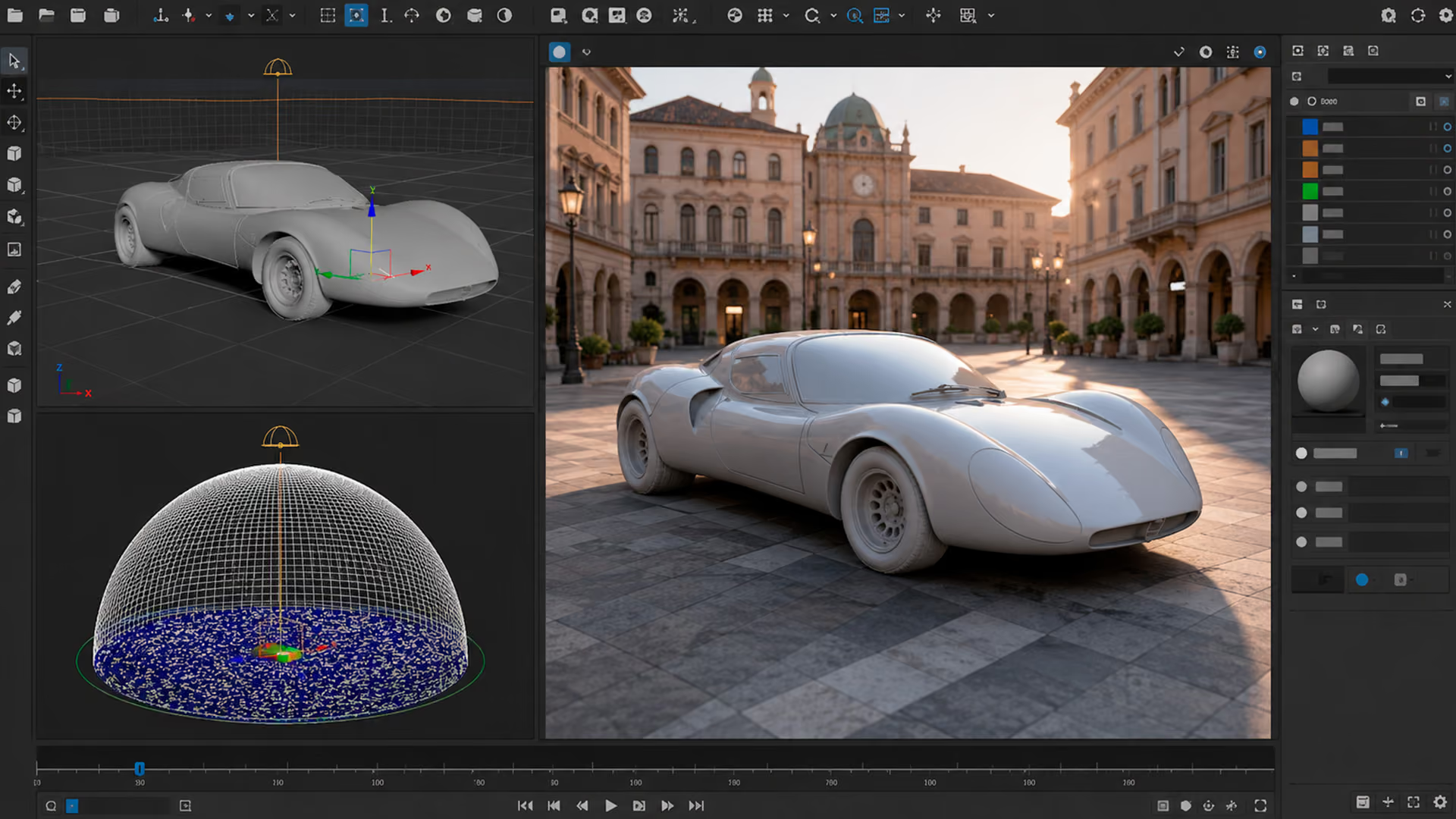
Texturing and lighting are the next pillars. A 3D object without realistic textures or with flat lighting will immediately give itself away as artificial. Artists must recreate materials (metal, glass, fabric, plastic) with their exact physical properties: how they reflect light, how they absorb color, how they react to humidity or wear. Lighting, for its part, must emulate the exact conditions of the real environment where the FOOH object will be "placed": the time of day, the direction of the sun, shadows cast by nearby buildings, ambient light. Good work in this aspect is what allows a CGI element to "blend" with the background video or photograph, creating a convincing illusion.
Animation and Physics Simulation: Bringing the Illusion to Life
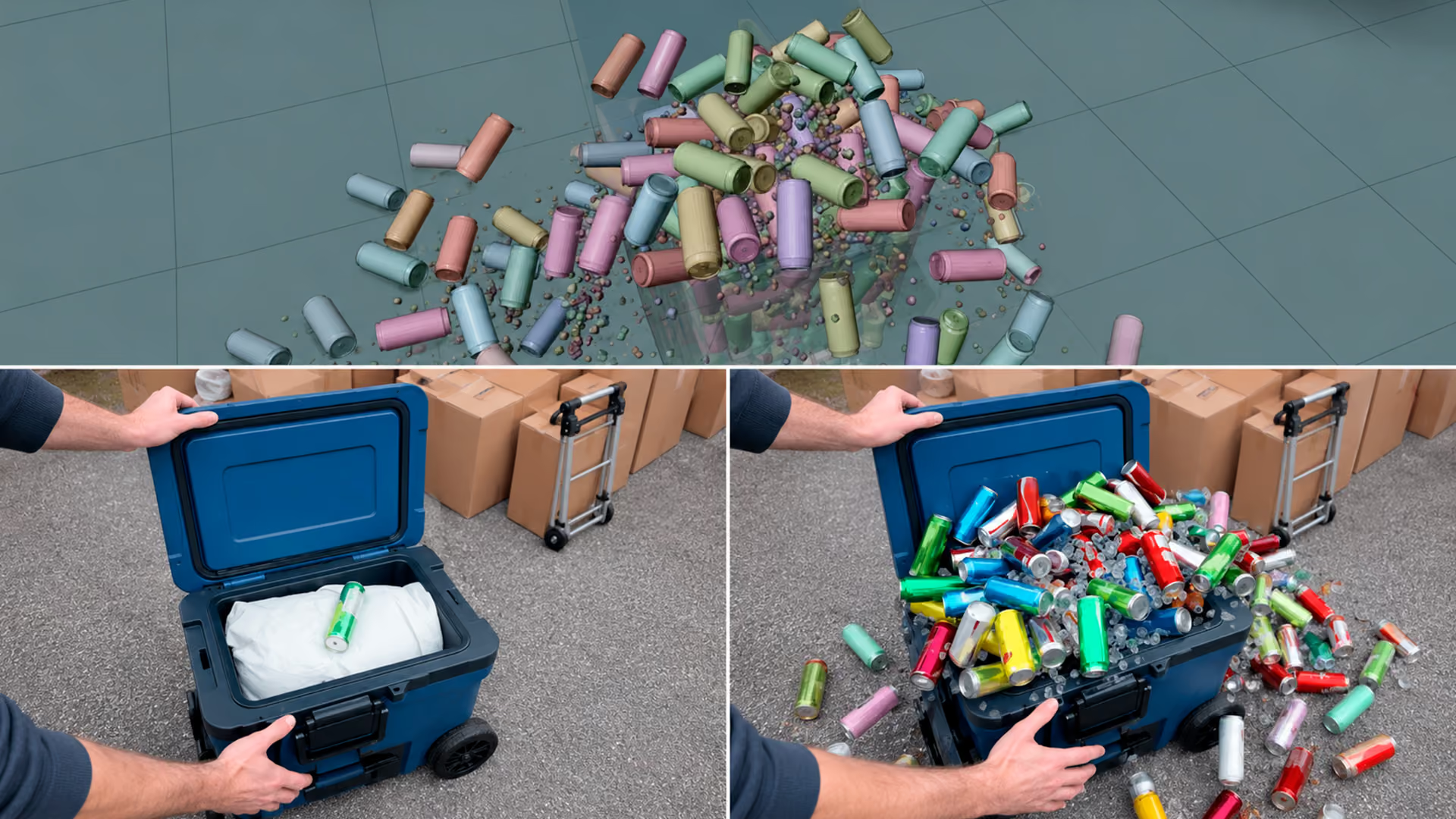
Animation adds another layer of complexity. A static object is simpler to produce than one that moves, interacts, or transforms. The fluidity of the animation, the physics of movements (gravity, collisions, deformations), and synchronization with the environment are elements that require highly specialized animators and advanced software. For example, if a FOOH object "falls" or "explodes," the simulation of particles, fluids, or soft body dynamics can significantly increase the cost due to the computational power and rendering time it demands.
Rendering: The Materialization of Vision
Finally, rendering is the process of transforming all this data (models, textures, lights, animations) into the final images. High-quality, photorealistic rendering, with ray tracing and complex effects, can take hours or even days for each frame, even with powerful render farms. This processing time is a direct cost that adds to the budget. The choice between CGI that seeks credibility and one that aims for absolute photorealism, where every pixel is indistinguishable from reality, is what can multiply the cost of a FOOH piece by five or more.
The Urban Canvas: The Real Environment and Its Digital Integration
The choice of "canvas" for a FOOH campaign is a decisive factor in its cost. Projecting an illusion onto a flat wall is not the same as integrating a 3D element into a historic monument or a building with complex architecture. The complexity of the real environment directly impacts the digital integration process, which is where CGI merges with live footage.
Environment Data Capture: The Basis of Integration
The first critical step is data capture of the environment. This often involves advanced techniques such as 3D scanning and photogrammetry. 3D scanning allows for the creation of a precise three-dimensional model of the building or urban space, capturing every detail, curve, and texture. Photogrammetry, on the other hand, uses multiple photographs taken from different angles to reconstruct the object or scene in 3D. The more intricate the environment, the more time and specialization required for these phases, which translates into an increased budget.
Camera Tracking and Perspective: The Illusion in Motion
Once the digital model of the environment is obtained, the challenge is to integrate the CGI in a way that makes it appear an organic part of reality. This demands exceptional mastery of perspective and camera tracking. Camera tracking is the process of accurately replicating the movement of the real camera in 3D software, ensuring that the CGI element moves and rotates in perfect synchronicity with the background. Faulty tracking can ruin the illusion, making the digital object appear to float or slide unnaturally.
Lighting and Harmonization: Merging Worlds
Lighting also plays a crucial role. The team must analyze how natural or artificial light falls on the real building at the time of filming to replicate those conditions in the CGI rendering. Shadows, reflections, and the interaction of light with different materials must be accurately recreated to achieve convincing realism. Any inconsistency in these details can break the immersion and credibility of the FOOH piece.
Finally, the integration of CGI with real footage is not just a technical matter, but also an artistic one. An expert eye is required to adjust colors, contrasts, and textures, ensuring that the virtual element not only fits in but elevates the visual narrative. The need for a team experienced in these complexities, from data capture to final post-production, is what justifies a significant portion of the investment in a high-quality FOOH piece.
The Team Behind the Illusion: Talent and Expertise
Behind every impactful FOOH piece is a multidisciplinary team whose talent and experience are directly proportional to the quality and, therefore, the final cost of the project. Creating a convincing digital illusion is not the work of one person, but an orchestra of specialists who master diverse technical and creative disciplines.
Key Profiles in FOOH Production
A specialized studio like Cinética Studio invests in the training and retention of highly qualified profiles. This includes creative directors with strategic vision, 3D artists who model and texture with photographic realism, animators who bring objects to life with fluid and believable movements, compositors who seamlessly integrate digital elements into real footage, and visual effects (VFX) specialists who add the final touch of magic and verisimilitude. Each of these roles requires years of practice and a deep mastery of advanced software and techniques.
The Value of Experience: Quality and Efficiency
The difference between a low and a high quote often lies in the caliber of this team. A junior or less experienced team might offer a more competitive price, but the final result could lack the realism, attention to detail, or adaptability required for a high-impact campaign. Conversely, a senior team, with a proven track record of successful projects and the ability to solve complex technical challenges, guarantees impeccable execution and a superior return on investment in terms of virality and brand perception.
Experience not only translates into technical skill but also into efficiency. An experienced team knows how to optimize workflows, anticipate problems, and deliver high-quality results within tight deadlines. This minimizes revisions, reworks, and ultimately saves time and resources in the long run, despite a potentially higher initial investment. The expertise of a studio like Cinética Studio ensures that every detail, from lighting to interaction with the environment, contributes to a perfect and memorable illusion.
Post-production and Visual Effects: The Final Polish
Once CGI elements are rendered and the real-world environment is captured, the true art of integration begins in the post-production phase. This is the "final polish" that transforms a good idea into a photorealistic and impactful illusion. The complexity and time invested in this stage are critical factors directly influencing cost variations between different FOOH quotes.
Compositing: The Fusion of Real and Digital
Compositing is the crucial first step. Here, computer-generated 3D elements are merged with real footage. This isn't merely superimposing images; it involves adjusting perspectives, lighting, shadows, and reflections so that the virtual object appears to have always been in the physical space. Meticulous compositing prevents a FOOH from looking like a simple montage and, instead, achieves the visual credibility that makes it go viral. Precision in this process requires specialized software and artists with a trained eye for detail, which translates into a significant investment of work hours.
Color Grading and Correction: Visual Harmony
Color grading and color correction are equally vital. These processes ensure that the color palette of the CGI element perfectly matches that of the real environment, adjusting the exposure, contrast, and saturation. A subtle mismatch can break the illusion, while expert color grading ensures the virtual object integrates organically, as if sunlight or the shadows of the real building affected it in the same way. This level of chromatic harmonization is a key differentiator between amateur and professional FOOH.
Additional Visual Effects (VFX): The Touch of Magic
In addition to compositing and color, additional visual effects (VFX) can exponentially elevate the quality and impact of a FOOH piece. This can include adding particles, smoke, dust, water effects, or even simulating physical interactions of the virtual object with its environment, such as surface deformation or reflection in a puddle. These details, though often imperceptible to the untrained eye, are fundamental for photorealism and immersion. For example, at Cinética Studio, we have developed FOOH for mass-consumer brands where the simulation of liquids or the movement of organic elements has been key to virality, requiring advanced VFX mastery to achieve impeccable realism.
Each of these processes—compositing, color grading, color correction, and VFX—requires time, talent, and advanced technology. A studio that invests in artists specializing in each of these areas and utilizes the most sophisticated tools will naturally offer a higher quote. However, this investment directly translates into a final product that not only captures attention but also maintains the credibility and visual impact that brands seek in a successful FOOH campaign.
Strategy and Dissemination: Beyond Creation
A FOOH piece, no matter how spectacular its technical production, cannot reach its full potential without a robust dissemination strategy. This is where a set of costs comes into play that, while not directly part of CGI creation or visual integration, are crucial for the campaign to go viral and generate the desired impact. Investment in this phase can be as significant as the production itself, and it is a key differentiator between a piece that goes unnoticed and one that dominates social media conversations.
Dissemination Planning and Complementary Content
Dissemination planning begins long before launch. It involves defining the appropriate channels, the perfect timing, and the message that will accompany the visual piece. This may include creating additional content for social media (stories, reels, TikToks), adapting the piece for different formats and platforms, and developing a paid media plan to amplify its initial reach. A well-executed launch strategy ensures that the production investment is not diluted by a lack of visibility.
Media Management and Public Relations
Media management and public relations also play a fundamental role. An experienced studio not only produces the piece but can also advise on or even manage the placement of the campaign in relevant media, both traditional and digital. This includes sending press releases, coordinating with journalists, and seeking opportunities for the campaign to be featured in specialized or mass-market publications. Organic media coverage is invaluable and often requires a strategic investment in public relations.
Influencer Marketing and Social Amplification
Finally, collaboration with influencers or content creators can be a powerful engine for virality. Identifying the right profiles, negotiating their fees, and coordinating content publication on their platforms adds a layer of cost, but also of reach and credibility. These creators can generate a multiplier effect, bringing the FOOH piece to massive and highly segmented audiences, transforming a good idea into a cultural phenomenon. The sum of these elements—launch strategy, social media amplification, media management, and influencer marketing—is what truly turns a FOOH piece into a successful campaign, justifying the variation in quotes that goes beyond mere production.
Case Studies: Understanding FOOH Investment
To better understand how cost variations materialize in FOOH, it's helpful to analyze concrete examples. At Cinética Studio, we've worked on projects that illustrate how different objectives and levels of complexity translate into distinct investments, always aiming for maximum brand impact.
FOOH for Virality vs. Immersive Experiences
A FOOH project with a simple 3D object, such as a giant can floating above a building, might have a base cost. However, if the brand requests that the can open, spill a liquid that interacts with the environment, or have an animated character emerge from it and perform a complex action, the investment multiplies. Every interaction, every animation detail, every physics simulation (liquids, fabrics, particles) adds hours of work from modelers, animators, riggers, and visual effects artists. Choosing an environment with variable light conditions or moving elements also increases the difficulty and, consequently, the cost of integration.
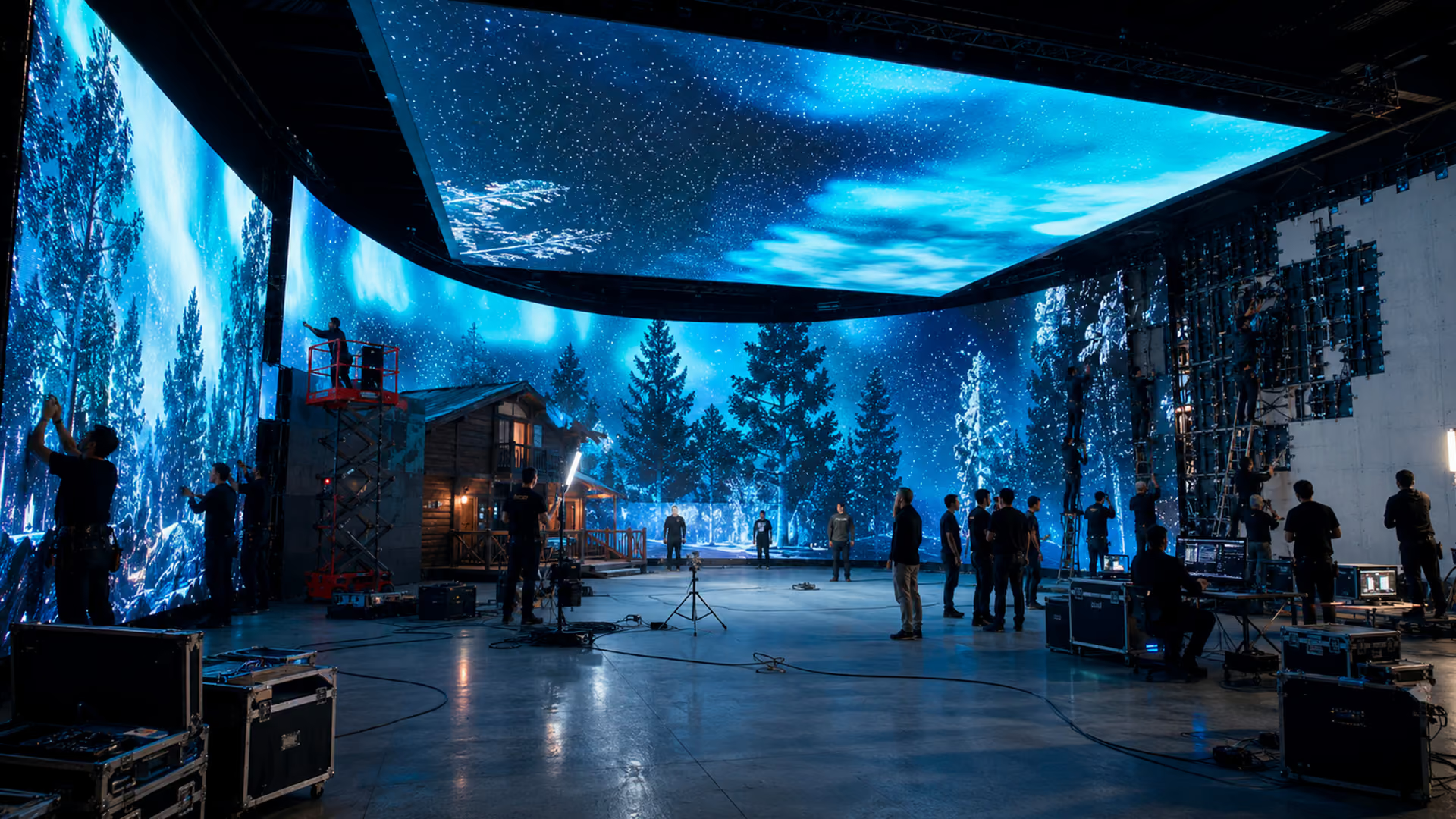
In contrast, at Cinética Studio, we have developed immersive experiences that, while not FOOH in the strict sense of urban virality, share the complexity of CGI and integration with space. For example, for Tecate at the Pa'l Norte festival, we created anamorphic content with forced perspective for giant LED screens. The goal was to generate an illusion of depth and scale that was only revealed from a specific angle, transforming the perception of space and generating an immediate point of attraction. The investment here focused on the mastery of 3D animation, texturing, lighting, and precise mapping for the LED screens—elements that require a high level of specialization in Blender to achieve that convincing anamorphic effect. The complexity lay in the technical precision needed to manipulate perspective and scale, ensuring the illusion was perfect for the audience at the desired viewpoint. This type of project, although with a different objective than viral FOOH, demonstrates Cinética Studio's ability to handle the technical and creative complexity of CGI in various formats.
These examples demonstrate that the value of a FOOH piece lies not only in the idea but in the technical execution and the level of detail required to make it believable and, ultimately, impactful. The investment directly aligns with the creative ambition and the complexity of the illusion the brand wishes to project.
Conclusion: How to Request a Smart Quote for Your FOOH
The disparity in FOOH quotes, which can sometimes be up to five times, is not a market whim but a reflection of the inherent complexity of this discipline. As we've explored, factors such as CGI sophistication, integration with the real environment, the creative team's experience, post-production, and dissemination strategy directly impact the final cost. Understanding these elements is the first step for any brand looking to invest in a successful and, above all, transparent FOOH campaign.
To obtain a smart quote and avoid surprises, brands must adopt a proactive and detailed approach when developing their brief. It's not just about asking for a price, but about clearly articulating the vision, objectives, and expectations. A well-structured brief should include:
- Campaign objectives: What does the FOOH aim to achieve? Virality, engagement, brand awareness, product launch?
- Initial creative concept: Although the studio will contribute its expertise, a basic idea of the 3D object, environment, and desired message is crucial.
- Animation duration and complexity: Will it be a simple animation or a complex sequence with multiple interactions and effects?
- Desired location: Specify the type of environment (iconic building, busy street, monument) and if there are geographical preferences. This influences the complexity of environment capture and permits.
- Delivery deadlines: Tight deadlines often require additional resources and can increase costs.
- Estimated budget: While it may seem counterintuitive, sharing a budget range helps the studio propose realistic and optimized solutions.
- Dissemination strategy: How is the FOOH planned to be amplified? Is distribution support required, or just the final piece?
Furthermore, it is essential to ask creative studios the right questions. Inquire about cost breakdowns, the team's experience in similar projects, the detailed workflow, the technologies they will use, and how they manage revisions. At Cinética Studio, for example, we prioritize open communication and client education to ensure that every FOOH investment translates into measurable impact and a piece that is not only visually spectacular but strategically effective. Ultimately, a smart quote is not the cheapest, but the one that best aligns with the value and results your brand expects to achieve.
Frequently Asked Questions (FAQ) about FOOH Cost
What are the main factors that increase FOOH production costs?
The factors that most increase FOOH production costs are the complexity of the CGI (modeling, texturing, animation, and physics simulations), the required level of photorealism, the difficulty of integrating the 3D element into the real environment (camera tracking, lighting), and the experience of the creative and technical team. The more detailed, interactive, and photorealistic the illusion, the greater the investment.
Why is there such a price difference between studios for the same FOOH concept?
The price difference is mainly due to the quality and experience of the team, the sophistication of the tools and workflows used, the level of detail and photorealism they can achieve, and whether the quote includes only production or also the dissemination and amplification strategy. A studio with a proven track record of successful projects and a senior team usually delivers higher impact results, which justifies a higher investment.
Is it possible to create a "cheap" FOOH?
It is possible to produce FOOH on a tighter budget, but this generally involves compromises in the level of CGI detail, animation complexity, photorealism, and dissemination strategy. A "cheap" FOOH can be effective for specific objectives, but it is crucial to align quality and virality expectations with the available investment. At Cinética Studio, we always seek the most efficient solution for the client's objective.
How can I ensure the best return on investment (ROI) for my FOOH campaign?
To ensure the best ROI, it is essential to have a clear and detailed brief, choose a studio with proven experience in FOOH and photorealistic CGI, invest in a robust dissemination strategy that amplifies the reach of the piece, and define clear success metrics from the outset. The quality of technical execution and the amplification strategy are key to virality and impact.
Does Cinética Studio offer complete FOOH services, from idea to dissemination?
Yes, at Cinética Studio, we offer a comprehensive service for FOOH campaigns, covering everything from creative conceptualization and 3D design to photorealistic CGI production, integration with the real environment, post-production, and advice on dissemination strategy. Our goal is to be your creative partner in transforming bold ideas into viral and memorable experiences for your brand. Contact us for a personalized quote or explore our CGI and FOOH portfolio.
Featured in
Our work has been recognized by leading industry publications covering creativity, technology, and innovation.
Discover interviews, features, and articles that highlight our projects and perspective.


You may also like
Ready to create something extraordinary?
From concept to execution, we design experiences that connect people, technology, and storytelling in unforgettable ways.