Blog Post
FOOH and Moment Marketing: The Speed Behind Instant Virality
FOOH and Moment Marketing: The Confluence of Creativity and Opportunity
In today's dynamic marketing landscape, a brand's ability to capture public attention at the precise moment can be the difference between relevance and oblivion. This is where two powerful strategies converge: FOOH (Fake Out-Of-Home) and moment marketing. This combination not only generates a striking visual impact but also allows brands to organically and virally insert themselves into real-time cultural conversations.
FOOH, or Fake Out-Of-Home, is a marketing technique that uses CGI (Computer-Generated Imagery) to create the illusion of massive, spectacular advertising installations in public spaces. These activations, which often appear impossible in physical reality, are specifically designed to be shared on social media, generating a viral effect that transcends the geographical limitations of traditional out-of-home advertising. It's not a real billboard, but a hyperrealistic digital content piece that simulates one, leveraging the viewer's credulity and awe.
On the other hand, moment marketing is the strategy of capitalizing on current events, trends, or conversations to create relevant and timely content. Its essence lies in agility: identifying an event of public interest—be it a sporting event, a viral meme, breaking news, or a holiday—and reacting quickly with a brand message that aligns with that moment. The goal is to authentically insert oneself into the conversation, generating engagement and visibility.
When FOOH and moment marketing unite, the result is an explosive synergy. A reactive FOOH piece, created in response to an event or trend, not only inherits the viral capacity inherent in the format but also benefits from the relevance and timing of moment marketing. Brands seek this agility because it allows them to be perceived as innovative, connected with their audience, and capable of generating fresh, surprising content that cuts through the digital noise. Production speed becomes a strategic asset, as the window of opportunity for effective moment marketing is, by definition, ephemeral. In fact, a 2023 Statista study revealed that 70% of consumers expect brands to react to cultural events in real-time, underscoring the importance of agility in such campaigns.
The Speed Challenge: What Does a 'Reactive' FOOH Entail?
The essence of moment marketing lies in its immediacy. A brand looking to capitalize on a cultural event, a viral news story, or an emerging trend must act with a swiftness often measured in hours, not days or weeks. This expectation of ultra-fast response is what defines a FOOH (Fake Out-Of-Home) as 'reactive.' However, this agility directly clashes with traditional CGI (Computer-Generated Imagery) production processes, which have historically been complex, labor-intensive, and consequently, slow.
Creating a high-quality CGI piece, like those that bring to life the spectacular FOOHs we see going viral, involves multiple stages: 3D modeling, texturing, lighting, animation, rendering, and compositing. Each of these phases requires specialized software, highly skilled human talent, and, above all, time. A photorealistic render, for example, can consume hours of processing even on powerful server farms, and any minor adjustment to animation or lighting can restart much of this process.
When we talk about a 'reactive' FOOH, the central question isn't just whether it's possible, but what compromises must be made to achieve it. Does it mean sacrificing quality for speed? Does it imply having teams ready to operate 24/7? Or has technology advanced enough to redefine what's possible in terms of delivery times for high-impact CGI content? The viability of a truly fast FOOH depends on a radical optimization of every link in the production chain, from ideation to publication, without losing the essence of what makes a FOOH so effective: its ability to surprise and generate conversation.
The paradox of immediacy and perfection
The main challenge lies in balancing the need for immediacy with the expectation of visual perfection. Today's consumers are constantly exposed to high-quality content, and a poorly executed FOOH can have the opposite effect, damaging brand credibility. Therefore, agility cannot compromise the photorealistic quality that characterizes a successful FOOH. This demands highly efficient production processes and teams with deep technical and creative expertise.
The cost of lost opportunity
In moment marketing, the window of opportunity is fleeting. A delay of a few hours can mean the trend has passed, the conversation has evolved, or a competitor has already capitalized on the moment. The cost of lost opportunity in this context is high, driving brands to seek solutions that guarantee a quick and effective response. According to a 2022 Sprout Social report, 49% of consumers say that brands that react quickly to trends are more appealing.
Technology at the Service of Agility: Key Tools for Rapid FOOH Production
Speed in reactive FOOH production isn't just about creative talent; it's about the technological infrastructure that supports it. Choosing the right tools is essential for optimizing workflows, enabling rapid iterations, and ensuring high-quality results within tight deadlines. The convergence of 3D modeling software, real-time rendering engines, and pre-existing asset libraries has transformed studios' responsiveness.
3D modeling and animation software
At the heart of FOOH production are 3D modeling and animation programs like Blender. This software, for example, allows artists to create environments, objects, and characters with photorealistic detail. Its flexibility and constant community updates make it a powerful tool for conceptualizing and executing complex ideas quickly. Blender's ability to handle complex geometries and advanced texturing is crucial for achieving the visual impact that defines FOOH.
Real-time rendering engines
However, modeling is only part of the equation. True agility is achieved with real-time rendering engines. Traditionally, rendering 3D scenes could take hours or even days—a luxury that moment marketing doesn't afford. Engines like Unreal Engine or Unity have revolutionized this aspect, allowing artists to visualize changes and obtain near-instant results. This real-time preview capability drastically accelerates the approval process and creative iterations, making it easier for teams to adjust lighting, textures, and animations on the fly. A 2023 Epic Games study highlighted that using Unreal Engine can reduce rendering times by 70% for complex projects.
3D asset libraries and photogrammetry
Another technological pillar for rapid FOOH production is extensive 3D asset libraries. Instead of modeling every element from scratch, studios can turn to databases with thousands of pre-made and optimized 3D models, textures, and materials. This not only saves valuable time but also ensures consistent quality. Customizing these pre-existing assets allows teams to quickly adapt elements to a brand's specific narrative or the context of the moment, without sacrificing originality. Additionally, techniques like photogrammetry allow for efficiently capturing real-world objects and environments and converting them into high-fidelity 3D models, accelerating the creation of custom assets.
The integration of these tools into a cohesive workflow is what enables studios like Cinética Studio to respond with the agility that moment marketing demands. For instance, in anamorphic 3D content projects, such as the one developed for Tecate, the combination of Blender for animation creation and mapping for giant LED screens demonstrates how technology aligns to generate illusions of depth and scale that make an immediate impact. This technological synergy is what transforms a reactive idea into a viral piece in a matter of hours or days, not weeks.

Optimized Workflow: From Idea to Virality in Hours or Days
The ability to transform an idea into a viral FOOH piece in a matter of hours or a few days isn't magic; it's the result of a meticulously optimized workflow, where each stage is designed for efficiency without sacrificing quality. This process, which we at Cinética Studio have perfected, integrates creativity with the most advanced technology to meet the speed demands of moment marketing.
1. Agile conceptualization and briefing
It all begins with conceptualization and the brief. In a moment marketing scenario, the brief is often concise and urgent. The key is fluid and direct communication between the brand and the creative studio. The event or trend to capitalize on, the central message, the target audience, and the desired virtual location for the FOOH are identified. Agility in this phase is crucial; there's no time for extensive iterations. A clear and concise brief from the outset can reduce production time by up to 30%, according to internal data from Cinética Studio.
2. Efficient 3D modeling
Once the idea is defined, the 3D modeling team springs into action. Using cutting-edge software, the central object or element of the FOOH is created. Here, the modeler's experience is fundamental to constructing optimized geometries that are both realistic and resource-efficient. Reusing pre-existing 3D asset libraries, adapting them to the new narrative, can significantly accelerate this stage.
3. Animation and real-time preview
In parallel, or immediately afterward, animation is addressed. Depending on the concept's complexity, this phase can range from subtle movements to dynamic sequences. Modern animation tools allow for quick previews and real-time adjustments, facilitating decision-making and minimizing subsequent rendering times. Experience in creating anamorphic content, such as what we developed for Tecate, where the illusion of depth and scale is achieved from a precise angle, is an example of how specialization can optimize animation for maximum impact.
4. Accelerated rendering
Rendering is traditionally one of the bottlenecks in 3D production. However, with the use of cloud-based render farms and real-time or near-real-time rendering engines, this process has been drastically accelerated. Choosing the right rendering technology, one that balances visual quality and speed, is a strategic decision. This allows for obtaining the final images or sequences in record time, ready for the next phase. Cloud rendering adoption can reduce waiting times by 80% compared to local rendering, according to a 2021 Autodesk report.
5. Impeccable post-production and compositing
Finally, post-production and compositing integrate the rendered 3D element into the actual footage of the chosen environment. Here, lighting, shadows, reflections, and perspective are adjusted to achieve impeccable realism. Digital compositing is where FOOH comes to life, convincingly merging with the real world. The team's experience at this stage is vital to ensure that the final result is indistinguishable from a physical interaction, ready to be launched and generate viral impact.
Critical Factors for Agile FOOH Production
The speed with which a FOOH piece can go from conception to virality is not accidental. It depends on a series of interconnected factors that, when optimized, allow brands to capitalize on moment marketing opportunities effectively. Agility in reactive FOOH production is built upon team experience, the availability of technological and human resources, the inherent complexity of the creative concept, and the clarity of the initial brief.
Team Experience and Specialization
A team with proven experience in CGI, 3D animation, and virtual production is fundamental. Familiarity with accelerated workflows, the ability to make quick technical decisions, and the skill to solve unexpected problems under pressure are invaluable. Professionals who have worked on projects where immediacy is key, such as creating anamorphic content for giant LED screens, already possess the mindset and tools to adapt to the demands of reactive FOOH. Their deep knowledge of software and hardware allows for optimization at every stage, from 3D modeling to final rendering. An experienced team can reduce production errors by 40%, according to a 2023 creative industry analysis.
Availability of Technological and Human Resources
Technological infrastructure is a pillar. Having high-performance workstations, scalable render farms, and updated software licenses (such as Blender for 3D animation or compositing tools) significantly reduces production times. However, technology alone is not enough. The availability of a multidisciplinary team—3D modelers, animators, texture artists, lighting artists, compositors, and technical directors—who can be mobilized quickly is crucial. The ability to allocate specialized human resources without delay is a key differentiator for a studio aiming for agility.
Complexity of the Creative Concept
While creativity is the engine of FOOH, the complexity of the concept directly impacts production times. A concept requiring extremely detailed 3D models, complex physical simulations, or highly elaborate interactions with the real environment will naturally take more time. For moment marketing, the focus is often on an impactful idea and clean execution rather than extreme hyperrealism, seeking a balance between the desired visual effect and production feasibility within a tight deadline. The key is intelligent design that maximizes impact with available resources and time.
Clarity and Precision of the Initial Brief
An ambiguous or incomplete brief is the enemy of speed. For reactive FOOH production, the brief must be exceptionally clear, detailing the key message, the event or trend to capitalize on, the target audience, desired visual elements, distribution platforms, and, crucially, the delivery deadline. Any ambiguity at this initial stage can lead to costly revisions in terms of time and resources. An experienced studio will work closely with the brand to refine the brief and set realistic expectations from the outset, ensuring that everyone involved shares a unified vision for the project.
Success Stories and Lessons Learned in Reactive FOOH
The true power of reactive FOOH lies in the resonance it generates. Analyzing successful campaigns allows us to break down the key elements that propelled them to virality, especially in a context where agility is paramount. These campaigns not only demonstrate the viability of rapid production but also offer valuable lessons on creativity, execution, and impact.
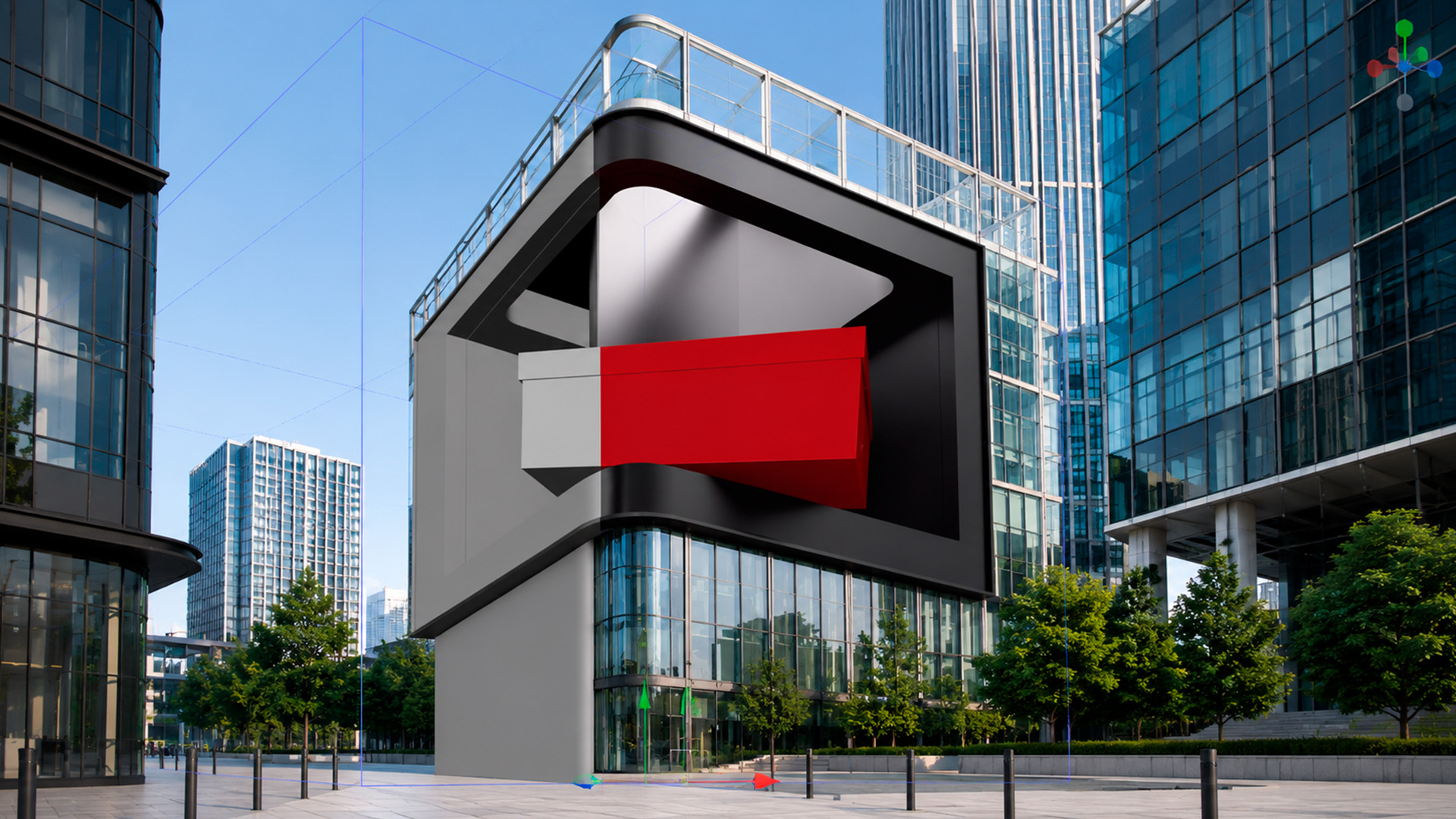
An example of how 3D technology can generate a quick and surprising visual impact, even if not pure FOOH, can be found in Cinética Studio's work for Tecate. We developed anamorphic content with forced perspective, designed for giant LED screens. The piece created an illusion of depth and scale that was impossible to the naked eye, transforming the space into an immediate attraction point. This project, while not a reaction to a real-time event, demonstrates the studio's ability to conceive and produce impactful 3D animations with precise technical execution and within tight deadlines—a critical factor for reactive FOOH. The lesson here is that mastery in 3D content creation and an understanding of how it interacts with the physical (or simulated) environment are fundamental for any campaign seeking to capture attention instantly.
Massively successful reactive FOOH campaigns often share several characteristics. First, a central idea that is inherently shareable and resonates with the cultural pulse of the moment. Second, impeccable execution that makes the illusion credible and visually striking. And third, a dissemination strategy that amplifies the viral effect, often relying on the immediacy of social media. Production speed is the catalyst that allows these three elements to converge at the opportune moment. A 2023 HootSuite study showed that campaigns with impactful and moment-relevant visual elements are 50% more likely to be shared.
Agility in production refers not only to technical speed but also to a team's ability to pivot and adapt creativity to changing circumstances. This implies having fluid internal processes, advanced technological tools, and a multidisciplinary team that can collaborate efficiently under pressure. The most important lesson from these cases is that reactive FOOH is not just a matter of technology, but a synergy between creativity, strategy, and responsiveness.
The Role of a Specialized Studio in Reactive FOOH Production
The execution of reactive FOOH (Fake Out-Of-Home) campaigns, especially those aiming to capitalize on moment marketing, demands a unique blend of creative agility, technological mastery, and a deep understanding of digital narratives. This is where a specialized creative technology studio, like Cinética Studio, becomes an indispensable strategic ally for brands.
A studio with expertise in 3D animation and CGI not only possesses the technical tools but also the know-how to transform a fleeting idea into a visually stunning and credible piece in record time. The ability to model, texture, light, and animate 3D objects with photorealistic accuracy is fundamental for effective FOOH. This goes beyond simple graphic creation; it involves understanding how light interacts with materials, how objects behave in different environments, and how to seamlessly integrate these elements into existing footage or photographs.
Speed is a critical factor in reactive FOOH. A specialized studio has multidisciplinary teams that can work in parallel: creative directors who conceptualize rapidly, 3D artists who model and animate, and compositors who integrate CGI into real footage. This optimized structure drastically shortens production times, moving from idea to final piece in a matter of hours or a few days—something unattainable for internal teams with limited resources or agencies without adequate technical infrastructure. According to a 2022 Deloitte report, companies collaborating with specialized creative technology studios report a 25% reduction in delivery times for complex projects.
Furthermore, Cinética Studio's experience in anamorphic 3D content projects, such as the one developed for Tecate, demonstrates the ability to create illusions of depth and scale that surprise the viewer. While FOOH doesn't always seek anamorphism, this skill underscores the technical mastery required to manipulate visual perception and generate a memorable impact. The same expertise in Blender for creating animations, assets, lighting, and texturing, applied in large-scale projects, is directly transferable to the agile production of FOOH pieces.
Finally, a specialized studio brings a strategic vision for virality and cultural impact. It's not just about producing an attractive image or video, but about understanding which elements will resonate with the audience, how to optimize the piece for different digital platforms, and how to maximize its sharing potential. This combination of technical prowess, operational agility, and strategic vision is what positions a creative technology studio as the ideal partner for brands looking to master the art of reactive FOOH in the fast-paced world of moment marketing.
The Future of FOOH and Moment Marketing: Beyond Speed
Fake Out-Of-Home (FOOH) and moment marketing are not fleeting trends but rather the vanguard of brand communication that values relevance, immediacy, and the capacity to surprise. Looking ahead, the evolution of these strategies will be intrinsically linked to technological advancements and a deeper understanding of consumer behavior in digital and physical environments.
Generative artificial intelligence as a catalyst
One of the pillars of this evolution will be generative artificial intelligence. AI tools that already assist in the creation of 3D images and animations will become even more sophisticated, enabling the generation of high-quality visual assets in a fraction of the current time. This will not only accelerate production but also democratize access to FOOH creation, allowing brands to react to real-time events with unprecedented speed and scale. AI will not only generate visuals but also analyze trends, predict the virality of certain content, and optimize distribution to maximize impact. It is estimated that generative AI could reduce content production costs by 30-50% by 2025, according to a Gartner report.
Real-time data integration and personalization
The integration of real-time data will be another key factor. Imagine FOOH that not only reacts to an event but dynamically adapts to the viewer's geographical location, weather conditions, or even social sentiment data at a given moment. This will transform FOOH from a static reactive piece into a hyper-personalized and contextual experience, elevating the level of immersion and connection with the audience. The ability of a studio like Cinética Studio to integrate these data sources into its 3D production workflows will be a crucial differentiator.
Convergence with immersive technologies
Furthermore, the convergence with other immersive technologies such as augmented reality (AR) and virtual reality (VR) will open new frontiers. While current FOOH relies on the illusion of a physical activation, the future could see FOOH pieces that invite direct interaction through AR on mobile devices, or even fully immersive FOOH experiences in mixed reality environments. This will not only increase virality but also offer brands new ways to tell stories and engage their audiences more deeply.
Sustainability and ethics in virtual production
Finally, sustainability and ethics will play an increasing role. As FOOH becomes more ubiquitous, transparency about its digital nature and the environmental impact of its production (albeit virtual) will be important considerations. Brands and creative studios must ensure that these campaigns, though ephemeral, align with values of authenticity and responsibility. The future of FOOH and moment marketing is one of greater speed, personalization, immersion, and, above all, boundless creativity that will continue to redefine out-of-home advertising.
At Cinética Studio, we are at the forefront of these innovations, combining our expertise in CGI, 3D animation, and virtual production with a deep understanding of moment marketing to create FOOH campaigns that not only capture attention but also generate lasting impact. If your brand seeks to capitalize on immediacy and virality with creative and technologically advanced solutions, we invite you to explore how we can transform your ideas into unforgettable experiences. Contact us to take your next FOOH campaign to the next level.
Frequently Asked Questions (FAQ) about FOOH and Moment Marketing
What is FOOH (Fake Out-Of-Home)?
FOOH is a marketing technique that uses Computer-Generated Imagery (CGI) to create the illusion of spectacular advertising installations in public spaces. These activations are digital and designed to be shared on social media, generating virality without the need for a real physical structure.
How does FOOH relate to moment marketing?
FOOH relates to moment marketing by allowing brands to react quickly to current events, trends, or news with visually impactful content. The agility in FOOH production enables brands to capitalize on the moment marketing opportunity window to generate instant relevance and engagement.
How long does it take to produce a reactive FOOH campaign?
The production time for a reactive FOOH can range from a few hours to a few days, depending on the complexity of the concept and the studio's efficiency. Specialized studios like Cinética Studio optimize their workflows and use advanced technology to accelerate this process without compromising quality.
What technologies are key for rapid FOOH production?
Key technologies include 3D modeling and animation software (like Blender), real-time rendering engines (like Unreal Engine or Unity), and the use of extensive 3D asset libraries. These tools, combined with team expertise, enable agile and high-quality production.
How can a specialized studio like Cinética Studio help my brand with reactive FOOH?
Cinética Studio offers expertise in CGI, 3D animation, and virtual production, allowing us to transform ideas into impactful FOOH campaigns in record time. We have multidisciplinary teams, advanced technology, and a strategic vision to ensure your FOOH is not only visually appealing but also viral and relevant to your audience. Explore our FOOH and CGI projects.
Featured in
Our work has been recognized by leading industry publications covering creativity, technology, and innovation.
Discover interviews, features, and articles that highlight our projects and perspective.


You may also like
Ready to create something extraordinary?
From concept to execution, we design experiences that connect people, technology, and storytelling in unforgettable ways.