Blog Post
The Perfect Brief for Your FOOH: Keys to Accurate Quotes and No Post-Production Surprises
What is FOOH and Why a Brief is Your Best Ally
FOOH, or Fake Out-Of-Home, has burst onto the advertising scene as one of the most viral and effective trends of recent years. It's a technique that uses 3D animation and visual effects (CGI) to create the illusion that a product or brand activation physically exists in a public space, when in reality it has been digitally generated and superimposed onto real footage. Think of a giant luxury handbag rolling through the streets of a capital city, or a refreshing beverage container emerging from an urban river: these hyperrealistic and often surprising images are shared massively on social media, generating an impact and reach that traditional outdoor advertising can hardly match.
The magic of FOOH lies in its ability to blur the line between the real and the digital, capturing public attention in a novel and memorable way. However, behind every successful FOOH campaign is a complex production process that requires impeccable communication between the brand and the creative studio. This is where the brief comes in: a fundamental document that acts as the project's roadmap, ensuring that the creative vision is faithfully translated into an impactful final piece and, most importantly, that it meets the brand's objectives.
A well-crafted brief is much more than a simple wish list; it's a strategic tool that prevents misunderstandings, optimizes time and resources, and ensures that the creative studio thoroughly understands the project's expectations and limitations. In the realm of FOOH, where technical precision and artistic vision must converge perfectly, the clarity of the brief is even more critical. It allows the studio to anticipate technical challenges, propose innovative solutions, and ultimately deliver an accurate quote and a final result that not only meets but exceeds expectations.
Without a detailed brief, the risk of creative deviations, endless revisions, and cost overruns increases exponentially. An incomplete or ambiguous brief can lead the studio to interpret the brand's vision differently, resulting in a final product that doesn't resonate with the original strategy. Conversely, a comprehensive brief empowers the studio to work efficiently, creatively, and with a deep understanding of what is sought, laying the groundwork for a successful collaboration and a FOOH that truly goes viral.
The Anatomy of a FOOH Brief: Essential Elements
A well-structured brief is the cornerstone of any successful FOOH project. It's not just about listing requirements; it's about crafting a document that unequivocally communicates the vision, objectives, and expectations. By detailing each aspect, guesswork is minimized, and the creative studio's efficiency is maximized, enabling them to deliver a proposal that resonates with the brand's essence and goals.
The first crucial component is the marketing and communication objectives. What is this FOOH campaign intended to achieve? Increase brand awareness, drive social media engagement, generate website traffic, or launch a new product? Quantifying these objectives with clear metrics (e.g., "generate X million impressions," "achieve Y% engagement") is fundamental. This allows the studio to understand the desired impact and propose creative solutions directly aligned with those outcomes.
Secondly, the brand and product/service description is vital. Beyond the logo, the studio needs to understand the brand's personality, values, tone of voice, and market positioning. If the FOOH is for a specific product, its unique features, key benefits, and the main message to be conveyed must be highlighted. This information forms the basis for ensuring that the proposed creativity is authentic and consistent with the brand's identity.
The target audience constitutes the third pillar. Who is the FOOH aimed at? Defining the demographics, psychographics, interests, media consumption habits, and online behaviors of the target is indispensable. A FOOH seeking virality among Gen Z will not have the same creative approach as one aimed at a more mature audience. Knowing the recipient allows the studio to design an experience that truly connects and generates the desired reaction.
Finally, the main message or key message that the FOOH piece should communicate. This must be concise, memorable, and aligned with the objectives. Is there a specific call to action? Is a particular emotion to be evoked? This message will be the guiding thread for the entire visual and conceptual narrative of the FOOH, ensuring that, beyond the visual impact, the audience receives the brand's key information.
Creative Vision and References: Translating Your Idea into Images
Once the strategic foundations and business objectives are set, the next crucial step in a FOOH brief is to articulate the creative vision. This is where the essence of the campaign is translated into a visual language that the studio can interpret and execute. It's not just about describing what you want to see, but about evoking the atmosphere, tone, and emotion the piece should generate. A vague description can lead to misinterpretations and, consequently, to results that don't meet expectations.
To achieve this clarity, including visual references is essential. A mood board is a powerful tool that compiles images, videos, textures, color palettes, and typography that inspire the desired aesthetic. These references can come from other FOOH campaigns you admire, works of art, cinematography, photography, or even elements from everyday life. The important thing is that they serve as a shared visual starting point, a common language between the brand and the creative studio.
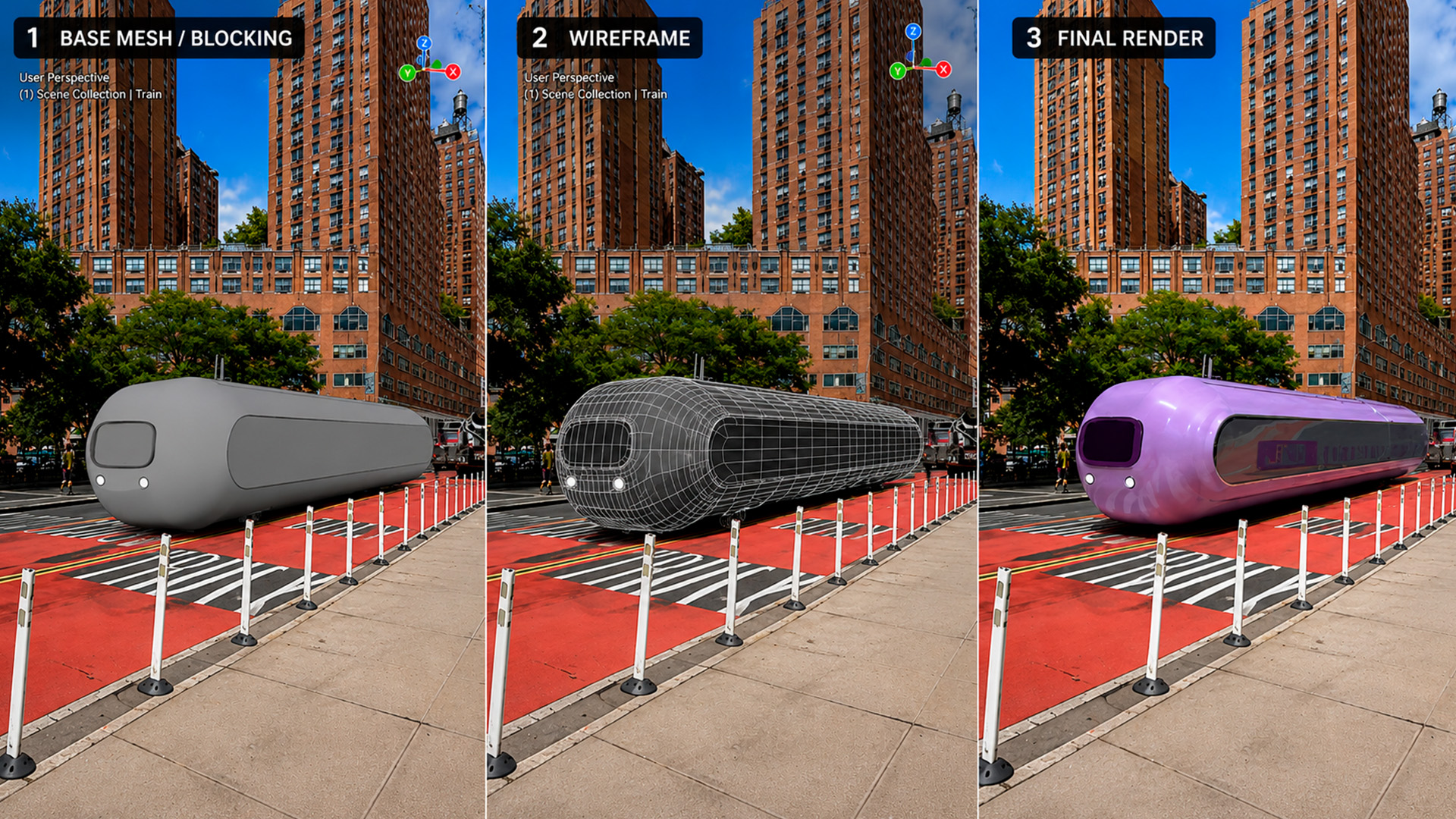
In addition to the mood board, it is fundamental to describe in detail the key elements of the 3D animation or CGI. What object or character will be the protagonist? What action will it perform? What is the environment in which the scene will unfold? For example, if the idea is a giant product interacting with the urban landscape, specify how you want that product to look (materiality, lighting, scale) and how it will interact with its surroundings (does it float, bounce, disintegrate?). The more granular the description, the less room there will be for ambiguity.
Also consider the tone and style of the animation. Are you aiming for photorealistic realism that deceives the eye, or do you prefer a more cartoonish and playful style? Should the piece be epic and grand, or subtle and elegant? These aesthetic decisions have a direct impact on production time and the technical resources required. A FOOH aiming for hyperrealism, like those often seen in viral campaigns where impossible objects seem to interact with real buildings, requires a much higher level of detail and rendering than a piece with a more stylized approach. Articulating these preferences from the outset allows the studio to assign the right talent and more accurately estimate post-production efforts.
Finally, don't forget to mention any sound or music elements you have in mind, even if it's just a genre or mood reference. Although FOOH is predominantly visual, audio can significantly enhance the experience if the piece is shared with sound. Providing this information beforehand ensures that the creative vision is fully understood, facilitating an accurate quote and a smoother production process.
Technical and logistical details that impact production
Beyond the creative vision, a FOOH brief must address the technical and logistical aspects that will define the feasibility and cost of production. These details are crucial for the creative studio to properly scope the project and avoid surprises in advanced stages. Precision in this section allows for an accurate quote and a smooth post-production process.
One of the first points to define is the desired location for the virtual intervention. Is it an iconic building in a specific city, a natural landscape, or a generic space? Providing high-resolution images or even 3D models of the site, if available, is very helpful. This allows the CGI team to assess the complexity of integration, environmental lighting, and potential perspective challenges. The choice of location not only influences aesthetics but also rendering time and the need for licenses or permits if references to private or public properties are used.
Another determining factor is the type of interaction expected, if any. Although most FOOH are passive visualizations, some concepts may involve interactive or reactive elements. For example, if the virtual object is expected to react to a dynamic environment (such as traffic or people's movement), this requires additional technical planning for simulation and rendering. Specifying whether the virtual object should interact with real elements or merely "pose" on them is fundamental.
The final video duration is a basic but essential parameter. A 15-second clip does not have the same production cost as a 60-second one, due to the number of frames to render and the complexity of the animation. Along with this, the expected delivery formats (resolution, codecs, aspect ratio for different platforms like Instagram Reels, TikTok, YouTube, etc.) must be clearly specified. This ensures that the final product is optimized for distribution and does not require additional conversions that could compromise quality.
Finally, it is vital to communicate any brand or legal restrictions that may affect production. This includes strict style guides, specific color palettes, logo usage, or any element that cannot be altered. Also, if there are legal considerations regarding the representation of certain products or interaction with public space, they must be mentioned. Anticipating these limitations allows the creative studio to propose solutions that meet all requirements from the outset, avoiding costly rework and delays.
Budget and Timeline: Realism to Avoid Surprises
One of the fundamental pillars for the success of any FOOH project is clarity and realism regarding the budget and timeline. These two factors not only determine the feasibility of the idea but also directly influence the complexity of the CGI, the quality of post-production, and ultimately, the impact of the final result. A brief that omits this information or presents it ambiguously is a recipe for misunderstandings and unpleasant surprises in advanced stages of the project.
It is crucial that the brief specifies a realistic budget range. Understanding the available budget allows the creative studio to propose solutions that fit within those constraints, optimizing resources and suggesting creative alternatives that maximize impact without overspending. For example, a tighter budget might mean fewer shots, less complex 3D elements, or a shorter animation duration. Conversely, a more generous budget opens the door to more sophisticated visual effects, more complex integrations with the real environment, and greater dedication to details that elevate the piece to another level.
Similarly, the timeline is a critical factor. FOOH projects, especially those aiming for virality, often have very specific windows of opportunity (product launches, events, seasons). The brief should detail key dates: first draft delivery date, review date, final delivery date, and, if applicable, the public launch date. A tight timeline may require a larger team or a more direct approach to production, while a more flexible deadline allows for greater experimentation and refinement at each stage, from 3D modeling to final composition.
Transparent communication about these aspects from the outset prevents the studio from investing time and resources in proposals that are out of scope. A brief that clearly establishes the budget and timeline allows the creative studio, like Cinética Studio, to offer an accurate quote and a viable work plan, aligning the expectations of both parties and ensuring that the creative vision materializes within the practical limits of the project. This not only builds trust but also optimizes the production process and minimizes the need for costly adjustments or unexpected delays.
The Role of Post-Production in FOOH and How to Anticipate It in the Brief
In the FOOH universe, post-production isn't a secondary stage; it's the very heart of the magic. This is where illusion materializes, where 3D elements seamlessly integrate with real footage, and where fantasy becomes a convincing reality for the viewer. Anticipating and detailing post-production requirements in the brief is crucial to avoid cost and timeline surprises, ensuring the final result meets visual and narrative expectations.
An effective brief must specify the desired complexity level for visual effects (VFX). Is it a subtle integration of a 3D object into an existing environment, or a radical transformation of space with computer-generated elements dynamically interacting with the surroundings? The more ambitious the vision, the greater the investment in 3D modeling, texturing, lighting, animation, and rendering. Clarity on this point allows the studio to accurately estimate the work hours and specialized talent required.
Element integration is another vital aspect. It's not enough to simply place a 3D object; it must credibly interact with the light, shadows, and reflections of the real environment. The brief should indicate whether simulations of fluids, particles, destruction, or any other physical effect are needed to add realism. For example, if a giant product "falls" onto a building, is it expected to generate dust, debris, or for the impact to be reflected on the surface? These details, though seemingly minor, have a significant impact on post-production effort.
Color correction and grading are fundamental to unifying the image. The brief should establish the desired visual aesthetic, whether a cinematic, vibrant, or more subdued look is sought. This includes chromatic consistency between real and computer-generated elements, ensuring all footage feels like a cohesive piece. A good brief can even include color references or visual styles from other campaigns or films.
Finally, sound design, though often underestimated in FOOH, is a key component for immersion. Will the giant 3D object make a noise when it "appears"? Will there be impact sounds, ambiance, or music that reinforces the narrative? Specifying audio expectations allows the studio to consider sound composition, editing, and mixing from the earliest stages, preventing the visual impact from being diminished by a poor auditory experience. By detailing these points in the brief, brands empower the studio to deliver an accurate quote and a final result that not only surprises but also delights.
Key Questions for Your Creative Studio: What to Expect and How to Collaborate
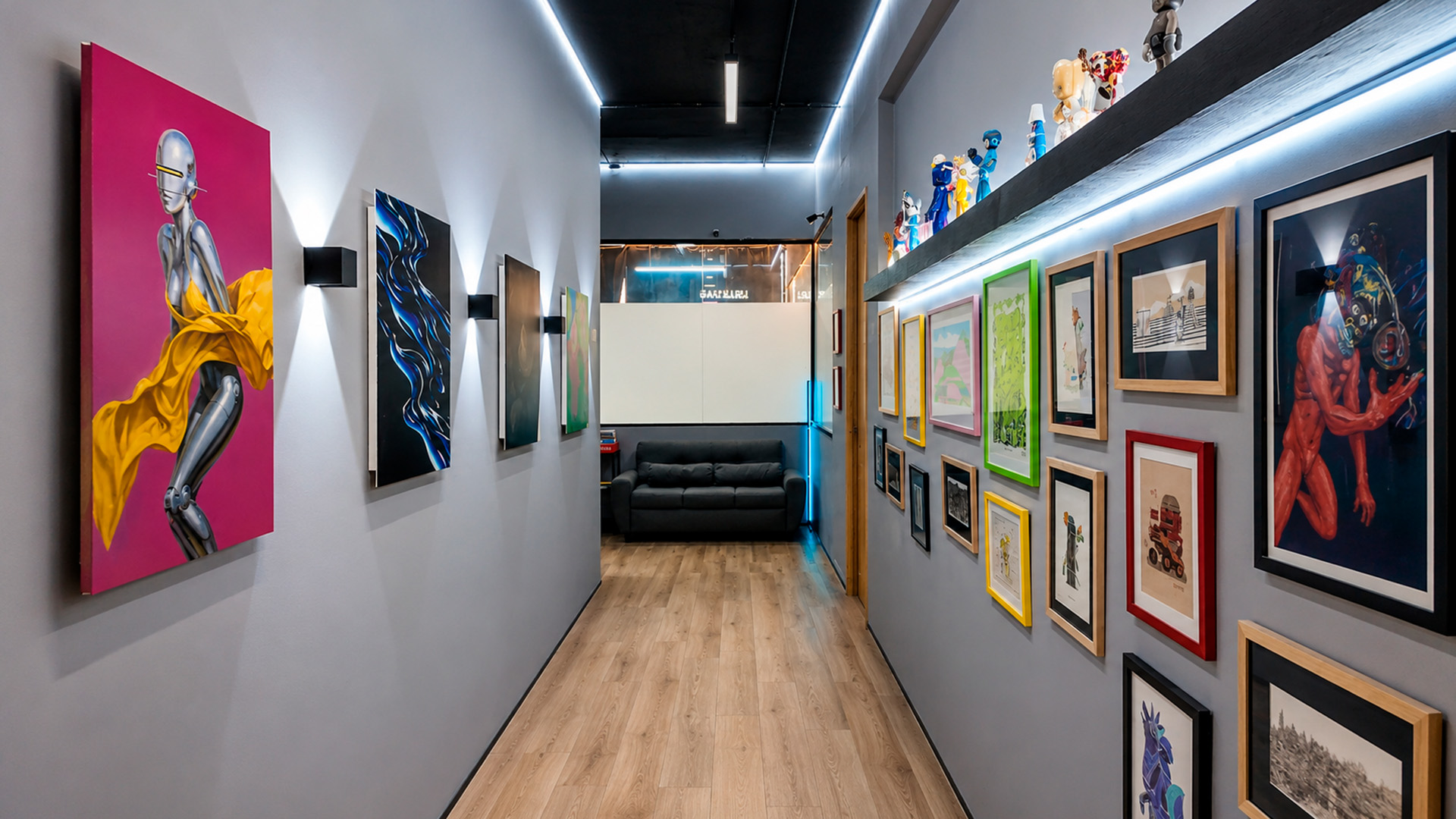
The relationship between a brand and a creative studio is a collaboration fueled by communication and transparency. A detailed brief is the starting point, but continuous dialogue is what ensures the success of a FOOH project. To optimize this interaction and avoid surprises, it's essential for brands to ask strategic questions to their creative studio from the earliest stages.
One of the first inquiries should focus on the studio's work methodology. Understanding how they approach a FOOH project, from conceptualization to final delivery, allows for aligning expectations. Questions like "What is your ideation and development process for a FOOH?" or "How do you handle revisions and changes during production?" are crucial. This helps to understand milestones, checkpoints, and key moments for feedback.
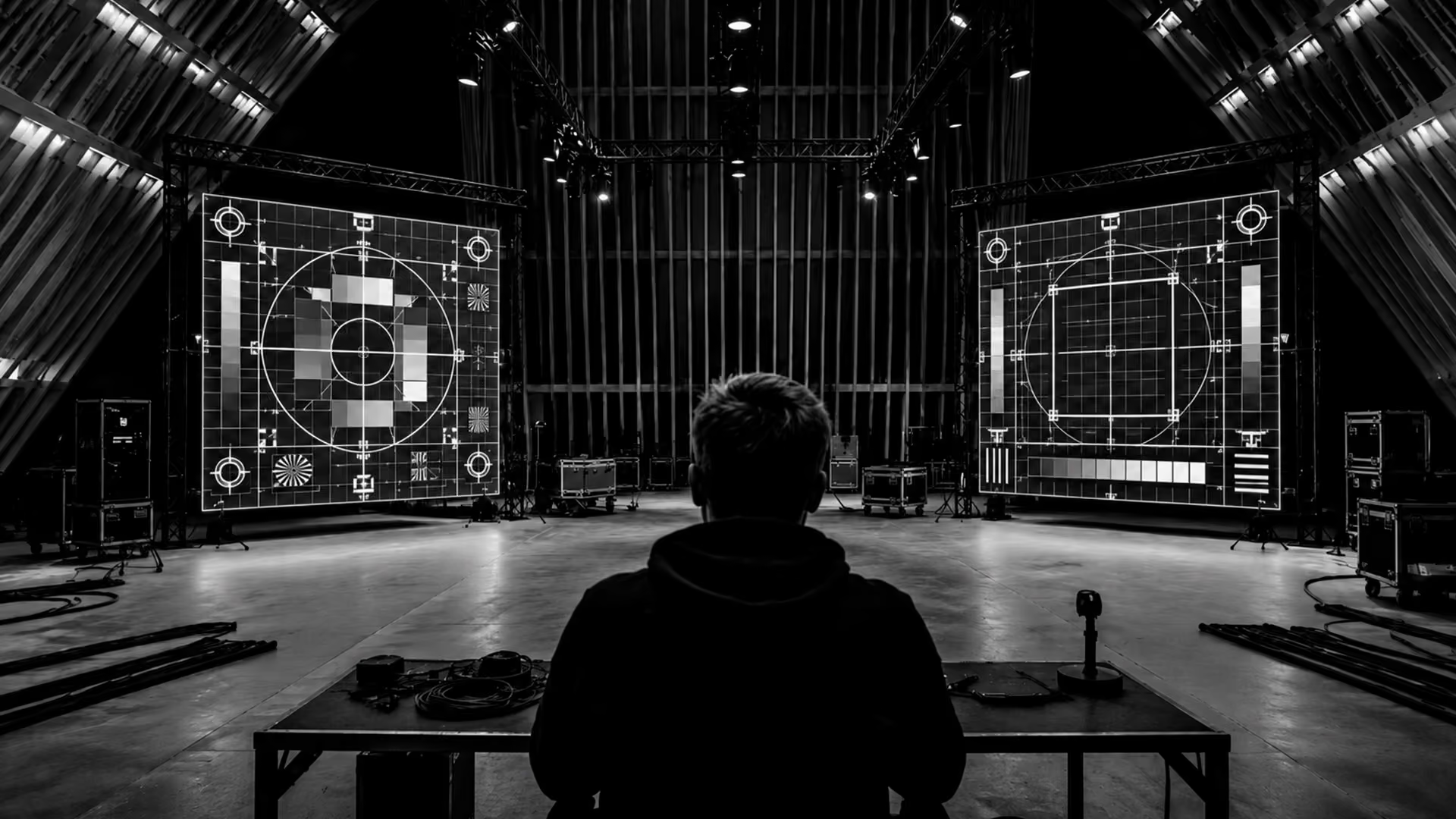
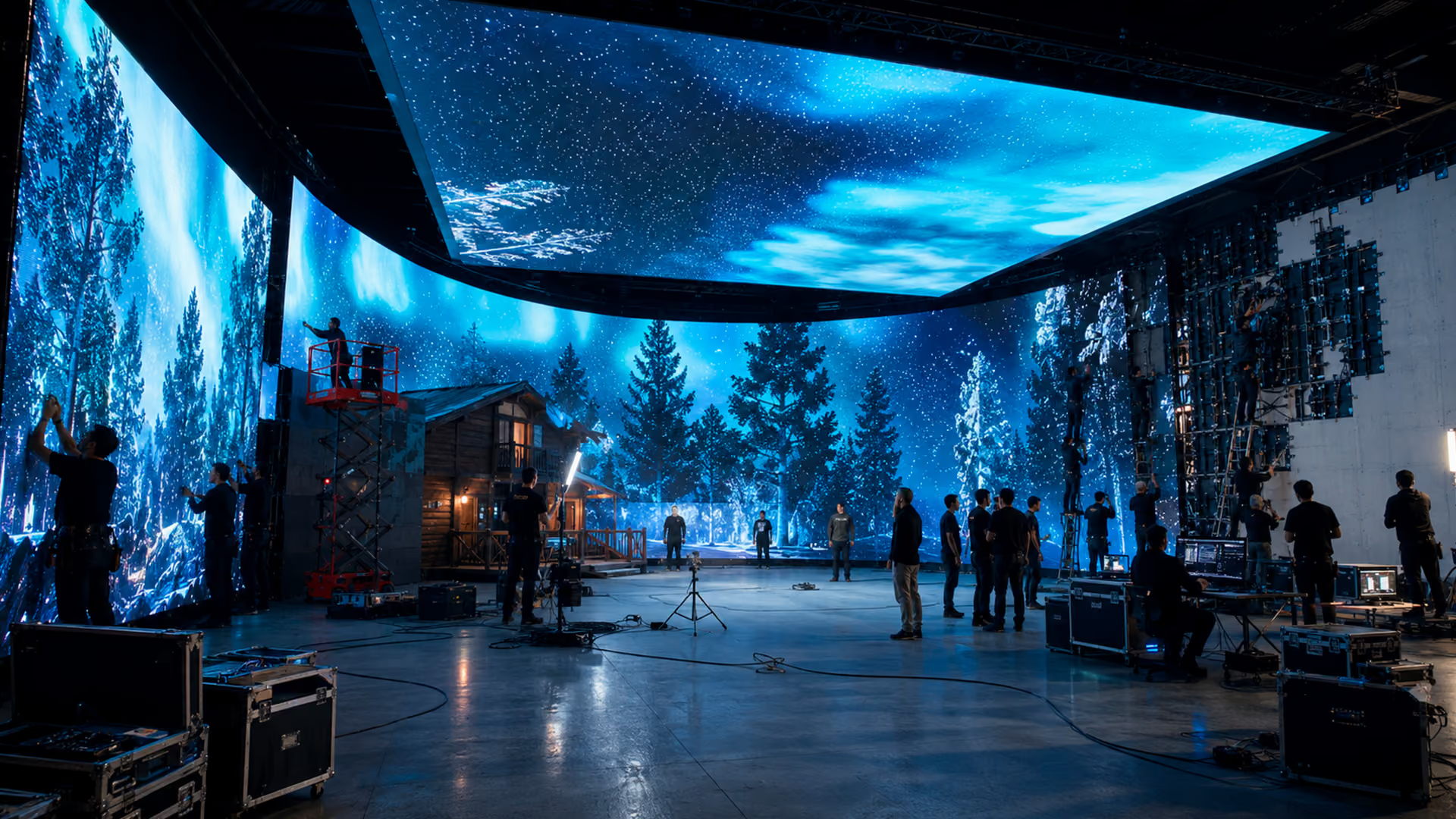
Another vital aspect is the studio's specific experience in FOOH and CGI. While a studio may have an impressive portfolio, it's important to inquire about their track record in this particular format. "Can you share examples of similar FOOH projects you've completed?" or "What technical challenges have you faced in FOOH productions and how did you resolve them?" are questions that reveal their capability and technical knowledge. At Cinética Studio, for example, we have developed anamorphic 3D content for brands like Tecate, where precision in forced perspective and integration with large-format LED screens were key to generating an impactful illusion. Knowing these details allows for evaluating the studio's suitability for the specific project.
The cost structure and budget breakdown should also be an open discussion point. Beyond the final figure, it's important to understand what each item includes. "How are production, post-production, and licensing costs broken down?" or "What factors could lead to additional costs and how are they communicated?" are questions that promote financial transparency. An experienced studio will be able to offer a clear and justified breakdown, which builds trust and avoids future misunderstandings.
Finally, time management and deliverables are fundamental. "What is the estimated timeline for each phase of the project?" and "What final delivery formats can we expect?" are questions that ensure the project stays on track and that the final outcome meets the brand's needs. Effective collaboration is built on constant communication and clarity at every stage, transforming the initial brief into a shared roadmap towards FOOH success.
Success Stories and Lessons Learned from Well-Executed Briefs
The theory behind constructing a robust brief for a FOOH project is validated in practice, where initial clarity translates into spectacular and efficient results. Creative technology studios like Cinética Studio have witnessed how a well-articulated brief not only streamlines the process but also elevates the final quality of a campaign.
A recurring example of success emerges when the brief precisely specifies the digital environment where the FOOH will be published. If a brand details that the campaign is intended for platforms like Instagram and TikTok, including exact dimensions, maximum video duration, and the need for subtitles or graphic elements that function without sound, the studio can optimize everything from 3D modeling to animation and rendering. This avoids costly revisions and ensures the final product is ready to go viral within the desired ecosystem.
Another key lesson comes from briefs that include very specific visual and tonal references. When a client provides not only examples of FOOH they like but also examples of their own brand campaigns that have performed well, or even those of competitors, the creative team can quickly align with the aesthetic and message. This accelerates the conceptualization phase and reduces the likelihood of creative detours that require significant adjustments in advanced post-production stages.
Anticipating post-production elements is another critical factor. A brief that details the need to integrate the FOOH with a 360 campaign, specifying that adapted versions will be needed for different formats (stories, reels, banners), or that a breakdown of 3D elements will be required for future activations, allows the studio to plan the workflow from the outset. This can include delivering layered files or preparing optimized models for subsequent uses, maximizing the value of the generated content.
Finally, briefs that set realistic expectations for budget and timeline, and are also flexible to discuss creative alternatives that fit these limitations, are the ones that generate the most fruitful relationships. Transparency in these areas allows the studio to propose innovative solutions that meet brand objectives without sacrificing quality or exceeding available resources. At Cinética Studio, we have seen how this open collaboration transforms a simple assignment into a memorable and effective piece of communication that not only impacts the audience but also optimizes the brand's investment.
Featured in
Our work has been recognized by leading industry publications covering creativity, technology, and innovation.
Discover interviews, features, and articles that highlight our projects and perspective.


You may also like

Ready to create something extraordinary?
From concept to execution, we design experiences that connect people, technology, and storytelling in unforgettable ways.