Blog Post
FOOH: When Digital Illusion Isn't Enough, and Your Campaign Needs the Physical Impact of OOH or DOOH
The FOOH Explosion: A Phenomenon That Redefined Out-of-Home Advertising
In the contemporary advertising landscape, few trends have captured the collective imagination and brand attention with the same intensity as FOOH (Fake Out-Of-Home). This acronym describes a technique where CGI (Computer-Generated Imagery) elements are integrated photorealistically into videos or photographs of real urban environments. The result is a convincing illusion that giant objects, impossible installations, or fantastic interactions are occurring in public spaces, when in reality, everything has been digitally created.
The rise of FOOH is no coincidence. It responds to brands' constant search to cut through advertising noise and generate a memorable impact. In a world saturated with messages, the ability to surprise and delight the public has become an invaluable asset. FOOH, with its intrinsically viral nature, offers precisely that: a visual experience so unusual and captivating that it invites instant sharing on social media. This inherent virality is its greatest strength, allowing campaigns with relatively modest media budgets to reach massive audiences through digital word-of-mouth. In fact, a study by the Out of Home Advertising Association of America (OAAA) revealed that OOH campaigns incorporating digital or interactive elements can increase social media engagement by up to 18% and web traffic by 38% [Source: OAAA, 2023].
The magic of FOOH lies in its ability to transcend the physical and budgetary limitations of traditional out-of-home advertising. Where a physical billboard has a fixed size and location, a FOOH activation can feature a product floating above a skyscraper, an animated character interacting with a historic monument, or a giant soda bottle spilling down a busy street. These digital creations are not only visually striking but also open up an unlimited range of creative possibilities, allowing brands to tell stories in ways previously unimaginable.
The production of high-quality FOOH involves an expert combination of 3D modeling, animation, texturing, lighting, and digital compositing. Artists and technicians must master the art of photorealistic integration, ensuring that virtual elements perfectly mimic the real environment in terms of perspective, light, shadows, and movement. It is this attention to detail that makes FOOH credible and, therefore, effective. When executed correctly, FOOH not only generates awe but also drives online conversation, positioning the brand at the center of digital culture and amplifying its message on a global scale.
FOOH vs. OOH and DOOH: Understanding the Fundamental Differences
To understand when FOOH (Fake Out-Of-Home) is the right tool and when it's not, it's crucial to differentiate it from its predecessors and counterparts: traditional OOH (Out-of-Home) and DOOH (Digital Out-of-Home). While all aim to capture attention in public spaces, their methodologies, reach, and perceptions differ significantly.
Traditional OOH refers to any form of advertising found outside the consumer's home. This includes static billboards, street furniture (mupis), public transport ads, and point-of-sale signage. Its nature is inherently physical, and its impact relies on repetition and constant visibility in strategic locations. Interaction is minimal or non-existent, and its primary goal is brand building and long-term recall through passive exposure. According to a Statista report, global spending on traditional OOH advertising remained robust, reaching 29 billion dollars in 2023, demonstrating its persistent relevance [Source: Statista, 2023].
On the other hand, DOOH represents the digital evolution of OOH. It uses LED screens, digital panels, and other electronic displays to show dynamic and, at times, interactive content. While still a physical presence in the urban environment, DOOH allows for greater flexibility in content scheduling, segmentation by time of day or event, and the possibility of integrating elements like QR codes or even basic facial recognition to adapt messages. Its advantage lies in the ability to update campaigns in real-time and offer a more engaging visual experience than static OOH. The DOOH market has grown exponentially, with projections placing it at over 20 billion dollars by 2027, driven by its segmentation and measurement capabilities [Source: Grand View Research, 2020].
FOOH, in contrast, is a purely digital creation. It does not physically exist in public space. It consists of CGI (Computer-Generated Imagery) animations that simulate the presence of giant advertising objects or installations in real urban environments, but which only exist in videos or images shared on social media. Its power lies in illusion, surprise, and, above all, virality. FOOH does not seek passive exposure in a physical location but rather massive distribution through digital platforms, generating conversation and shares. Its interaction is indirect, through comments, likes, and shares, and its reach is global, not limited by the geography of a billboard.
The key distinction lies in materiality. OOH and DOOH are tangible; they occupy real space and are experienced by passersby in their daily lives. FOOH, however, is a digital fantasy, a piece of content designed to be consumed on a screen. They are not mutually exclusive; in fact, a robust marketing strategy can integrate all three, using FOOH to generate initial buzz and virality, and then complementing it with OOH or DOOH campaigns to anchor the brand in the physical world and reinforce the message at key touchpoints.
Signal #1: When physical interaction is at the heart of the experience
One of the clearest signals that an advertising campaign could benefit more from a traditional OOH (Out-of-Home) or DOOH (Digital Out-of-Home) activation, rather than FOOH, is when physical and tangible interaction with the public is a central component of the experience. FOOH, by its digital nature and virtual existence, is a convincing illusion primarily shared through screens. Its power lies in visual surprise and social media virality, but it lacks the ability to offer tactile interaction or direct participation in the physical space.
If the brand's objective is for consumers to touch a product, sample it, participate in a real-time interactive game, or become an active part of an installation, FOOH simply cannot deliver on that promise. In these scenarios, the immersive experience is built through the individual's physical presence, their ability to manipulate elements, or their response to direct sensory stimuli that go beyond the visual. A FOOH can simulate a giant object or a fantastic scene, but it cannot allow a user to interact with it meaningfully in the real world.
Consider, for example, activations where the public becomes the engine of the experience. At Cinética Studio, we have developed projects that exemplify this need for physical interaction. For Coca-Cola, we created an interactive floor using TouchDesigner and Computer Vision to detect and track people as they walked through a tunnel. Real-time generative graphics visually changed based on movement and the number of users, transforming the space into a dynamic and reactive experience. Here, the physical presence and movement of each person were indispensable for the activation to come alive. A FOOH could have shown an interactive floor in a video, but the sensation of walking on it and seeing how it reacts to your steps is irreplaceable.
Another case that underscores the importance of physical interaction was the karaoke experience we developed for Amazon Music during a soccer match. Attendees entered a booth, chose a song, and sang, while our software recorded the best 20 seconds of their performance. Afterward, they received a QR code to download and share their video. This activation not only generated shareable content but also offered a personal and memorable experience through direct participation. A FOOH could not have replicated the excitement of singing live and receiving a personalized memento of that moment.
When the marketing strategy seeks to generate a deep emotional connection through active participation, product testing, or the creation of a personal and untransferable memory, investing in an OOH or DOOH activation with physical interactive components will always be more effective than the illusion of FOOH. The key is to evaluate whether the interaction is a mere visual embellishment or the fundamental pillar of the connection that is sought with the audience.
Signal #2: The Need for an Inescapable and Persistent Brand Presence
Another unequivocal sign that FOOH might not be the best option is when the campaign's primary goal is to establish a constant, inescapable, and persistent brand presence in a specific physical location. FOOH, by its digital and ephemeral nature, excels at virality and momentary impact. Its power lies in surprise, novelty, and the ability to generate online conversation, but not in physical permanence. A study by Nielsen found that OOH has an ROI of $5.97 for every dollar invested, outperforming other media in long-term brand building [Source: Nielsen, 2022].
When a brand seeks to embed itself in the consumer's mind through visual repetition in a real environment, or when it needs to continuously impact a local audience, traditional OOH or DOOH (Digital Out-of-Home) solutions are intrinsically superior. A billboard, a hoarding, or a digital screen at a strategic high-traffic point guarantees constant exposure over time. This permanence is crucial for long-term branding campaigns, for product launches requiring visual saturation in a specific market, or for keeping the brand top-of-mind for consumers day after day.
Consider, for example, a campaign aiming to position a new coffee shop chain in a city. While a spectacular FOOH might generate initial social media buzz, it won't replace the effectiveness of a series of strategically placed billboards and DOOH screens near the new branches. These ensure that pedestrians and drivers see the brand repeatedly, reinforcing the message and location, which eventually translates into physical visits. Consistent visibility builds familiarity and trust, elements that FOOH, being a digital illusion, cannot replicate in the physical world.
FOOH is a powerful tool for generating peaks of attention and virality, but its impact dissipates once the novelty wears off and the content stops actively circulating on social media. It lacks the ability to anchor itself in the urban landscape and become part of citizens' daily lives, as OOH and DOOH structures do. If the marketing strategy demands a physical presence that integrates into the environment and generates recall through prolonged exposure, investment should be directed towards formats that offer that inescapability and persistence.
Signal #3: The Goal is Direct Conversion or Immediate Point-of-Sale Action
When the primary goal of an advertising campaign is to drive a concrete, measurable short-term action—such as a direct purchase, a visit to a physical store, an app download, or a service registration—FOOH (Fake Out-Of-Home) is rarely the most efficient tool. FOOH's nature, focused on virality and emotional impact through surprise and novelty, positions it as a generator of brand awareness and engagement, rather than a driver of direct conversion.
Campaigns designed for immediate conversion greatly benefit from the geolocation and responsiveness offered by Digital Out-of-Home (DOOH) platforms or the strategic visibility of traditional Out-of-Home (OOH). A DOOH ad, for example, can display real-time offers, direct consumers to the nearest store via a QR code or interactive map, or even adapt its message based on the time of day or weather conditions. This immediacy and contextual relevance are crucial for closing the purchase cycle. In fact, DOOH has proven to be highly effective in conversion, with 70% of consumers who recall a DOOH ad taking a subsequent action, such as an online search or store visit [Source: Ocean Outdoor, 2021].
Consider a retail brand looking to increase foot traffic to its branches during a special sale. A FOOH showing a giant product floating over an iconic building might generate social media buzz, but how many of those virtual viewers would head directly to the store? In contrast, a series of strategically placed DOOH screens near the stores, displaying the specific offer and directions, or even a traditional OOH with a clear call to action and a simplified map, would have a much higher probability of converting interest into a physical visit.
The ability to segment geographically and provide useful information at the right time and place is an inherent advantage of OOH and DOOH. An ad at a bus stop promoting a nearby coffee shop, or a digital screen in a shopping mall highlighting exclusive discounts for visitors, are designed to capitalize on proximity and purchase intent. FOOH, being a digital creation that exists primarily in the online realm, lacks this direct physical connection to the point of sale or the desired action in the real world.
Furthermore, measuring conversion in FOOH campaigns is inherently more complex. While virality metrics such as shares, likes, and comments can be tracked, directly linking these interactions to sales or physical visits is challenging. In contrast, DOOH campaigns can integrate with attribution systems that measure direct impact on store traffic, online sales, or app downloads through promotional codes, QR codes, or even Bluetooth beacons. This clear attribution capability is fundamental for brands operating on tight budgets that need to demonstrate a tangible and direct return on investment (ROI).
Signal #4: When Authenticity and Credibility Outweigh Viral Surprise
FOOH, by its very nature, is an illusion. Its charm lies in surprise, in the disruption of reality that generates visual impact and digital conversation. However, this very characteristic can be a significant disadvantage for brands that need to project an image of solidity, seriousness, or a tangible and credible presence in the real world. When authenticity and trust are the pillars of communication, the ephemeral and digitally constructed nature of FOOH may not be the most suitable strategy. A Kantar study revealed that consumers perceive OOH advertising as more credible and less intrusive than other digital formats [Source: Kantar, 2020].
Consider, for example, sectors such as finance, pharmaceuticals, or even luxury brands with a deep heritage and tradition. For these entities, credibility is not just a desirable attribute, but a fundamental requirement. A real OOH (Out-of-Home) installation, whether an imposing billboard, an elegant bus shelter, or a physical experiential activation, conveys a sense of permanence and legitimacy that a CGI, however realistic, cannot fully replicate. The visible investment in a real physical space, the materiality of the structure, and the direct interaction with the urban environment reinforce a message of stability and trust that is difficult to simulate.
In these cases, the goal is not so much instant virality or momentary astonishment, but rather the construction of a long-term relationship based on reliability. A campaign that seeks to communicate the safety of a pharmaceutical product, the solidity of a banking institution, or the exclusivity of a high-jewelry piece, greatly benefits from a physical presence that validates its message. The public perceives the investment in a real OOH as a serious commitment from the brand to its environment and its consumers, a statement of intent that transcends the screen.
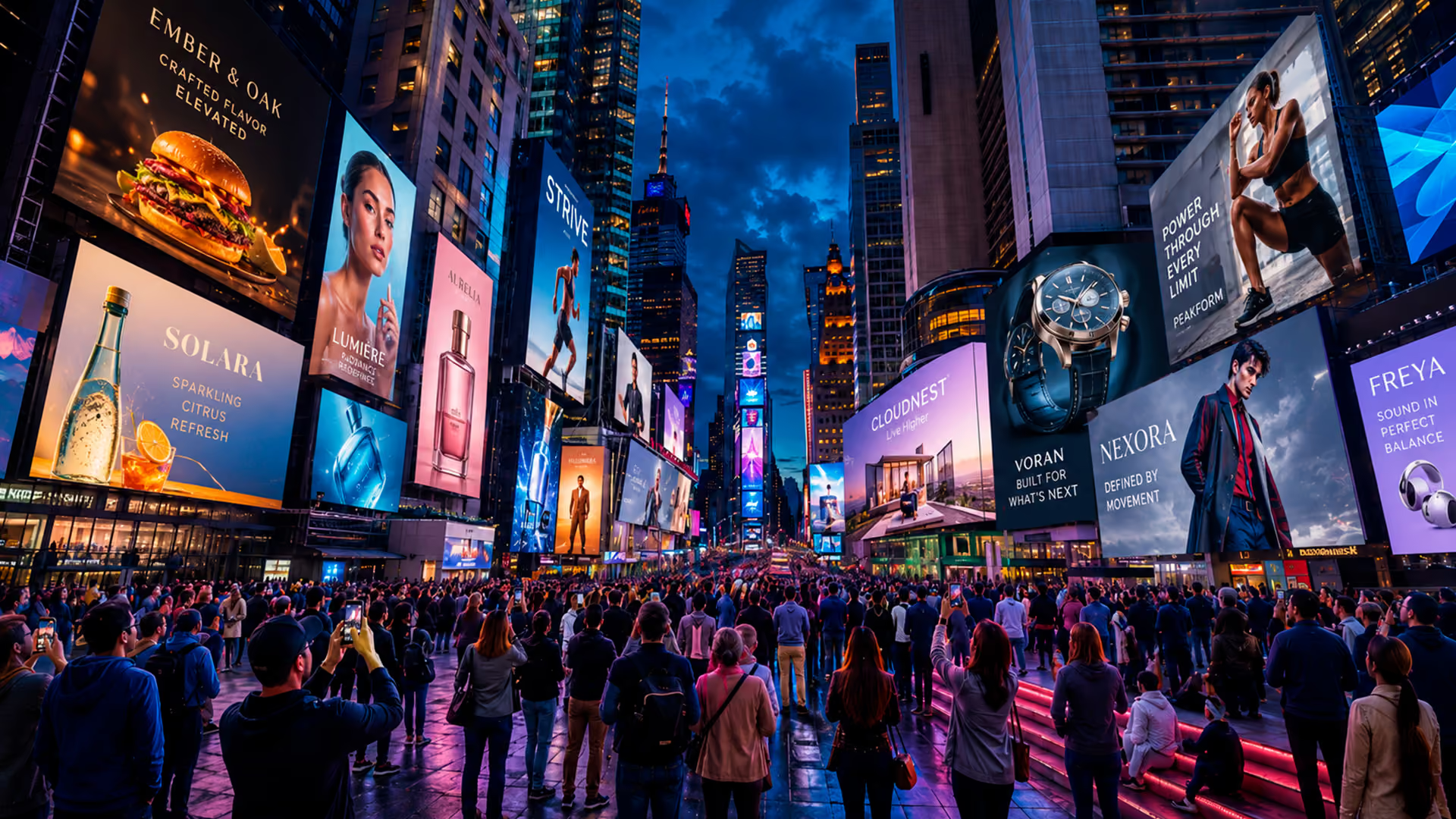
Even in the realm of DOOH (Digital Out-of-Home), where flexibility and update capability are key, presence on giant screens in strategic locations like Times Square or Piccadilly Circus, or in major shopping malls in Mexico City, offers inherent credibility. These screens are part of the urban fabric, are seen by millions of people in their daily lives, and their content, although digital, integrates into the real experience of the passerby. The brand appropriates a high-value public space, which translates into an increase in its perceived importance and relevance.
Therefore, if your brand's communication strategy focuses on building an image of trust, seriousness, and an undeniable presence in the physical world, it is likely that a real OOH or DOOH campaign, with its tangibility and its ability to authentically integrate into the environment, will be a more powerful and coherent option than the virtual surprise of FOOH.
Cinética Studio Success Stories: The Strategic Choice of Technology
At Cinética Studio, we understand that technology is a tool serving a communication objective. The decision to implement a FOOH, an interactive activation, or a traditional OOH campaign is not arbitrary; rather, it's the result of deep strategic analysis considering the audience, the message, and, fundamentally, the expected outcome. Our approach focuses on consulting and designing experiences that truly resonate with the audience and meet the client's KPIs, even if that means advising against a viral trend when it's not the optimal solution.
A clear example of this philosophy was seen in the development of experiences for NESTLE - NAN. Instead of seeking ephemeral virality, the goal was to educate and entertain children and their parents about the importance of microbiota. To achieve this, Cinética Studio designed a series of interactive games that transformed science into fun. Experiences were implemented using Unity, touchscreens, and interactive totems for a visual microbiota hunt, as well as a local multiplayer system with physical buttons for competitive challenges. An interactive wall with LiDAR detection was even developed, where children could run and explore, bringing science to life. These activations, with their direct physical interaction and educational content, achieved immersion and engagement that a FOOH, by its virtual nature, could not have replicated for this specific objective of learning and emotional connection.
Another case that illustrates the choice of technology was the karaoke experience we developed for Amazon Music during the Mexico vs. Ecuador match. Here, the objective was to connect the passion for football with music, offering a memorable and shareable experience at a live event. Cinética Studio developed an interactive booth where attendees could sing their favorite song. Using Unity for development and control, along with a webcam and audio capture, the best 20 seconds of each performance were recorded. Afterward, participants received a QR code to download and share their video. The key here was real-time interaction, content personalization, and the ability to instantly share on social media, generating a tangible memory and organic amplification. A FOOH might have generated visual impact, but not the personal experience and user-generated content that this activation achieved.
These projects demonstrate that, while FOOH is a powerful tool for virality and visual impact, there are scenarios where physical interaction, immersive education, or personalized content creation at the real point of contact offer superior value. The choice of the right technology always stems from a deep understanding of the brand's objectives and the audience it seeks to impact.
Conclusion: The Key Lies in Your Campaign's Objective
The choice between FOOH, a traditional OOH campaign, or a DOOH activation isn't about which technology is inherently superior, but rather which aligns most precisely and effectively with a marketing campaign's strategic objectives. As we've explored, FOOH shines in its ability to generate virality, surprise, and conversation in the digital realm, making it ideal for campaigns seeking high media impact and global reach through social media.
However, when the goal is to foster physical interaction, establish a persistent brand presence in a specific geographic area, drive direct conversion at the point of sale, or build unshakeable credibility through authenticity, traditional OOH and DOOH solutions—or even interactive immersive experiences—prove to be more suitable and powerful tools. These options offer a tangibility and direct engagement opportunity that FOOH, by its illusory nature, cannot replicate.
True strategic intelligence lies in the ability to discern the specific needs of each brand and campaign. It's not about jumping on the latest trend just for the sake of it, but about deeply understanding the target audience, the message to communicate, and the desired outcome. Only then can the creative technology be selected that maximizes return on investment and generates a significant, measurable impact. A study by Magna Global estimated that the average ROI of OOH is $2.80 for every dollar invested, underscoring its effectiveness in various marketing strategies [Source: Magna Global, 2021].
At Cinética Studio, our experience has taught us that technology is a means, not an end. Whether developing 3D anamorphic content for giant LED screens, as we did for Tecate, or creating interactive experiences that detect and track people's movement, like the interactive floor we developed with TouchDesigner and Computer Vision, the key is always the same: understanding the objective. Our role is to be the strategic ally that helps brands navigate this complex ecosystem of possibilities, translating their ambitions into memorable experiences and tangible results. The right decision isn't the most spectacular, but the smartest.
Frequently Asked Questions (FAQ) about FOOH, OOH, and DOOH
What is FOOH and how does it differ from OOH and DOOH? FOOH (Fake Out-Of-Home) is an advertising technique that uses CGI to create photorealistic illusions of giant objects or installations in urban environments, which only exist in videos or images shared on social media. Unlike OOH (traditional, physical, and static outdoor advertising) and DOOH (digital outdoor advertising, with dynamic and interactive screens), FOOH does not have a real physical presence in public space, but rather seeks digital virality.
When should I choose FOOH for my campaign? FOOH is ideal for campaigns that aim to generate high visual impact, surprise, social media virality, and digital conversation. It's perfect for launching products, creating buzz, or amplifying a brand message creatively and globally, without the physical or budgetary limitations of a real installation.
In what situations are OOH or DOOH more effective than FOOH? OOH and DOOH are more effective when the campaign requires physical interaction with the public, a persistent and tangible brand presence in a specific location, driving direct conversion at the point of sale (store visits, downloads), or building long-term credibility and authenticity. Their materiality and geolocation capabilities make them superior for these objectives.
Can FOOH, OOH, and DOOH be combined in the same strategy? Yes, a robust marketing strategy can integrate all three. FOOH can be used to generate initial buzz and online virality, while OOH and DOOH campaigns complement this strategy by anchoring the brand in the physical world, reinforcing the message at key touchpoints, and driving action or conversion.
How does Cinética Studio help brands choose the best platform? At Cinética Studio, we conduct a deep strategic analysis of campaign objectives, audience, and message. We offer consulting and experience design ranging from FOOH and virtual production to interactive activations and videomapping, ensuring that the selected creative technology maximizes return on investment and generates significant, measurable impact for the brand.
Featured in
Our work has been recognized by leading industry publications covering creativity, technology, and innovation.
Discover interviews, features, and articles that highlight our projects and perspective.


You may also like
Ready to create something extraordinary?
From concept to execution, we design experiences that connect people, technology, and storytelling in unforgettable ways.