Blog Post
Beyond the Headset: Strategies for Planning VR Capacity in Brand Activations
The Promise and Challenge of VR in Brand Activations
Virtual reality (VR) makes it possible to present digital environments through a headset and develop experiences in which a user can observe, explore, or interact with virtual content. In experiential marketing, it can be used to visualize products, run simulations, or build narratives that would be difficult to reproduce physically.
Its suitability depends on the activation’s objective, audience, duration, hardware, available space, and expected number of participants. The technology does not guarantee emotions, memorability, or commercial outcomes; these effects should be assessed using metrics defined for each project.
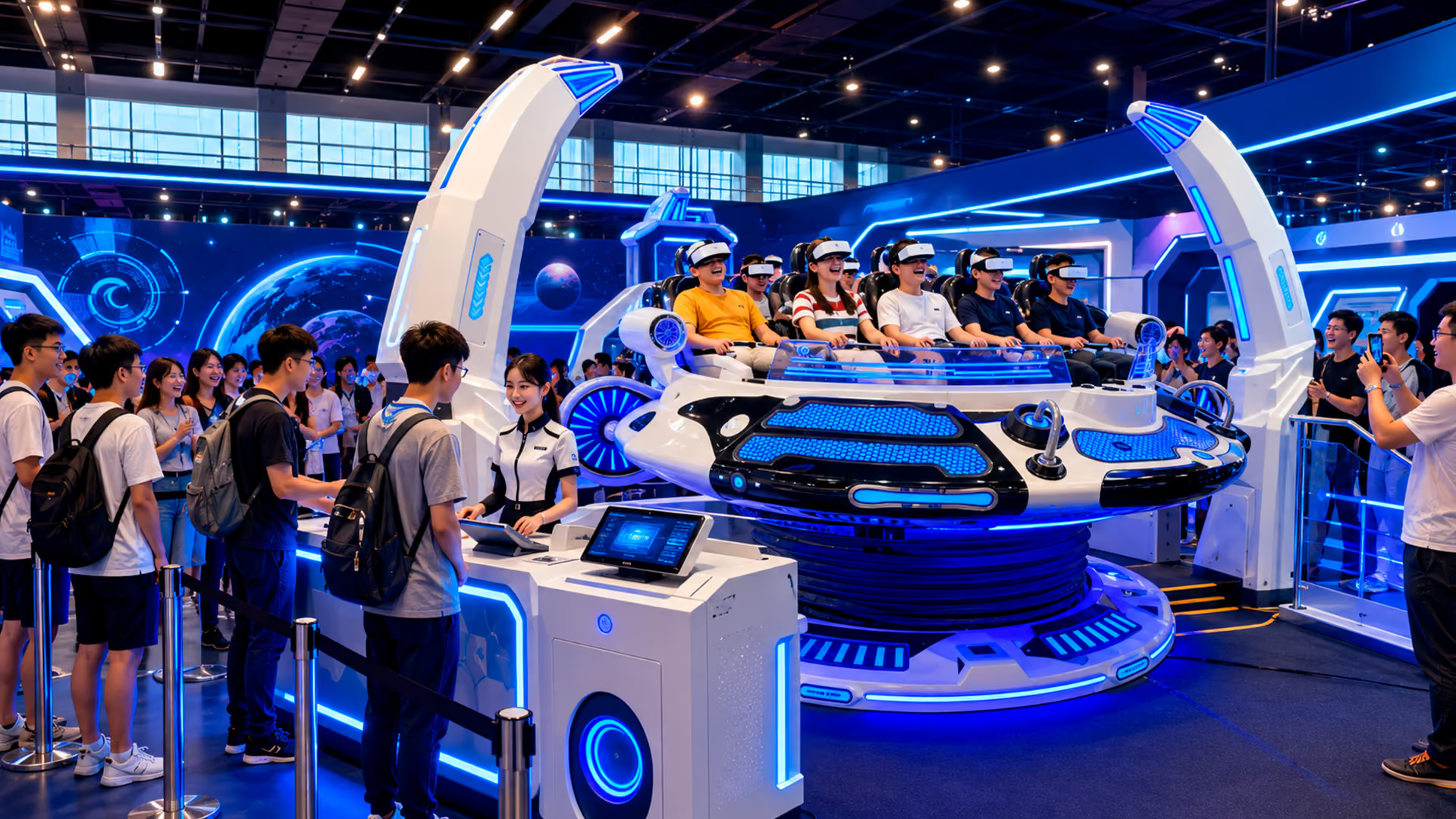
In high-attendance activations, capacity can become a challenge when the number of headsets or stations is limited. Each headset normally corresponds to one participant, but several stations can operate simultaneously and multi-user experiences can also be developed.
A bottleneck depends on the number of available devices, the total cycle duration, headset fitting and adjustment time, cleaning between participants, technical assistance, and entry and exit flow. If demand exceeds that capacity, waiting times or lines may occur.
Before producing a VR activation, its capacity should be estimated. To do this, it is useful to calculate how many stations will be available, how long each complete cycle lasts, and how many hours the experience will operate.
An activation with lower capacity is not necessarily unviable: it can be designed for a specific audience or for a longer interaction. The decision should be related to project objectives and metrics. Planning should balance the level of immersion, simultaneous participation, and available capacity.
Overcoming the limits of an individual VR experience requires designing the entire activation: stations, turns, screens, parallel activities, and, where relevant, shared functions among users. Each component should serve a specific function and should not create a new bottleneck.
One strategy is to operate several headsets at the same time. This can consist of running independent experiences simultaneously or developing a multi-user application with shared state.
A shared experience requires defining communication between devices, state synchronization, each participant’s identity, recovery after disconnections and, when users share a physical space, spatial alignment and safe zones.
A headset view can be shown on an external screen so other people can observe part of the experience. This output can be used as visual support, although it does not automatically turn spectators into participants.
Implementation should consider casting latency, aspect ratio, framing, the privacy of displayed content, and connection stability. This external visualization can include additional graphic elements or contextual information that supports the spectator experience.
Physical elements can complement a VR experience through ventilation, vibration, motion, or other synchronized stimuli. However, these integrations add hardware, calibration, maintenance, and safety requirements.
They should be used when they contribute a specific function to the experience, not as a solution for automatically increasing capacity. Physical interaction can also trigger the VR experience, such as a button or object that starts virtual content when manipulated.
Collaborative or competitive dynamics can be used when they are coherent with the activation’s goal. A multi-user experience can require communication between devices and state synchronization; a turn-based dynamic can involve people outside the headset through decisions, scores, or shared information.
These mechanics do not guarantee participation or engagement and should be tested with the target audience. They can be used to relate the headset experience to activities in the physical space.
Flow Design and User Management: Planning Capacity
The capacity of a VR activation depends on both content and operation. To size it, the team should identify the duration of every contact point, from a participant’s arrival to station reset.
When participant volume requires it, a turn, reservation, or virtual-queue system can be used. Requested information should be limited to what is necessary to operate the experience.
Registration is not always necessary and should not be added solely to collect data. If personal information is collected, consent, purpose, storage, and retention time should be defined.
The physical layout also affects capacity. Several VR stations can operate simultaneously and serve more users in the same period than one station. Each station should account for equipment, cleaning, instructions, and the support staff required for its operation.
Duration should be defined from the activation’s capacity target. Calculation should include time inside the content, headset fitting and removal, instructions, cleaning, and reset between sessions.
There is no universal duration. The appropriate time depends on the experience, number of stations, and expected number of participants. It should be defined together with the capacity target and validated through operational testing.
While one person uses a headset, others can take part in a parallel activity when space and operation allow it. That activity should form part of the overall activation design and should not add a second bottleneck.
Before implementation, its own capacity, duration, required staff, and relationship to the VR experience should be calculated. A parallel activity contributes to flow only if it can operate without creating a second bottleneck.
Integrating VR with Other Immersive Technologies
A VR activation can be complemented with screens, interactive installations, or other dynamics, but each additional system increases technical and operational scope.
The combination should be used only when it solves a specific need, such as showing content to spectators, offering a parallel activity, or connecting stages of the journey.
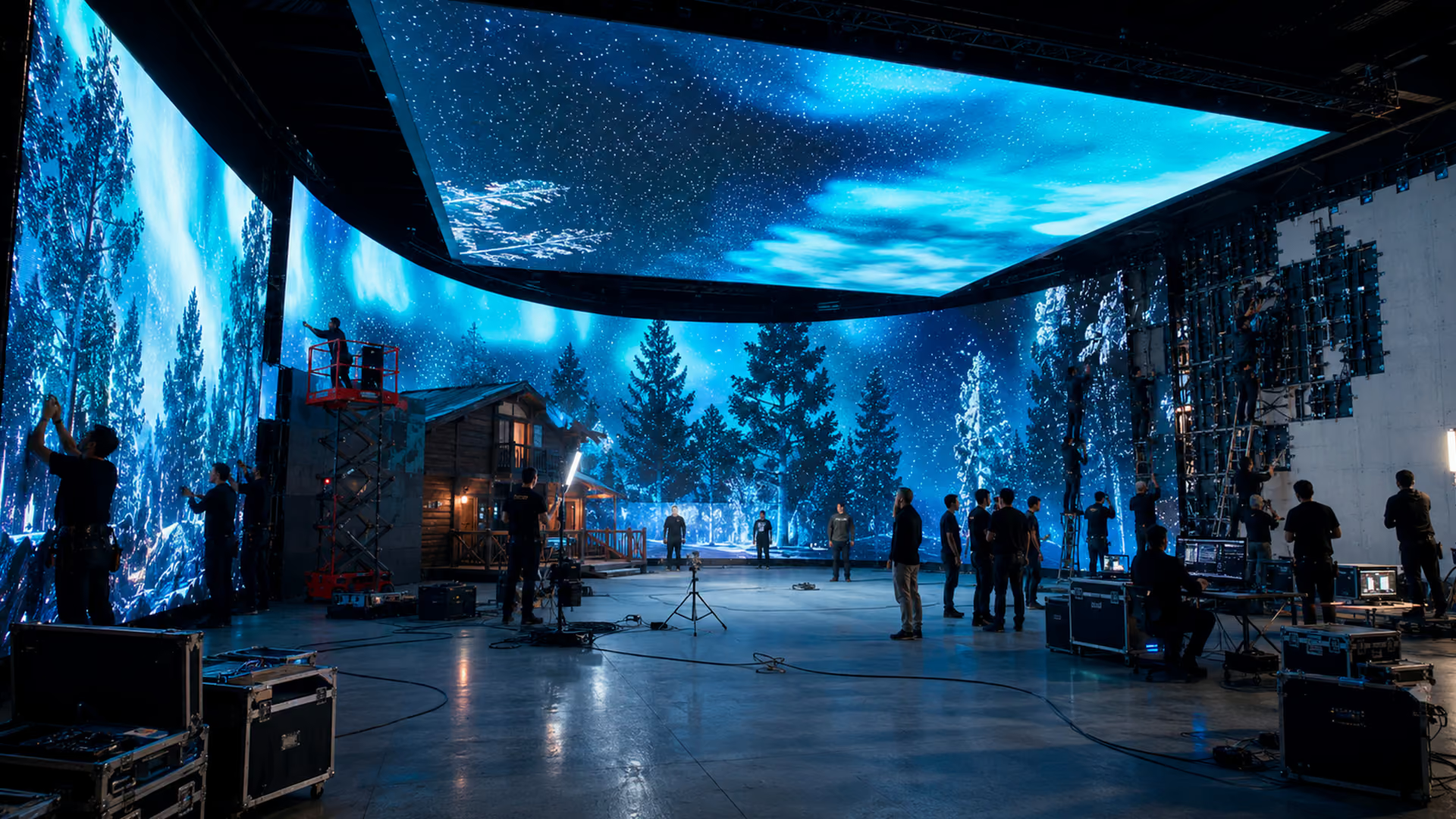
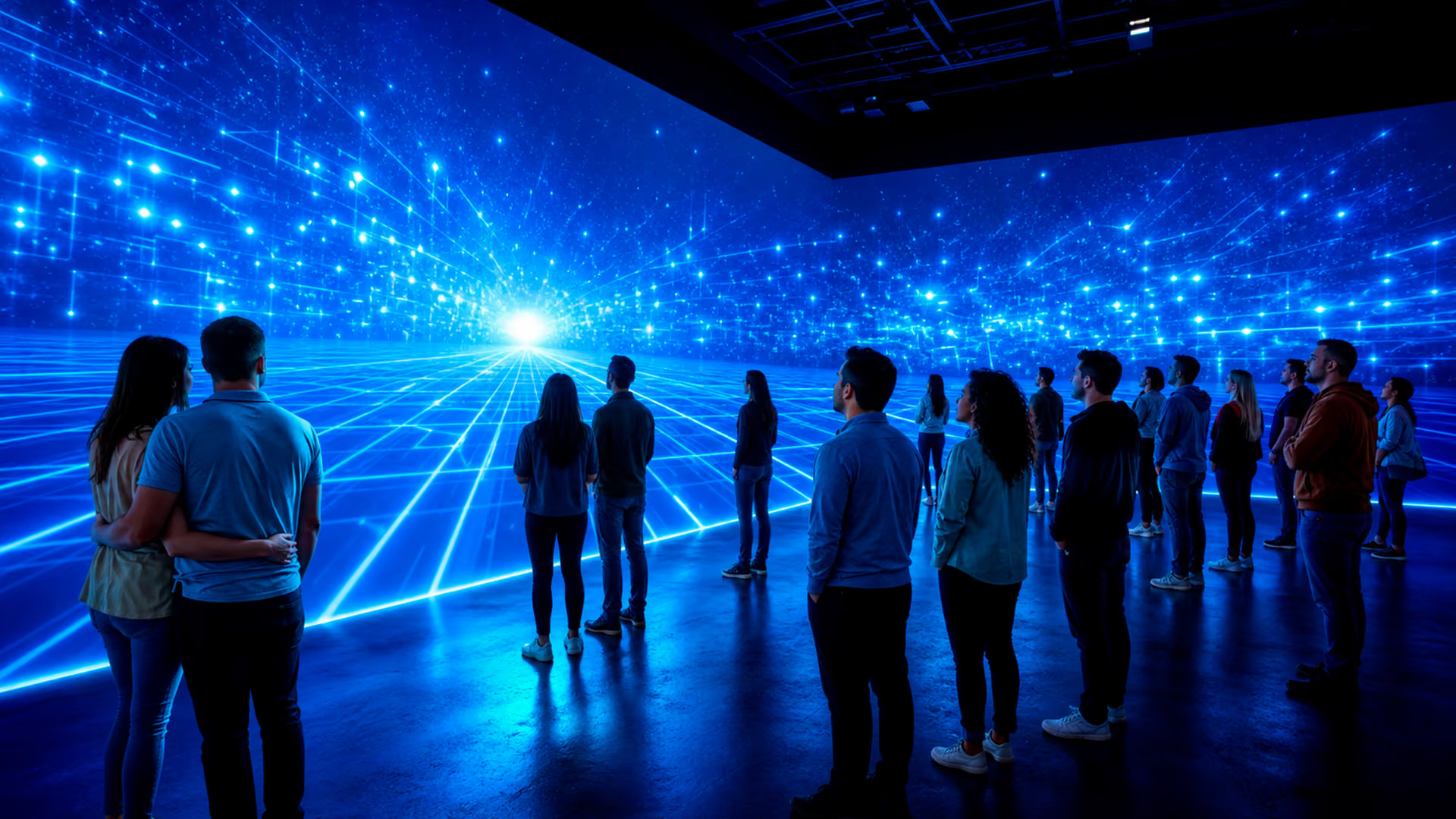
VR can be complemented with large-format projections or videomapping when there is a defined function for content outside the headset. A participant’s view, contextual information, or related visuals can be shown on screens or surfaces, but latency, framing, privacy, lighting, and equipment operation must be considered.
Interactive installations can also complement a VR activation. Motion sensors, touch surfaces, or gesture interfaces can offer a parallel activity to people not using a headset. These connections require defining whether systems share data, what information is exchanged, and how they will behave in the event of failures or delays.
Augmented reality can be used as an independent stage before or after a VR experience when there is a narrative or functional reason to do so. Both systems require different architectures, devices, and tests.
Adding AR does not guarantee continuity, sharing, or greater reach; these functions must be designed and instrumented specifically.
Cinética Studio Case: VR as Part of an Activation Ecosystem
For Nissan Formula E, Cinética Studio developed a VR experience that recreated a lap at Autódromo Hermanos Rodríguez from the driver’s perspective. The content was prepared in Blender and Unity to run on Meta Quest 3 with head-movement tracking.
The VR experience formed part of a broader set of installations within the stand, including racing games and other interactive dynamics. This configuration allowed different experiences to operate in parallel and distribute attendees throughout the space.
Actual service capacity should be calculated by station and cannot be inferred only from the presence of several dynamics.
Keys to Planning a VR Activation with Defined Capacity
Planning should define activation objectives and criteria for assessing the experience. These objectives guide design, content, operation, and measurement decisions, but they do not by themselves guarantee marketing outcomes.
The design should consider headset fitting and adjustment, instructions, participant posture, movement space, session duration, and level of familiarity with VR.
Alternatives should also be defined for people who cannot or do not want to use a headset. These measures can improve access, but they do not guarantee a suitable experience for every person or a specific emotional outcome.
Capacity should be calculated from the number of stations and total time of each cycle. It can increase through more headsets, simultaneous experiences, or parallel dynamics, provided space, budget, and operation allow it.
Turn systems and support staff can improve flow, but they do not replace capacity calculations or guarantee the absence of waits.
A VR project can require content development, optimization for the selected headset, hardware setup, testing, operation, and participant-flow design. Scope should define which responsibilities belong to Cinética Studio and which depend on the client, venue, or suppliers.
Technical experience can reduce certain risks, but it does not guarantee meeting objectives or return on investment.
Conclusion: Designing Capacity Alongside the Experience
VR can be part of a brand activation, but its capacity should be planned from the start. The number of headsets, cycle duration, staffing, cleaning, space, and parallel activities determine how many people can take part.
Multi-user experiences, screens for spectators, and complementary dynamics are design options, not universal solutions. Each adds technical and operational requirements that should be validated through testing.
At Cinética Studio, we assess these variables to define when to use VR as the main experience and when to integrate it as a station within a broader activation ecosystem.
Frequently Asked Questions
How Can a VR Experience Be Scaled for a Large Event?
Scaling a VR experience for a large event requires calculating capacity from simultaneous stations and the complete time of each cycle. Multi-user experiences, screens for spectators, physical elements, collaborative dynamics, and parallel activities can be assessed when they serve a defined function. Turn systems, reservations, and support staff should be sized together with the space and operation. Cinética Studio has developed immersive activations for brands such as BMW and Shark; the scope of each project should be presented specifically.
Which Technologies Can Be Combined with VR to Extend an Activation?
VR can be combined with projections, videomapping, interactive installations, or augmented reality when each resource solves a specific need. For example, a screen can let spectators observe part of an experience, and a reactive installation can offer a parallel activity. These integrations require their own architecture, testing, and operation; they do not by themselves guarantee greater participation or reach.
How Long Should a VR Experience Last in a Brand Activation?
There is no universal duration. It should be calculated according to the expected number of participants, number of stations, and complete cycle time, including instructions, headset fitting, experience, removal, cleaning, and reset. A shorter duration increases potential capacity but does not guarantee a better experience.
How Can Cinética Studio Help My Brand Create a Scalable VR Activation?
Cinética Studio can participate in conceptualization, bespoke VR-content development, integration with other technologies, and the operational design of an activation, according to the agreed scope. Development can use engines such as Unity or Unreal Engine when suitable for the project. Responsibilities, acceptance criteria, and dependencies should be defined with the client, venue, and other suppliers.Contáctanos para explorar cómo podemos llevar tu marca al siguiente nivel.
What Can Create a Bottleneck in a VR Activation?
A bottleneck occurs when demand exceeds the capacity of available stations. Capacity depends on the number of headsets and total time of each cycle. It can increase through simultaneous stations or multi-user experiences, while screens and parallel activities can offer additional content to people not using a headset. Each strategy should be assessed according to space, budget, and operation.
Featured in
Our work has been recognized by leading industry publications covering creativity, technology, and innovation.
Discover interviews, features, and articles that highlight our projects and perspective.


You may also like
Ready to create something extraordinary?
From concept to execution, we design experiences that connect people, technology, and storytelling in unforgettable ways.