Blog Post
FOOH and the Fine Line of Transparency: How to Label CGI Without Losing Impact or Risking Your Brand
The FOOH Phenomenon: Impact, Virality, and the Authenticity Debate
Fake Out-Of-Home (FOOH) has burst onto the advertising scene as one of the most disruptive and talked-about trends in recent years. Essentially, FOOH involves creating advertisements that simulate being in public spaces but are, in reality, entirely computer-generated (CGI) and digitally superimposed onto real images or videos. This technique allows brands to deploy visually striking campaigns, often on a scale and with a level of creativity that would be unfeasible or prohibitively expensive in the physical world.
The popularity of FOOH stems from its ability to generate immediate visual impact and organic virality. By presenting gigantic, interactive, or fantastical elements in everyday urban environments, these campaigns capture public attention in a novel and surprising way. The "is it real or not?" effect is precisely what drives viewers to share the content, debate its authenticity, and ultimately amplify the brand's message across social media. This cycle of awe, questioning, and sharing is the primary engine behind the viral success of many FOOH campaigns.
However, the very nature of FOOH—its intrinsic "fakeness" or digital simulation—has sparked a significant debate about authenticity in advertising. While for some, FOOH is a manifestation of the limitless creativity offered by technology, for others, it raises ethical questions about manipulating consumer perception. The line between artistic illusion and advertising deception can become blurred, especially when campaigns do not include a clear indication that the content is CGI. This central dilemma drives the need for transparency and regulation in a field that, by its very definition, plays with reality.
The discussion is not limited to ethics; it also encompasses long-term effectiveness. While the initial impact of FOOH is undeniable, a lack of transparency could erode consumer trust in the brand. In a media ecosystem where misinformation is a constant concern, brands must be cautious not to be perceived as deceptive. The challenge, then, lies in how brands and creative studios can harness the power of FOOH to create memorable and viral experiences while maintaining integrity and trust with their audience. At Cinética Studio, we understand that technological innovation must go hand-in-hand with responsibility, always seeking to balance visual wonder with clarity in communication.
Why Transparency is Crucial in FOOH: Legal and Reputational Risks
The virality and visual impact of FOOH are undeniable, but its inherently "fake" nature—in the sense that it simulates a reality that doesn't physically exist—poses a fundamental challenge: transparency. Omitting the disclosure that a FOOH piece is a digital creation can lead to serious consequences, both legal and reputational, that far outweigh the benefits of fleeting virality.
In many countries, advertising legislation is clear regarding the prohibition of deceptive advertising. If a consumer perceives a FOOH campaign as a real installation rather than a digital simulation, and this perception influences their purchasing decision or their expectation of the product or service, the brand could face accusations of deception. This not only opens the door to fines and sanctions from regulatory bodies but can also trigger class-action lawsuits from consumers who feel defrauded. The line between creativity and deception is thin, and in the digital realm, where visual manipulation is increasingly sophisticated, this line becomes even more blurred.
Beyond legal implications, reputational damage is perhaps the most significant and lasting risk. In the information age, where news and opinions spread at the speed of a click, a brand perceived as dishonest or manipulative can suffer a devastating blow to its image. Consumer trust is an invaluable asset, and once eroded, it is extremely difficult to regain. An improperly labeled FOOH can generate a boomerang effect: what was initially an ingenious and viral campaign can quickly transform into a public relations scandal, with consumers and media outlets criticizing the brand's lack of ethics.
This loss of trust not only affects short-term sales but can also damage long-term brand loyalty. Today's consumers value authenticity and honesty, and they expect brands to be transparent in their communications. A FOOH that doesn't disclose its digital nature can be interpreted as an attempt to manipulate perception, which goes against the values of transparency that many brands seek to project. In a saturated market where differentiation is key, integrity becomes a fundamental pillar for building lasting relationships with the audience. Therefore, transparency is not just a legal obligation but a smart strategy to protect the brand and foster a genuine connection with the public.
The Regulatory Landscape: What Do Laws and Organizations Say About CGI in Advertising?
The explosion of FOOH and the widespread use of CGI in advertising has brought the need for transparency to the forefront of the debate, and with it, the relevance of regulatory frameworks. Globally, the trend points towards increased disclosure requirements, especially when computer-generated content could mislead about the characteristics of a product or service, or the authenticity of a situation.
In Mexico, while there isn't a specific law explicitly regulating FOOH or CGI in advertising, various regulations and organizations already establish applicable principles. The Federal Consumer Protection Law (LFPC) is fundamental, as it prohibits misleading or abusive advertising. This includes any message that, due to its inaccuracy or concealment, induces or could induce error or confusion in the consumer about the characteristics, properties, or conditions of goods or services. A FOOH that simulates an unreal effect or scale of a product without any warning could fall under this category, exposing brands to sanctions from the Federal Consumer Protection Agency (PROFECO).
Furthermore, self-regulatory bodies like the Advertising Self-Regulation and Ethics Council (CONAR) in Mexico establish ethical codes that promote truthfulness and honesty in advertising. Although their resolutions do not carry the weight of law, compliance is vital for the reputation of brands and agencies. CONAR's Code of Advertising Ethics, for example, emphasizes the importance of advertising being clear, truthful, and not misleading, principles that are directly applicable to how CGI and FOOH are presented.
Internationally, the situation is similar, with organizations such as the Advertising Standards Authority (ASA) in the United Kingdom or the Federal Trade Commission (FTC) in the United States, which have issued guidelines on the need to clearly identify sponsored content or representations that do not correspond to reality. In the context of CGI, this translates into the expectation that consumers can distinguish between what is a real representation and what is a digital creation, especially if the latter exaggerates or distorts a product's capabilities.
The lack of specific regulation for CGI or FOOH does not mean that brands operate in a legal vacuum. Existing laws and codes on misleading advertising are broad enough to cover these new forms of communication. The challenge lies in how to apply these principles to a technology that, by its nature, seeks to blur the line between the real and the simulated, without losing its creative impact. The key, then, is not to prohibit CGI, but to ensure its ethical and transparent use, protecting the consumer without stifling the innovation.

Labeling Strategies: How to Communicate CGI Use Without "Killing" the Effect
The key to a successful and ethically responsible FOOH campaign lies in finding the perfect balance between transparency and preserving creative impact. Labeling CGI content doesn't have to negate its magic; in fact, it can reinforce consumer trust and brand reputation. The goal is to inform without stripping the experience of its initial wonder.
Various labeling strategies can be implemented by brands and creative studios, each with its own advantages and considerations:
1. Hashtags and Social Media Mentions
This is the most common and least intrusive way to disclose the use of CGI. Hashtags like #FOOH, #CGI, #DigitalAdvertising, #FakeOutofHome, or even #RenderedWithCGI can be included in the post description or comments. The advantage is their discretion and natural integration into the language of digital platforms. However, their effectiveness depends on the user reading the description, which doesn't always happen. To maximize their impact, it's recommended that the hashtag be visible and used consistently.
2. Subtle Visual Disclaimers
A small text or logo indicating "CGI" or "Computer-Generated Content" can be integrated directly into the video or image. The key here is subtlety: it must be legible, but not so prominent that it distracts from the main content. It can appear briefly at the beginning or end of the clip, or as a small watermark in a corner. This approach ensures that the information is present within the content itself, regardless of where it is shared.
3. "Behind the Scenes" or Creative Reveals
Some brands have opted for a bolder strategy: revealing the FOOH creation process at a later stage. This can be through a "making-of" video that shows how the CGI was done, or a subsequent post explaining the technique. This approach not only fulfills transparency but can also generate a second peak of interest and appreciation for the creativity and technology behind the campaign. By showcasing the ingenuity of the production, the "fakeness" is transformed into a celebration of digital art.
4. Authenticity Logos or Seals
In the future, we might see the emergence of standardized seals or logos, perhaps driven by regulatory bodies or industry associations, that certify the use of CGI. Similar to sustainability or quality labels, a "CGI seal" could offer a clear and universally recognized indication. This would require collaboration between the industry and regulatory bodies to establish a common standard.
The choice of strategy will depend on the campaign's context, platform, target audience, and the level of risk the brand is willing to take. The fundamental point is that disclosure should be clear, accessible, and not perceived as an attempt to deceive. Transparency, far from being an obstacle, can become a differentiator, showcasing an honest brand at the forefront of digital communication.
Success Stories and Lessons Learned: When Transparency Strengthens the Brand
Integrating transparency into FOOH campaigns doesn't have to dilute their creative impact; in fact, it can strengthen the connection with the audience by fostering trust and respect. Far from being a limitation, intelligently disclosing the use of CGI becomes an opportunity to highlight the technological innovation and creative mastery behind the campaign.
One example of how transparency can be an asset is seen in campaigns where the revelation of CGI becomes part of the narrative. Some brands have chosen to first launch the impactful FOOH and, days later, publish a "behind-the-scenes" showing the creation process, including 3D modeling, integration with the real environment, and post-production work. This strategy not only satisfies public curiosity but also underscores the technical sophistication and art involved, elevating the brand's perception as innovative and honest. A 2022 Stanford University study found that brands proactively disclosing the use of CGI in their campaigns experienced a 15% increase in consumer trust perception compared to those that did not.
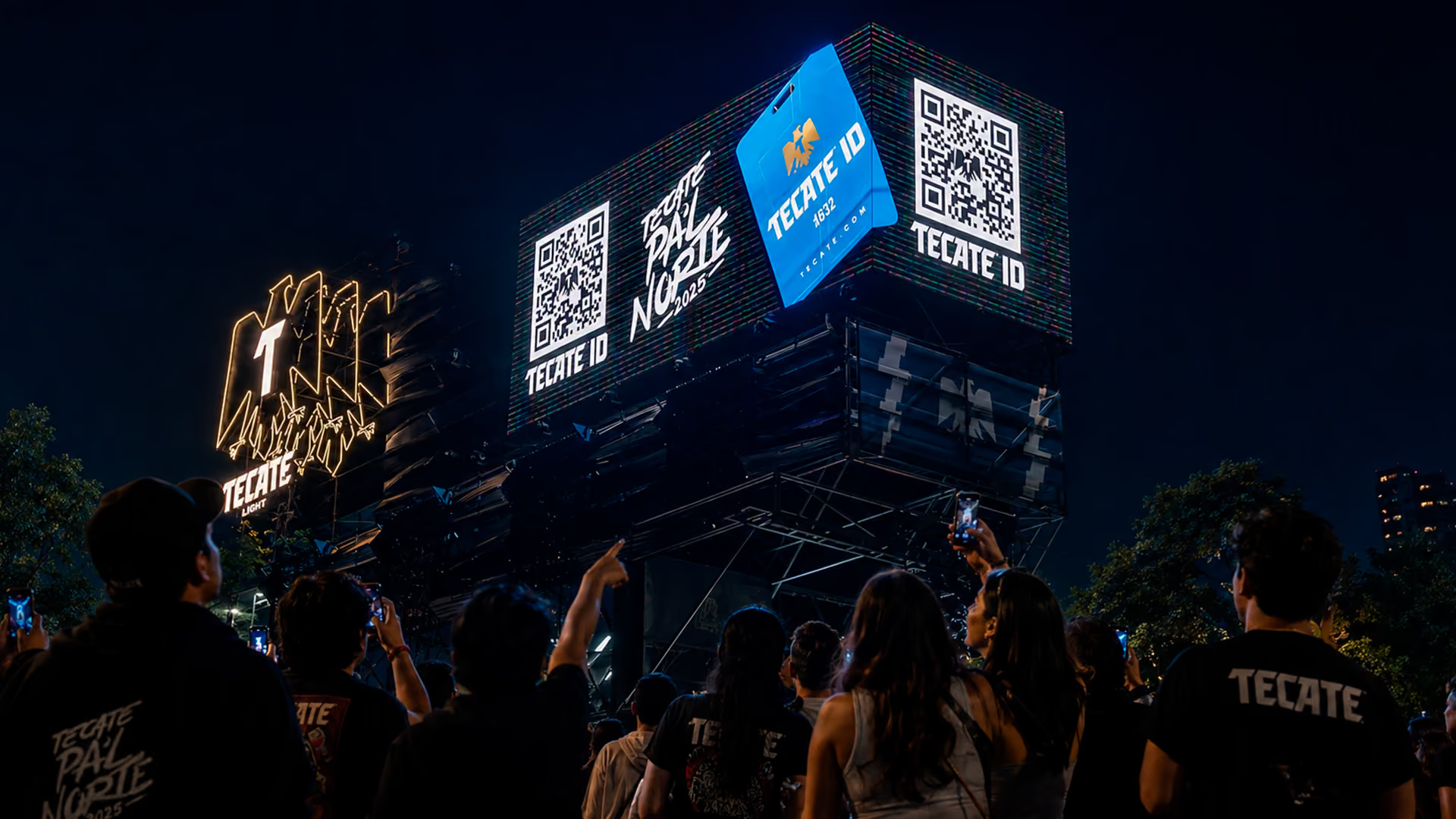
At Cinética Studio, we have seen how clear communication about the use of advanced technologies can enrich the experience. For example, in anamorphic 3D content projects, such as the one we developed for Tecate, the illusion of depth and scale is generated through the creation of animations in Blender and their precise mapping onto giant LED screens. Although the effect is visually striking and aims to surprise, the understanding that it is a piece of digital art and technology reinforces admiration for the execution. The "forced perspective" is part of the magic, and knowing that it is a digital construct does not detract from its value, but rather adds to it, by highlighting the technical skill behind the illusion. This approach has allowed us to position our clients as leaders in innovation, while maintaining transparent communication with their audience.
Another relevant case is the development of interactive experiences that, although not FOOH, share the essence of creating augmented or simulated realities. In the Amazon Music Karaoke project, where attendees could sing and receive a personalized video, technology (Unity, Firebase, audio and video capture) was at the heart of the experience. Transparency about how the content was generated and delivered to users via QR codes was not only functional but also built trust in the process and the brand. Participants knew they were interacting with a technological system that transformed their performance into a digital memory, and that clarity was an integral part of the enjoyment. These types of projects reinforce the idea that technology, when used with honesty, builds bridges of trust.
The main lesson is that transparency is not an obstacle, but a strategic tool. When brands and creative studios adopt a proactive approach to communicating the use of CGI, they not only meet regulatory and ethical expectations but also open new avenues for engagement. By inviting the audience to appreciate digital craftsmanship and innovation, a deeper and more authentic relationship is built, transforming a potential objection into a point of differentiation and admiration.
Technology in Service of Transparency: Tools and Best Practices for Disclosure
Paradoxically, the same technological tools that enable the creation of immersive experiences and hyperrealistic FOOH also offer robust solutions to ensure transparency. Far from being an obstacle, technology can be a fundamental ally in disclosing the use of CGI, allowing creative studios and brands to adopt best practices that strengthen consumer trust.
One of the most promising avenues is the use of embedded metadata. Just as a digital photograph contains information about the camera, date, and settings, video files and CGI images can include metadata specifying their origin, the tools used in their creation (e.g., Blender for 3D animation, as in the case of Cinética Studio for Tecate's anamorphic content), and the presence of computer-generated elements. This metadata, while not always visible to the end-user, is accessible to verification platforms and can serve as irrefutable proof of the content's nature. The standardization of this metadata is a crucial step for its widespread adoption. Initiatives like the Content Authenticity Initiative (CAI) are working on open standards for content metadata, which could be a game-changer for CGI transparency.
Digital watermarks represent another layer of transparency. Unlike visible watermarks that can be distracting, invisible or steganographic watermarks are embedded in the content in a way that does not affect the visual experience but can be detected by specialized software. This allows for verification of the authenticity and provenance of a digital asset, as well as identification of whether it has been altered or contains CGI elements. Their implementation requires a balance between robustness (to prevent removal) and invisibility (to avoid compromising creative impact). A 2023 study by the University of California, Berkeley, demonstrated that the use of robust digital watermarks can reduce the perception of deception by 20% without negatively affecting the visual experience.
In the platform realm, the integration of automated verification and labeling tools directly into social networks and distribution channels is a necessary evolution. Some platforms are already experimenting with indicators for AI-generated content, and this functionality could extend to all advertising CGI. This not only facilitates identification for the consumer but also standardizes how information is presented, avoiding ambiguity. For example, TikTok has implemented a feature to label AI-generated content, and other platforms are expected to follow suit for CGI.
For creative studios like Cinética Studio, the adoption of these technologies is complemented by internal best practices. This includes rigorous documentation of production processes, from the initial brief to final delivery, detailing the use of CGI and the technologies employed. For example, when developing interactive experiences with Unity or TouchDesigner, such as projects for Amazon Music or Nestlé NAN, the technological stack and the interactive or generated nature of the content are documented. This traceability is not only useful for internal audits but can also be shared with clients and regulators to demonstrate a proactive commitment to transparency. At Cinética Studio, every CGI project includes a detailed technical report specifying the computer-generated elements and techniques used, ensuring maximum clarity.
Finally, consumer education is a powerful tool. Through informative campaigns or even small tutorials, brands can familiarize their audience with the signs of CGI content and the value of transparency. By empowering the public with knowledge, a more mature and trusting relationship is fostered, where the wonder of FOOH is not compromised by doubt but enriched by an appreciation of the technical mastery behind the illusion. An example of this is Adobe's "Know Your Content" campaign, which aims to educate the public about the authenticity of digital content.
The Role of Creative Studios: Ethics, Responsibility, and the Future of FOOH
In this rapidly evolving landscape, creative technology studios like Cinética Studio are not just content producers; they are also custodians of ethics and responsibility in digital advertising. Their position at the intersection of creativity and technology grants them significant influence in shaping industry practices, especially in emerging areas like FOOH.
The responsibility of these studios extends beyond mere technical execution. It involves leading the conversation on transparency, educating clients about the risks and benefits of different CGI approaches, and proposing innovative solutions that allow for disclosure without compromising creativity. This means advocating for clear standards, developing effective and non-intrusive labeling methodologies, and fostering a culture of honesty at all stages of production. According to a 2023 Deloitte report, 70% of consumers expect brands to be transparent about the use of emerging technologies in their advertising, and creative studios are key to facilitating this transparency.
For Cinética Studio, this translates into a commitment to technical excellence and creative integrity. When developing projects that integrate 3D animation and CGI, the studio ensures that its clients understand the implications of every decision, from conception to implementation. For example, in creating anamorphic 3D content for brands like Tecate, where the illusion of depth and scale is key, clear communication about the digital nature of the piece is fundamental. The goal is for the surprise and visual impact to come from technical mastery and creativity, not from intentional ambiguity about its origin. Our team works hand-in-hand with clients to define the most appropriate disclosure strategy, ensuring that the creative message remains intact while adhering to the highest ethical standards.
The future of FOOH and creative advertising in general will largely depend on how studios address these ethical challenges. Those that adopt a proactive approach, prioritize transparency, and collaborate with brands and regulators to establish best practices will lead the next wave of innovation. This will not only protect brand reputation and consumer trust but also elevate the standard of digital creativity, demonstrating that authenticity and visual impact can coexist harmoniously.
Conclusion: Towards Responsible and High-Impact FOOH
The FOOH phenomenon has proven to be an advertising tool of undeniable power, capable of generating virality, conversation, and a visual impact that few strategies achieve. However, its long-term effectiveness and contribution to building strong brands intrinsically depend on a crucial factor: transparency. Far from being an obstacle to creativity, normativity and ethics in the use of CGI in advertising are the foundations upon which truly sustainable and high-impact FOOH can be built.
The discussion about how to label CGI without "killing" the effect is, in essence, a search for balance. It's not about diluting the magic or wonder these campaigns generate, but about establishing a pact of trust with the audience. When brands and creative studios adopt a proactive approach to disclosure, they not only mitigate legal and reputational risks but also reinforce their credibility and foster a more authentic relationship with their consumers. Honesty, even in the context of a digital illusion, becomes a competitive differentiator.
The future of FOOH does not lie in evading regulations or deliberate ambiguity, but in the mastery of communication. This implies developing intelligent labeling strategies that integrate organically into the campaign's narrative and use technology not only to create but also to inform. Creative technology studios like Cinética Studio have the responsibility and opportunity to lead this change, demonstrating that innovation and ethics can coexist, raising the standard of digital advertising.
Ultimately, responsible FOOH is one that celebrates creativity without deception, that embraces normativity as a guide for excellence, and that understands that true impact is not only measured in likes and shares but in the trust and respect a brand inspires. By embracing transparency, FOOH not only survives but evolves, consolidating itself as a form of advertising art that is as powerful as it is integral.
Frequently Asked Questions (FAQ) about FOOH and Transparency
What is FOOH and why is transparency important?
FOOH (Fake Out-Of-Home) is an advertising technique that uses CGI to create ads that simulate being in public spaces, generating visual impact and virality. Transparency is crucial to avoid deceptive advertising, protect brand reputation, and maintain consumer trust, as unlabeled FOOH can mislead about the authenticity of the content.
What legal and reputational risks does unlabeled FOOH entail?
Unlabeled FOOH can carry legal risks such as fines and sanctions from regulatory bodies (e.g., PROFECO in Mexico) under deceptive advertising laws. Reputational risks include severely damaging the brand's image, eroding consumer trust, and generating a public relations scandal, affecting long-term loyalty.
How can brands label CGI in their FOOH campaigns without losing impact?
Brands can use various labeling strategies such as hashtags on social media (#FOOH, #CGI), subtle visual disclaimers in the content, "behind-the-scenes" videos that reveal the creation process, or even the adoption of standardized authenticity seals. The key is subtlety and organic integration to inform without distracting from the creative message.
What role do creative studios like Cinética Studio play in FOOH transparency?
Creative studios are fundamental in leading the conversation about transparency. They have the responsibility to educate clients about the implications of CGI, propose innovative disclosure solutions, and foster a culture of honesty. Cinética Studio, for example, integrates transparency into its processes, documenting the use of CGI and collaborating with clients on clear communication strategies, as in its anamorphic 3D and interactive experience projects.
What technologies can help ensure transparency in advertising CGI?
Technologies such as embedded metadata in video and image files (specifying origin and creation tools), invisible digital watermarks (to verify authenticity), and automated verification and labeling tools on digital platforms are key. These tools, along with good internal documentation practices and consumer education, strengthen transparency in the use of CGI.
Interested in creating impactful and ethically responsible FOOH campaigns?
Contact Cinética Studio for a consultation or explore our portfolio of CGI and immersive experience projects.
Featured in
Our work has been recognized by leading industry publications covering creativity, technology, and innovation.
Discover interviews, features, and articles that highlight our projects and perspective.


You may also like



Ready to create something extraordinary?
From concept to execution, we design experiences that connect people, technology, and storytelling in unforgettable ways.